Latitude Margaritaville Watersound is full of life, sunshine, and seasonal rhythms. Many homes are occupied year-round, while others see more visitors during peak months. That changing pattern can quietly affect your water, especially if you rely on a water softener or other clean water systems. When a softener is not keeping up, the results show up everywhere you use water, from the kitchen sink to the shower and even in how laundry feels.
This guide walks through practical water quality warning signs connected to water softening, with a focus on everyday water in Latitude Margaritaville Watersound, FL. You will also see how reverse osmosis systems, whole home water filtration, and AO Smith water filtration options can help protect comfort and plumbing performance through the year.
Why seasonal use changes water quality in a softener home
Water softeners are designed to treat hardness minerals like calcium and magnesium. In coastal Florida, these minerals still build up scale over time, and the effects can be more noticeable when water usage patterns shift. During slower seasons, the softener may cycle less often. During busy seasons, demand can increase quickly, and the unit may need time to regenerate at the right intervals.
In practical terms, seasonal changes can affect:
- Regeneration timing: Some systems regenerate on a schedule or based on usage. If the household is away and then comes back full-time, the softener may not be fully ready for the increased flow.
- Salt levels and brine performance: If salt is low, or if brine draws are inconsistent, the softener may not remove hardness efficiently.
- Water demand peaks: Showers, laundry loads, and dishwasher runs during visits can outpace the softening capacity.
- Bypass and plumbing changes: If a valve is left in bypass after maintenance, or if filters are recently serviced, water can temporarily bypass the intended treatment path.
For homeowners searching for water treatment near me or water filtration near me, this is one reason “the water was fine last month” can become “why does it look worse today?” The softening system may be working, but the household water pattern has changed.
Hard water signs you can spot in daily life
When water softening is not doing its job, the first clues often appear in places you touch and see every day. These are the warning signs that are commonly tied to hard water treatment performance, scale buildup, and incomplete softening.
Hard water spots on glass, dishes, and fixtures
You may notice cloudy glassware after the dishwasher, spots on drinking glasses, or streaks on faucets. In the shower, water can leave a film that makes surfaces look dull. These are classic “hard water spots on glass” and “scale buildup on faucets” symptoms. If the spots are new or worsening after seasonal occupancy changes, that points toward a softener that is not keeping up.
Scale buildup around faucets, showerheads, and plumbing
Scale buildup around faucets and showerheads is more than cosmetic. It can reduce water flow, create hot spots, and lead to restricted plumbing. Over time, scale can also contribute to appliance wear and shorter service life.
Look for:
- Mineral crust around faucet bases and aerators
- Showerheads that spray unevenly
- Dishwashers that leave a film despite good rinse cycles
If you are seeing scale buildup around faucets and showerheads after returning to the home, it is a strong signal that your AO Smith water softener or water filtration setup may need adjustment or maintenance.
Dry skin or dull hair after bathing
One of the most noticeable comfort clues is how skin and hair feel after bathing. When water is hard, soap does not work the way it should. Many homeowners describe dry skin from hard water and dull hair that feels less clean. You may also notice that shampoo rinses harder and leaves a film.
These symptoms can be subtle at first, then more obvious during high-use months. If you are hosting family gatherings or increasing shower and laundry use, the softener’s ability to reduce hardness matters.
Soap that does not lather or rinse well
Hard water makes it harder for soap to dissolve and rinse. A simple test is to notice whether soap lathers quickly in the shower or whether it leaves residue. If your “soap does not lather” or “soap does not rinse well” experience is increasing, it is often tied to hardness minerals not being removed effectively.
Metallic, chlorinated, or unpleasant taste
Your senses can catch problems before the visual signs show up. Some homeowners report metallic tasting water or unpleasant taste that becomes more noticeable when the water softener is not performing well. While taste can be influenced by multiple factors, hardness and sediment issues can change how water feels in the kitchen and can affect how you perceive other water qualities.
If you also see sediment in household water or notice odor concerns, you may need a more complete approach such as whole home water filtration or an under-sink reverse osmosis system for drinking and cooking.
Cloudy ice cubes
Cloudy ice cubes are a common clue that something is off with dissolved minerals, sediment, or filtration performance. If ice looks cloudy and the problem shows up after seasonal changes, it can indicate that treatment capacity is not matching demand, or that filters are due for service.
Poor tasting coffee and cooking water
Kitchen water quality is where many families notice the difference immediately. Poor tasting coffee water can happen when hardness and mineral content change extraction. Cooking water can also taste different and affect how flavors develop. If you are used to great drinking water from your tap and then the taste changes, your water softening and filtration system may need attention.
In a typical Latitude Margaritaville Watersound routine, you might be making morning coffee, boiling pasta for guests, or filling a water pitcher for the fridge. Better water quality supports better flavor, and it helps protect the equipment you use daily.
Appliances wearing out faster
When hard water treatment falls short, scale buildup does not only show up on fixtures. It can accumulate inside:
- Water heaters
- Dishwashers
- Coffee makers and kettles
- Tankless components and internal plumbing passages
Homeowners often interpret this as “our appliances just did not last like they used to.” In reality, scale and mineral deposits can reduce efficiency and shorten service life. When seasonal occupancy changes, the timing of demand can make the problem more obvious.
What to check in your water softener before you call
Before scheduling water softener service, you can do a few homeowner checks that help pinpoint whether the issue is softening performance, filtration, or something else.
Confirm the system is not in bypass
After maintenance or filter changes, it is easy for valves to end up in bypass. If you have recently had any service or if you are the type to shut systems down when away, verify the softener is actually treating water.
Check salt level and salt type
If your AO Smith water softener uses salt, confirm there is enough to support consistent brine production. Low salt can lead to incomplete softening. Also verify the correct salt type for your system to avoid bridging or poor dissolution.
Look for sediment or discoloration issues
If you see visible sediment, discoloration, and odor concerns, the softener may not be the only factor. Some water quality issues are related to sediment, carbon filtration, or particulate control. In those cases, whole home water filtration or a targeted system like reverse osmosis can make a noticeable difference for drinking and cooking.
Inspect faucets and showerheads for scale buildup on faucets
If you can remove an aerator or check the showerhead, you may see mineral crust. A quick visual inspection can confirm that hardness is getting through. If the scale is increasing after seasonal returns, the softener may need a performance check and adjustment.
How whole home filtration and reverse osmosis complement softening
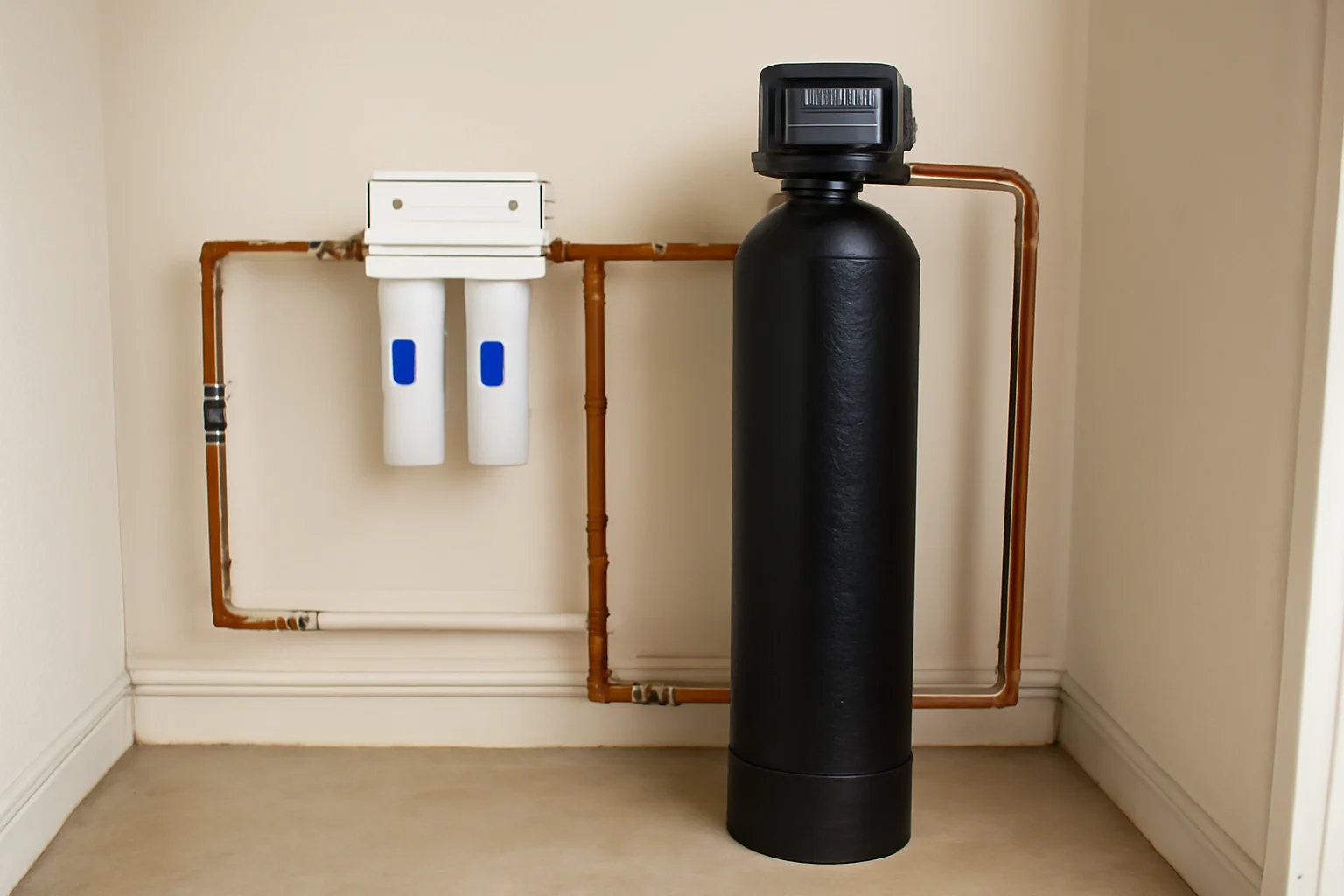
Water softening focuses on hardness minerals. That is critical for preventing scale buildup and protecting plumbing and appliances. But many homeowners want better drinking water and cleaner water for everyday tasks like cooking, coffee, and ice.
That is where whole home water filtration and reverse osmosis systems often fit well alongside water softening.
Whole home water filtration for cleaner, consistent water
Whole home water filtration systems help reduce sediment and improve overall water clarity and taste. For households with visible sediment in household water concerns or odor issues, this type of setup can improve what you experience at every faucet. It also supports appliances by reducing particles that can contribute to wear.
Homeowners considering clean water systems near me often look for a solution that protects both the plumbing and the kitchen. A combined approach can be especially helpful in seasonal homes where water quality needs to stabilize quickly after returning.
Reverse osmosis for drinking and cooking
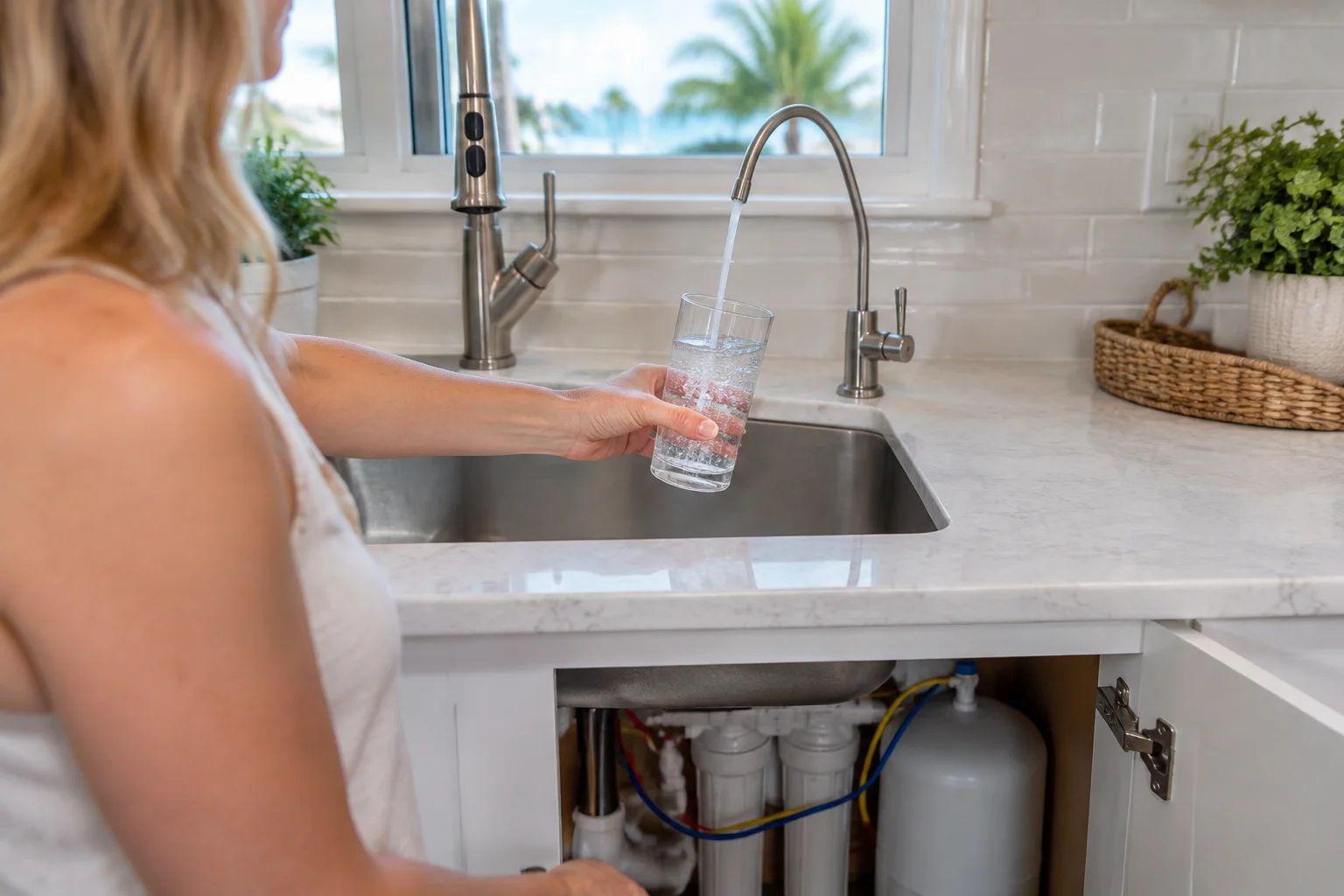
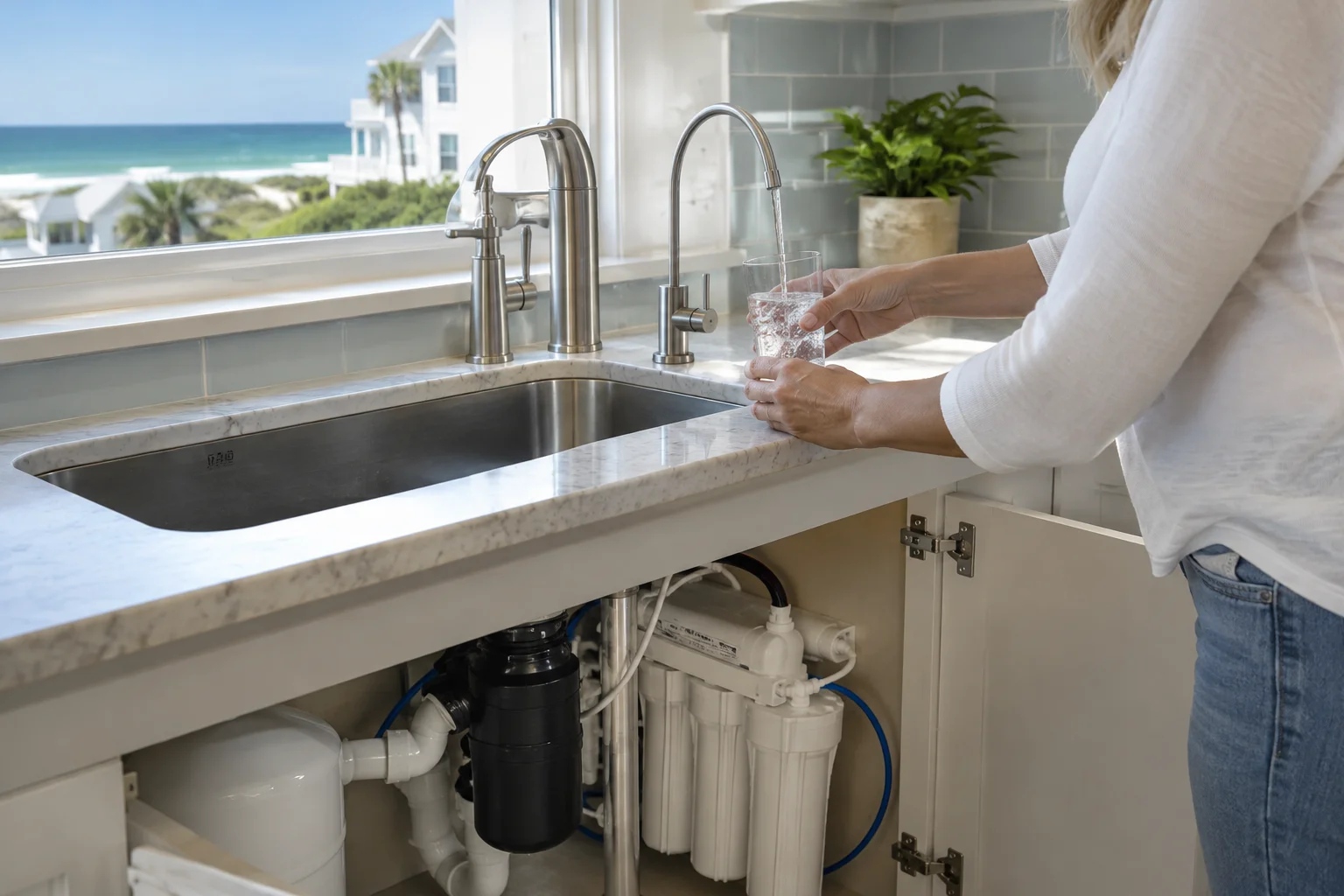
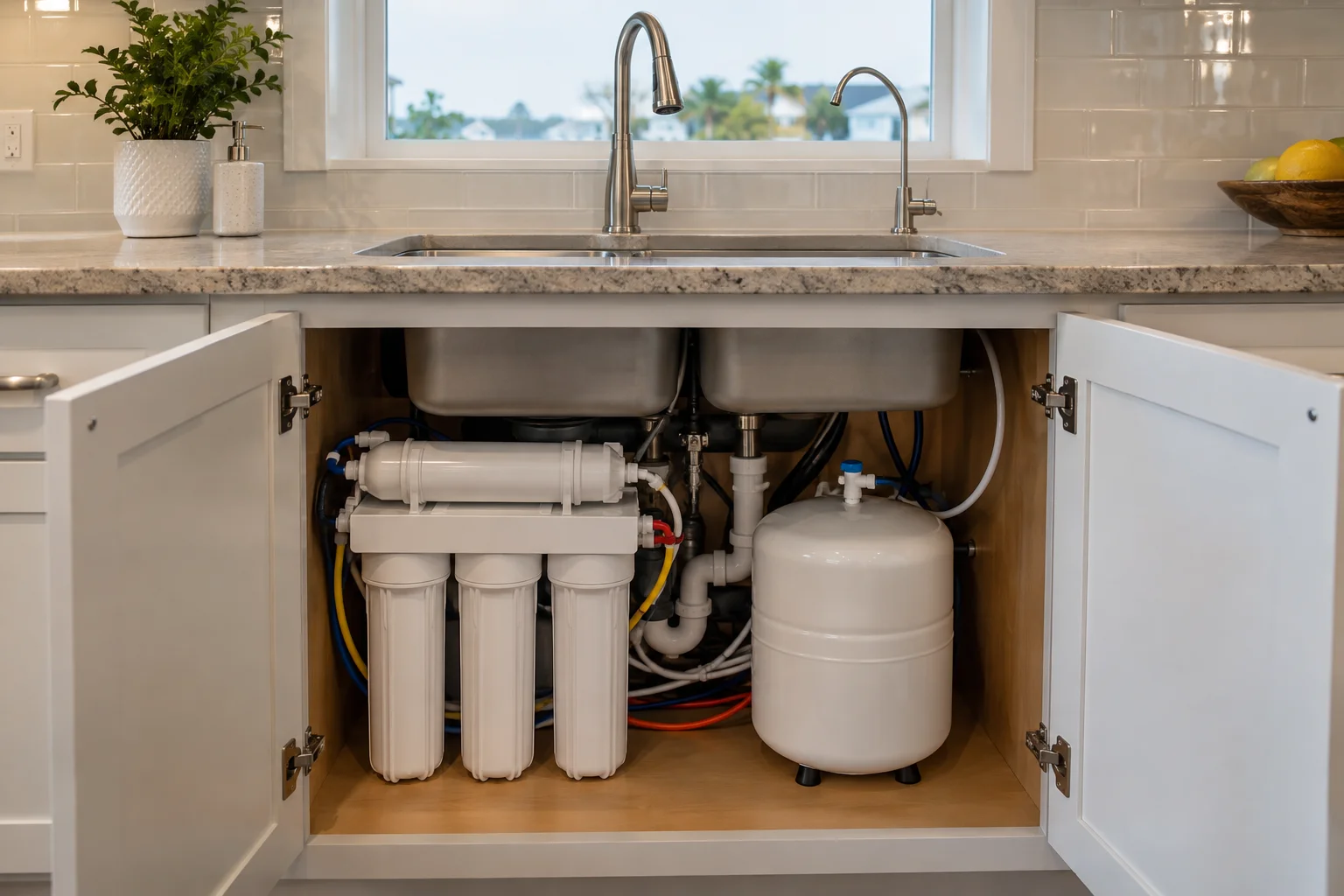
Reverse osmosis system near me searches usually come from a desire for better drinking water and better cooking water. RO is commonly used at the sink for drinking and food preparation. It can improve taste and help reduce dissolved contaminants that soften alone cannot address.
If you notice metallic tasting water, unpleasant taste, or cloudy ice cubes, reverse osmosis can be a strong complement to your softener and whole home filtration. Many families keep softened water for bathing and laundry, while using RO for the glass and the kettle.
For homeowners who want a branded, dependable path, AO Smith water filtration options can also be part of the plan. A Superior Mechanical can evaluate your current equipment and recommend a configuration that matches your home’s water use patterns.
Latitude Margaritaville Watersound and Bay County: why local service matters
Local water service decisions matter because water quality can vary across neighborhoods and because homes in Latitude Margaritaville Watersound are built around different occupancy schedules. Some households run constant water use, while others rely on seasonal patterns that can influence how quickly treatment systems recover after downtime.
Coastal Florida climate also plays a role in maintenance needs. Humidity, salt storage considerations, and the way systems are installed in garages or utility areas can affect performance. Water treatment is not one-size-fits-all, especially when you want better water for bathing, laundry, and kitchen use.
That is why working with a local water softening service matters. If you are searching for water treatment near me, you want a provider that understands the local housing style, common seasonal occupancy, and the practical signs that a softener is falling behind.
Seasonal maintenance plan for softer water you can count on
To keep water quality steady through every season, focus on a simple maintenance rhythm. It does not have to be complicated, but it should be consistent.
Before peak occupancy: verify performance
When you know your household will ramp up use, check salt levels, confirm the system is operating correctly, and verify that you have not missed any filter service intervals. This can prevent the “first week back” period where soap does not lather and glasses come out spotty.
During high-use months: watch for flow and scale clues
Pay attention to showerhead performance, soap behavior, and how quickly scale builds around faucets. If you see increased scale buildup around fixtures during busy months, your system may need tuning or additional capacity.
After downtime: inspect for recovery
After a longer absence, water quality can shift. When you return and run laundry, showers, and dishwashing, the softener should recover. If it does not, homeowners typically notice:
- Soap does not lather
- Dry skin from hard water
- Cloudy ice cubes
- Metallic or unpleasant taste changes
Those clues help confirm that a professional water softener service visit may be needed.
When to call A Superior Mechanical for water softening service
If multiple warning signs show up at once, it is usually time to get a professional evaluation. A Superior Mechanical can inspect your system, review how it is set up, and recommend next steps based on your household’s water patterns in Latitude Margaritaville Watersound.
Call for service if you notice:
- New or worsening hard water spots on glass and dishes
- Scale buildup around faucets, showerheads, and plumbing
- Dry skin or dull hair after bathing that keeps recurring
- Soap does not lather or rinse well despite normal cleaning routines
- Cloudy ice cubes, visible sediment, discoloration, or odor concerns
- Appliances wearing out faster than expected
You can learn more about the service designed for local homes here: Latitude Margaritaville Watersound water softening services. If you also want to explore broader treatment options, start with water filtration and reverse osmosis options. For general local coverage, visit the Latitude Margaritaville Watersound service area and Bay County service area.
If you are seeing reverse osmosis issues or want to protect your plumbing costs as you maintain treatment equipment, these reads can help: Reverse Osmosis Problems in Latitude Margaritaville Watersound Homes and How to Keep Plumbing Costs Down and Keeping Plumbing Trouble Small in Latitude Margaritaville Watersound Homes. For homeowners planning repairs or upgrades, also consider What Homeowners Often Miss During Plumbing Repair in Latitude Margaritaville Watersound.
For many families, the goal is simple: clear drinking water for the kitchen, softer water for bathing, and fewer surprises in the plumbing. Seasonal occupancy should not mean seasonal water problems. With the right softening setup and supporting filtration, everyday water quality can stay reliable from the first cup of coffee to the last load of laundry.
Find Water Softening in Latitude Margaritaville Watersound, FL
If you need Water Softening in Latitude Margaritaville Watersound, FL, visit our local service page or contact A Superior Mechanical today.
For a broader look at whole-home water filtration, reverse osmosis, and water softener options, visit our water filtration, RO, and water softener page.
Map of Latitude Margaritaville Watersound, FL
Frequently Asked Questions
Can a water softener look like it is working but still leave hard water spots on glass?
Yes. If the softener is low on salt, not regenerating correctly, or is unable to meet a seasonal demand peak, you can still get hardness passing through. That is when you often see hard water spots on glass and dishes, along with scale buildup around faucets.
Why does the water feel worse after we return from being away for a while?
Seasonal use can change regeneration timing and demand. If the system did not fully recover during downtime, hardness can temporarily increase. Homeowners commonly notice soap does not lather, dry skin from hard water, and faster scale buildup after returning.
Does water softening improve drinking water taste and cloudy ice cubes?
Softening mainly targets hardness minerals, which helps with scale and improves how water feels. For taste changes, metallic or unpleasant flavors, odor concerns, or cloudy ice cubes, many homes also benefit from whole home water filtration or reverse osmosis for drinking and cooking water.
How do AO Smith water softeners and water filtration systems fit together?
AO Smith water softeners can reduce hardness to protect plumbing and appliances. AO Smith water filtration options can help with additional water quality goals like sediment reduction and improved taste. Some households choose both softening and reverse osmosis for the best results in kitchens and for better drinking water.
Related Articles
- Reverse Osmosis Problems in Latitude Margaritaville Watersound Homes and How to Keep Plumbing Costs Down
- Keeping Plumbing Trouble Small in Latitude Margaritaville Watersound Homes
- What Homeowners Often Miss During Plumbing Repair in Latitude Margaritaville Watersound
- How Better Plumbing Maintenance Lowers the Risk of Water Damage During Water Heater Replacement in Latitude Margaritaville Watersound
Photo Gallery