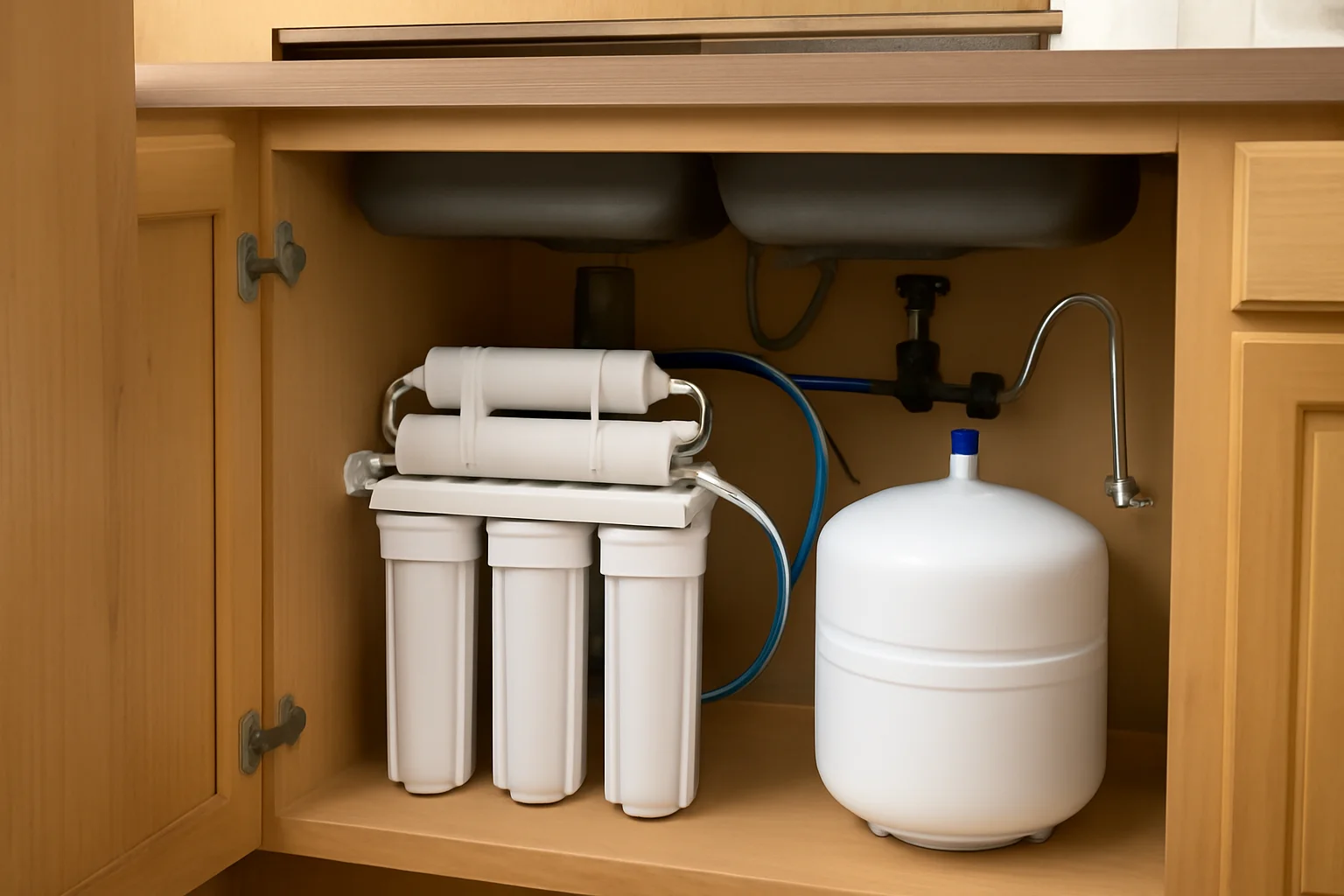
Reverse osmosis (RO) systems are built to give you cleaner, better-tasting drinking water. On 30A, FL, though, seasonal schedules, coastal water conditions, and long stretches of low use can combine to create problems that homeowners do not always expect. When an RO system is not performing at its best, the results show up in the kitchen, at the sink, and even in the shower.
This guide covers the most common causes of trouble with reverse osmosis systems near 30A, FL, with a special focus on how seasonal use affects water quality. You will also find practical prevention tips and clear signs it is time to call a professional like A Superior Mechanical for reverse osmosis installation, service, or replacement.
Why reverse osmosis systems can struggle during seasonal use
Many 30A homeowners use their homes as vacation properties. That means the RO drinking water system might run heavily for a few weeks, then sit idle for months. RO systems are not fragile, but they do rely on consistent conditions to keep filters, membranes, and storage tanks working the way they were designed to.
When an RO system sits unused, several issues can develop:
- Stagnant water in the system can contribute to off tastes or odors.
- Filters can load with sediments during periods of higher flow, then perform poorly when the system is restarted.
- Membranes can foul if water chemistry changes while the system is not being flushed regularly.
- Pressure and flow decline if the pre-filters are overdue or if the system has not been properly maintained.
Coastal areas can also experience changes in water demand and source water characteristics across seasons. Even when the city water supply remains within acceptable ranges, the blend of minerals and sediment can shift enough to matter to a membrane-based system.
Common causes of RO problems in 30A homes
1) Sediment and “sediment in household water” that overwhelms pre-filters
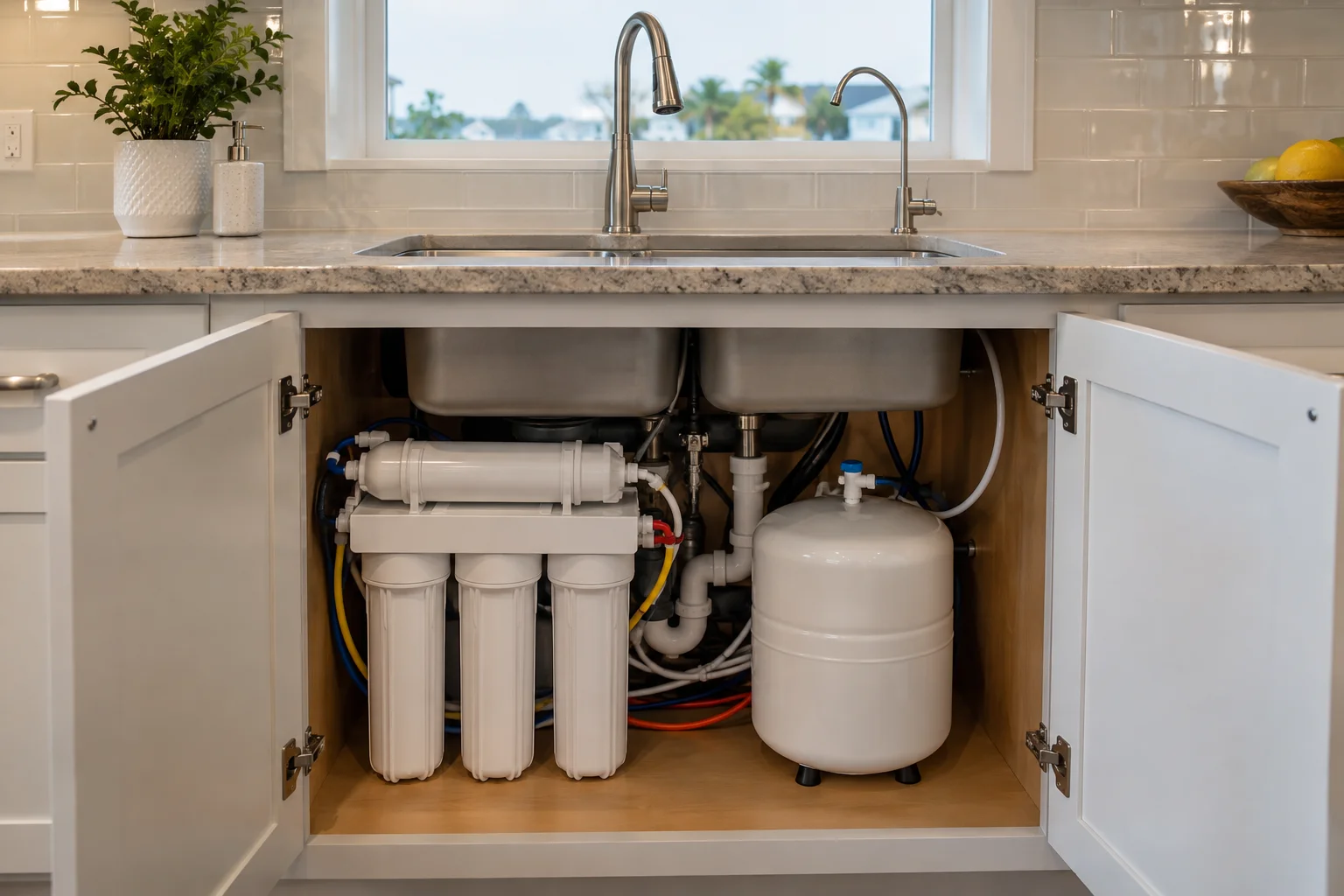
RO systems typically use a multi-stage filtration setup. The first stage often targets sediment and particulates to protect the membrane. If sediment is higher than usual, or if the pre-filters are overdue, the system may start letting more fine particles pass. Over time, that can lead to:
- Visible sediment or discoloration in drinking water
- Odor concerns that were not there before
- Reduced water clarity for cooking water and ice
- Faster wear on RO components, including the membrane
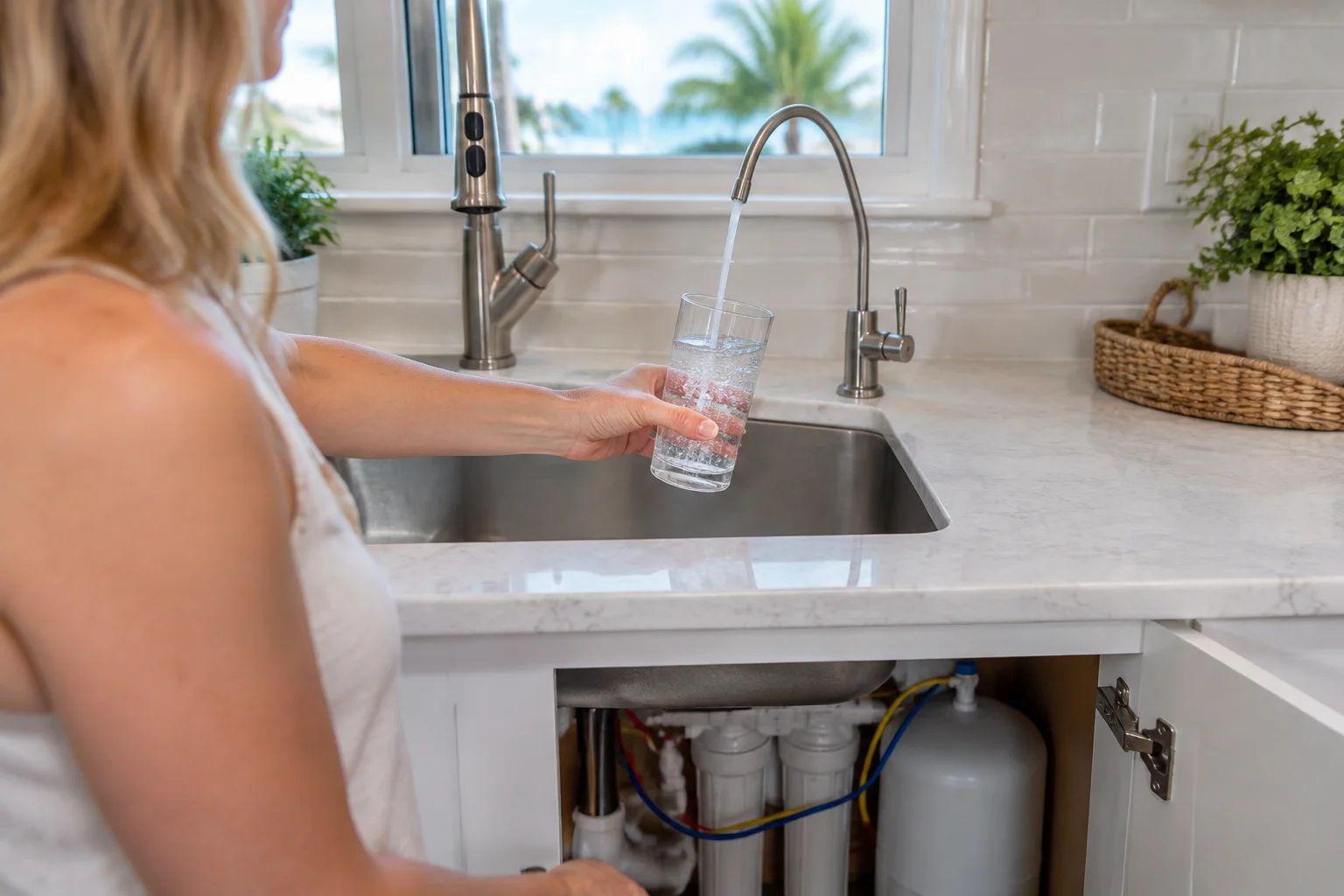
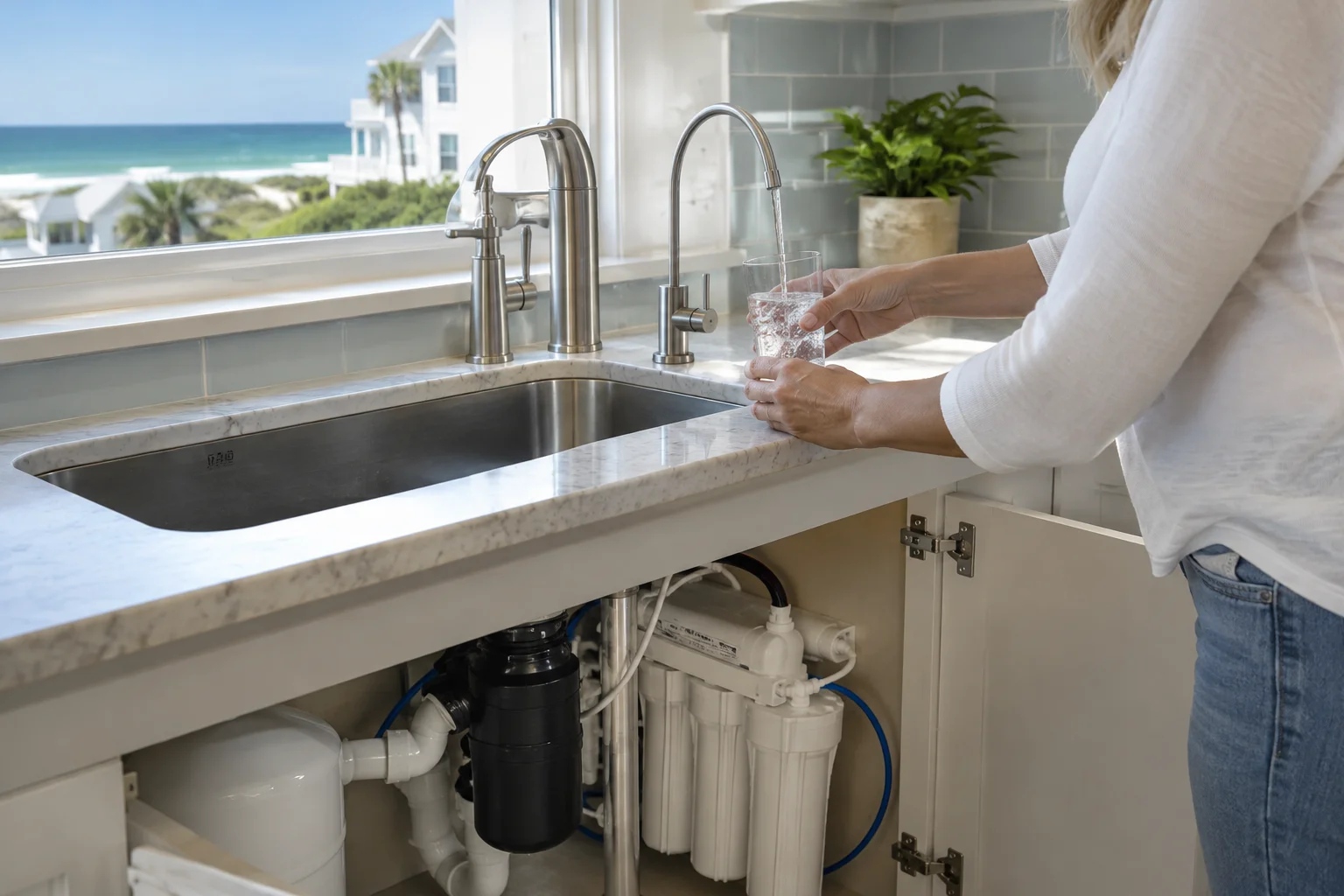
Homeowners often notice sediment issues first at the kitchen sink, especially when filling a glass from the RO faucet. If your home also shows scale buildup around faucets and fixtures, that is another clue that mineral content and water quality changes are impacting the system.
2) Hard water scale buildup around faucets, showerheads, and plumbing
Hard water can be a major factor in how an RO system behaves, even though RO removes many dissolved solids. In 30A homes, hard water is commonly associated with:
- Scale buildup on faucets, showerheads, and plumbing connections
- Hard water spots on glass after dishes or drinks dry
- Soap does not lather or rinse well
- Dry skin or dull hair after bathing
- Appliances wearing out faster due to mineral deposits
RO drinking water can still be excellent even when your overall home water is hard. However, scale can affect the rest of the plumbing, including supply lines that feed the RO system. In addition, if your RO system is paired with other filtration or water softening equipment, the balance between those systems matters.
For households where hard water is a daily challenge, many owners explore water softener service near me and consider an AO Smith water softener alongside RO drinking water. That combination helps protect fixtures and appliances while keeping kitchen water tasting clean.
3) Chlorine or taste issues that affect RO performance
Chlorine and other treatment byproducts can influence how RO membranes and carbon filters perform. If your water supply has noticeable changes across seasons, you might see:
- Metallic, chlorinated, or unpleasant taste in drinking water
- Poor tasting coffee and cooking water because the taste is carrying through from the water
- Cloudy ice cubes that look milky or cloudy in the freezer
Cloudy ice cubes can be caused by dissolved gases, mineral content, or fine sediment. When RO is functioning properly, ice should look clear and taste neutral. If ice looks cloudy, it is often a sign the system is not filtering as it should.
4) Filter and membrane aging from inconsistent use
RO components are designed around both time and usage. Seasonal living can create a mismatch: the system might be used intensely for a short period, then left idle. That can cause filters to load quickly during high-demand weeks, while the membrane may experience stagnation effects during off-season months.
Even if the calendar says filters are not “that old,” water quality issues can appear when the system is restarted. This is one reason homeowners looking for reverse osmosis system near me service often need scheduled maintenance that matches their actual usage patterns, not just generic timelines.
5) Low pressure or flow problems that reduce purification
RO systems depend on water pressure and correct flow rates. Seasonal changes in household demand, plumbing conditions, and equipment wear can influence performance. When pressure drops or flow becomes restricted, the system may not achieve the intended separation, which can result in:
- Less effective reduction of dissolved solids
- More frequent need to replace components
- Drinking water that tastes “off” compared to your usual standard
Low flow can also cause the storage tank to refill differently, which may affect how much water is available for drinking and cooking.
Signs your RO system is not keeping up
Homeowners do not always connect water quality changes to the RO system. The clearest signs usually show up in daily routines, especially in the kitchen and bathroom.
Kitchen and drinking water red flags
- Metallic, chlorinated, or unpleasant taste in water
- Poor tasting coffee and cooking water, even if you use the same beans or recipes
- Cloudy ice cubes that look different from normal
- Sediment in household water coming from the RO faucet
- Visible discoloration or unusual odor when you fill a glass
Bathing and household comfort changes
RO is mainly for drinking and cooking, but water quality affects the entire home experience. If RO performance drops or hard water is not addressed, you may notice:
- Dry skin or dull hair after bathing
- Soap does not lather or rinse well
- Scale buildup around showerheads and fixtures
Fixture and appliance wear clues
When water is not treated well, minerals and sediment build up where water evaporates or concentrates. Over time, you may see:
- Hard water spots on glass after washing dishes
- Scale buildup on faucets, handles, and sink edges
- Appliances wearing out faster, including coffee makers, kettles, and water-using appliances
How to handle seasonal start-up for RO systems on 30A
If your 30A home sits empty for weeks or months, a restart routine can protect your RO drinking water system and improve what you taste on day one. A Superior Mechanical can help you develop a plan, but here are homeowner-friendly steps to consider.
Before guests arrive
- Check the system for leaks under the sink and around connections.
- Turn on the cold water supply feeding the RO system.
- Flush water from the RO faucet according to the system’s manufacturer guidance. This helps clear stagnant water.
- Run water until taste and clarity improve if you notice any odor or cloudy appearance.
Because RO systems rely on filters and the membrane, flushing alone may not solve a cartridge that is already loaded or a membrane that is fouled. If water quality does not return to normal quickly, it is a strong sign you need maintenance.
During peak vacation use
- Use the RO faucet for drinking and cooking so you can keep track of water quality changes.
- Pay attention to ice quality. If ice turns cloudy, address it early.
- Keep an eye on taste. If coffee or cooking water tastes off, that is often the first clue.
Prevention and maintenance that keeps RO water tasting clean
RO system performance depends on maintenance that matches your water and your usage. For homeowners searching for clean water systems near me or reverse osmosis installation near me, the best approach is a service plan that includes:
1) Scheduled filter changes based on real conditions
Coastal water quality and sediment levels can change. Filters may need replacement sooner if you see sediment in household water, odor concerns, or taste changes. A technician can evaluate the system and recommend the right schedule for your household.
2) Membrane checks and performance testing
Membranes typically last longer when pre-filtration is doing its job. When homeowners delay maintenance, the membrane can foul. Professional testing can confirm whether the RO drinking water system is producing the quality you expect.
3) Protect the rest of the home with water softening when needed
RO helps your drinking water, but it does not replace whole-home treatment for mineral scale. If you are seeing scale buildup around faucets, showerheads, and plumbing, consider pairing RO with water softening. An AO Smith water softener is one option many homeowners explore for managing hardness. This can reduce scale, improve soap performance, and help protect appliances.
If you are also shopping for whole home water filtration, it can be worth comparing how sediment reduction and hardness control work together. Some families choose whole home water filtration to reduce sediment and improve overall water quality, while still using RO for drinking and cooking.
For homeowners who want better water for bathing and laundry, whole home strategies can also help with the “dry skin from hard water” problem and the dull-hair feel after showers.
Where AO Smith water filtration fits for 30A families
Many 30A households want a consistent, dependable path to better water. That often means combining technologies for different goals:
- Reverse osmosis for RO drinking water system quality, especially for drinking and cooking water.
- Water softening to reduce hardness related issues like scale buildup on faucets and hard water spots on glass.
- AO Smith water filtration solutions that help with taste, odor, and sediment reduction depending on the system configuration.
When you match the right treatment to the right problem, everyday life improves in ways you can feel. A kitchen scene in a 30A home might look like this: kids filling cups for lemonade, a pot of pasta simmering with better tasting water, and coffee that tastes more like the roast and less like the water. In the bathroom, it might mean a smoother rinse, less residue on the shower glass, and hair that does not feel weighed down.
What whole home water filtration can do alongside RO
Some homeowners assume RO fixes everything. It improves drinking water, but the rest of the home still receives the incoming water supply. If your water quality issues include sediment, discoloration, or noticeable odor in other taps, whole home water filtration can help.
Whole home filtration can be a good fit when you are seeing:
- Visible sediment or odor concerns at more than one faucet
- Frequent scale buildup on fixtures
- Soap does not lather or rinse well
- Dishwashing results that feel inconsistent
For homeowners searching for water filtration near me or clean water systems near me, it also helps to consider how whole home filtration reduces the burden on appliances and plumbing. That can extend the life of equipment and keep fixtures cleaner with less scrubbing.
Appliances and laundry: the hidden cost of poor water
RO systems focus on drinking water, but water quality affects laundry, dishwashing, and appliances in the background. When minerals and sediments are present, you may notice:
- Clothes that feel less fresh or that do not come out as soft
- Soap residue or streaking on glassware
- Appliances wearing out faster due to scale buildup
- Cooking water that impacts taste for soups, pasta, and vegetables
Families often notice these issues when they switch between “vacation mode” and “home mode.” During peak use, the RO system may seem fine, but if the home water is still hard or sediment-heavy, other areas of the home can show the strain.
Why local service matters on 30A and Walton County
30A homes are influenced by the local climate, coastal conditions, and the way vacation demand changes household water use. That can affect how quickly filters load, how often you need maintenance, and how you should approach seasonal start-up.
Choosing a local provider who understands 30A water treatment needs can help you avoid the guesswork. A Superior Mechanical serves Walton County and can evaluate your reverse osmosis system performance, recommend the right maintenance schedule, and help you decide whether you need additional equipment like water softening or whole home water filtration.
If you want a focused option for your property, you can explore reverse osmosis systems in 30A. For broader options, visit water filtration and RO water softeners. To learn about service across the region, see 30A service coverage and Walton County water treatment.
Helpful next steps for homeowners
If you are noticing metallic taste, cloudy ice cubes, or scale buildup around fixtures, it is worth taking action sooner rather than later. A small water quality problem can turn into bigger RO performance issues and faster wear on equipment.
Here are practical steps you can take today:
- Schedule an RO service visit if taste, odor, or clarity has changed.
- Plan maintenance around your calendar, not just generic filter timelines.
- Compare your RO results to the rest of your water. If other taps show sediment or odor, whole home filtration may be needed.
- Address hardness if you see dry skin from hard water, soap does not lather, or scale buildup on faucets and showerheads.
For more homeowner guidance, these reads can help you protect your system and improve daily water quality: Smart Plumbing Habits for Reverse Osmosis Systems in 30A Homes and Cleaner Drinking Water and Healthier Plumbing: A Rosemary Beach Homeowner’s Guide to Reverse Osmosis Systems. If you are also updating fixtures, consider What 30A Homeowners Should Know Before Replacing Plumbing Fixtures. For homes dealing with moisture and long-term plumbing protection, Plumbing Installation That Helps 30A Homes Stay Ahead of Water Damage is useful background.
Find Reverse Osmosis Systems in 30A, FL
If you need Reverse Osmosis Systems in 30A, FL, visit our local service page or contact A Superior Mechanical today.
For a broader look at whole-home water filtration, reverse osmosis, and water softener options, visit our water filtration, RO, and water softener page.
Map of 30A, FL
Frequently Asked Questions
Can seasonal vacation use cause reverse osmosis problems?
Yes. When an RO system sits idle, water can stagnate in the lines and storage tank, and filters or the membrane can perform less effectively when the system is restarted. Seasonal start-up flushing and timely maintenance help keep RO drinking water tasting clean.
Why would my RO water taste metallic or chlorinated even though I have an RO system?
Metallic or chlorinated taste can point to overdue carbon or pre-filters, changing source water conditions, or reduced RO performance from pressure or flow issues. A technician can test output and check the filtration stages to find the cause.
Is cloudy ice cubes a sign my reverse osmosis system needs service?
Often, yes. Cloudy ice cubes can mean the RO system is letting more dissolved solids or fine particulates through, or that the system is not producing water with the clarity you expect. If your ice looks different from normal, it is a good time to have the system inspected.
Will reverse osmosis fix hard water scale buildup on faucets and showerheads?
RO mainly improves drinking and cooking water. Scale buildup on faucets, showerheads, and plumbing is usually related to hardness in the home’s incoming water. Many homeowners pair RO with water softening or whole home water filtration to protect fixtures and appliances.
How do I know whether I need whole home water filtration or just RO for drinking water?
If taste, odor, sediment, or discoloration appears in more than just the RO faucet, whole home water filtration may be needed. If the issues are mostly limited to drinking and cooking, RO service or filter replacement may be the priority. A local water treatment evaluation can clarify which approach fits your 30A home.
Related Articles
- Smart Plumbing Habits for Reverse Osmosis Systems in 30A Homes
- What 30A Homeowners Should Know Before Replacing Plumbing Fixtures
- Plumbing Installation That Helps 30A Homes Stay Ahead of Water Damage
- Cleaner Drinking Water and Healthier Plumbing: A Rosemary Beach Homeowner’s Guide to Reverse Osmosis Systems
Photo Gallery