Seaside homes see salty air, humid days, and plenty of water use. That makes it easy to blame every plumbing problem on “coastal conditions.” But many everyday frustrations come from water quality, especially hard water. When mineral levels run high, homeowners often notice scale on faucets, soap that does not lather, and dull hair after bathing. The good news is that better water treatment helps you catch these problems early, so water softening services can protect your kitchen and bath water, your appliances, and the plumbing behind the walls.
If you are searching for water treatment near me or considering water softening services in Seaside, FL, this guide explains what to look for, what causes it, and how the right system can improve both comfort and performance.
Hard water shows up where you use water every day
Hard water usually means elevated minerals like calcium and magnesium. They do not just change the feel of water. Over time, they build up. In a Seaside kitchen, you might see it on glassware and in the sink. In the bathroom, it can show up around showerheads and faucet handles. On laundry day, it can affect how clean clothes feel and how well soap rinses.
Common signs that water softening is needed
Homeowners often notice multiple symptoms at once. Watch for:
Hard water spots on glass, especially after the dishwasher or when a drinking glass dries on the counter.
Scale buildup around faucets and showerheads, including whitish rings, rough textures, and clogged spray patterns.
Scale buildup on plumbing surfaces you cannot see, which can reduce flow and make water heaters and other appliances work harder.
Dry skin or dull hair after bathing, along with soap that does not lather or rinse well.
Metallic, chlorinated, or unpleasant taste in drinking water, plus odor concerns that make it harder to enjoy water straight from the tap.
Cloudy ice cubes, which can happen when water has mineral content, sediment, or an odor that carries into the freezing process.
Poor tasting coffee and cooking water, including flavors that seem “off” or water that does not behave the way it should in a kettle or saucepan.
Appliances wearing out faster, such as water heaters and dishwashers that seem to need repairs sooner than expected.
Visible sediment, discoloration, and odor concerns, especially at certain taps or after periods of plumbing disruption.
When these issues stack up, it is usually not just one problem. Many Seaside households benefit from combining water softening with whole home water filtration and, in some kitchens, a reverse osmosis system for drinking water. That combination helps you soften the water that touches fixtures and appliances while also improving taste, odor, and clarity for everyday drinking and cooking.
Why Seaside conditions make early detection more important
Walton County is known for coastal weather swings, humidity, and seasonal changes. Those conditions can affect how minerals precipitate and how quickly scale forms on surfaces. Even when the main source of hard water comes from the local water supply, the way water behaves in your home depends on factors like pressure, temperature, and how long water sits in pipes.
Homes near the coast also tend to have a lot of water use. Baths, outdoor rinses, laundry, and dishwashing all add up. If water quality problems are present, they show themselves sooner because you are using more hot and cold water across the day.
That is why homeowners looking for water treatment near me often benefit from a proactive approach: test, identify the mineral and contaminant profile, then match the solution. Waiting until everything looks “bad” usually means you have already started building scale inside plumbing and appliances.
How water softening actually helps your kitchen and bath
Water softening services are designed to reduce the minerals that cause hard water scale. Most systems use ion exchange to replace calcium and magnesium with sodium or potassium ions. When softened water flows through your home, it changes how soap performs, how water dries on surfaces, and how minerals deposit over time.
What softened water changes immediately
Soap that lathers and rinses better: Many people describe it as a noticeable difference in bathing and laundry within days. If you have been dealing with soap that does not lather, softening can help you use less product and get cleaner results.
Less scale buildup around faucets and showerheads: You will still see water spots from normal drying, but the heavy, chalky rings tend to reduce. That means less frequent scrubbing and fewer clogged showerheads.
Better feel for skin and hair: Dry skin from hard water and dull, rough-feeling hair after bathing are common complaints. Softened water can help you feel the difference because soap and shampoo work more effectively.
Cleaner dishes and glassware: The “film” that shows up after washing often improves when minerals are reduced. You may also notice less residue in kettles and coffee makers.
What softened water protects over months and years
Scale buildup is not just cosmetic. It forms on heating elements and inside pipes, which can reduce efficiency. When scale accumulates, appliances have to work harder to heat water and maintain performance. That is one reason homeowners notice appliances wearing out faster when hard water is untreated.
Softening also helps protect plumbing surfaces and reduces the strain on fixtures. For families, that can mean fewer interruptions and fewer repairs, especially in a busy Seaside household where hot water gets used constantly for showers, laundry, and cooking.
Better water treatment is often more than one system
When you see both scale and taste or odor concerns, you likely need a combined approach. Hard water minerals can cause scale, but other issues like chlorine taste in water, sediment, or fine particles can affect drinking water and kitchen performance.
That is why many Seaside homeowners choose a layered strategy that may include:
Water softening to reduce scale buildup around faucets, showerheads, and appliances.
Whole home water filtration to help with sediment and improve overall water clarity.
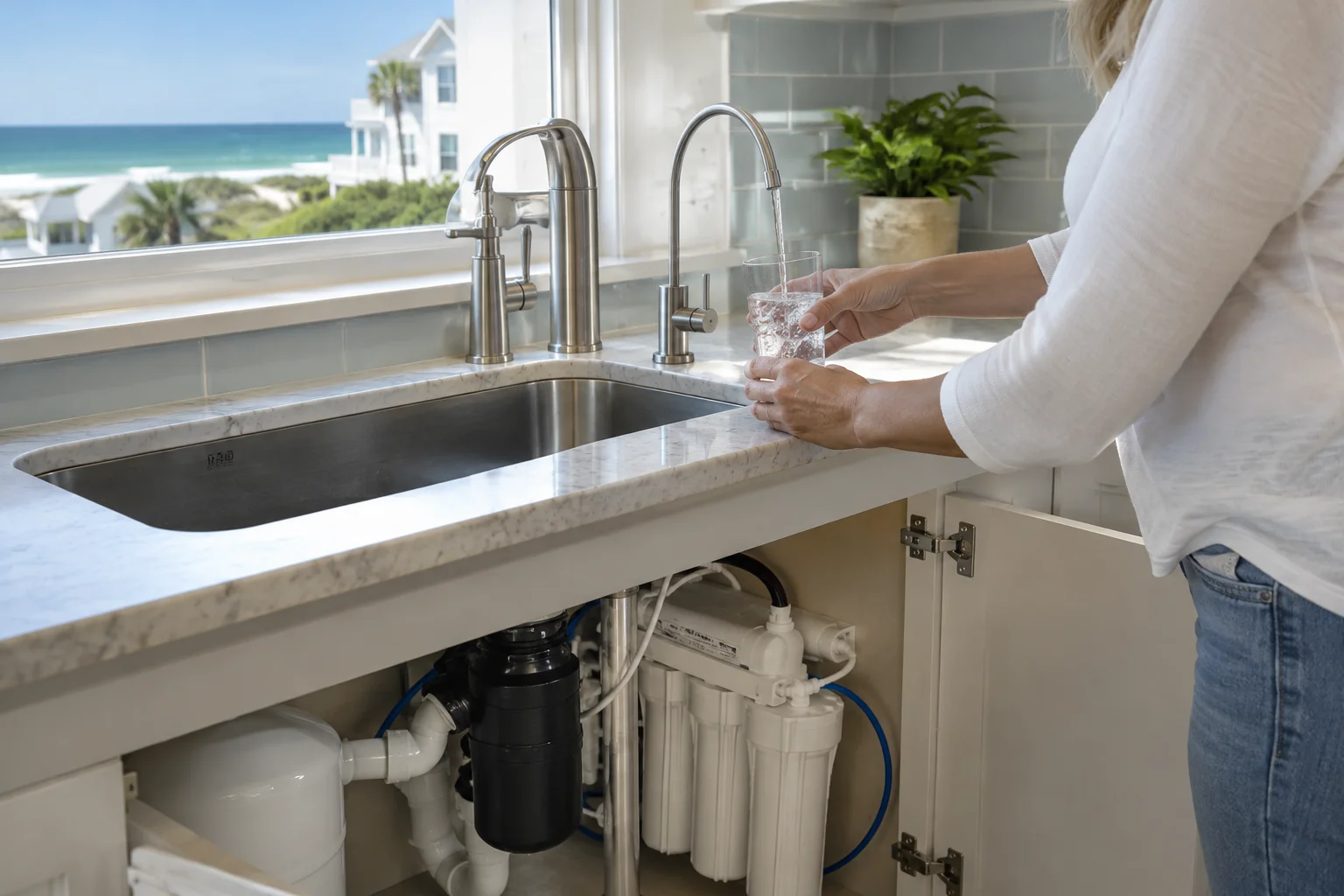
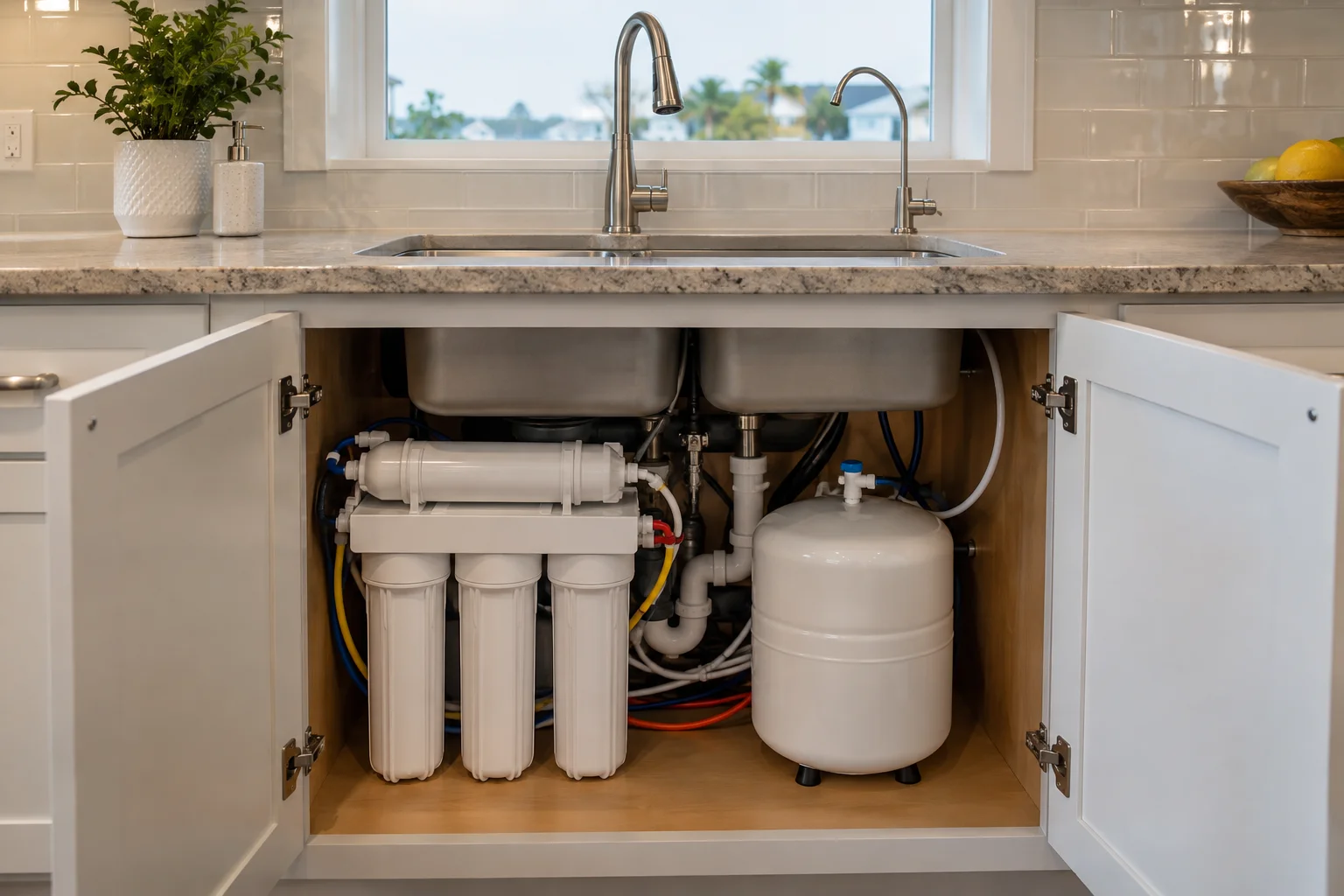
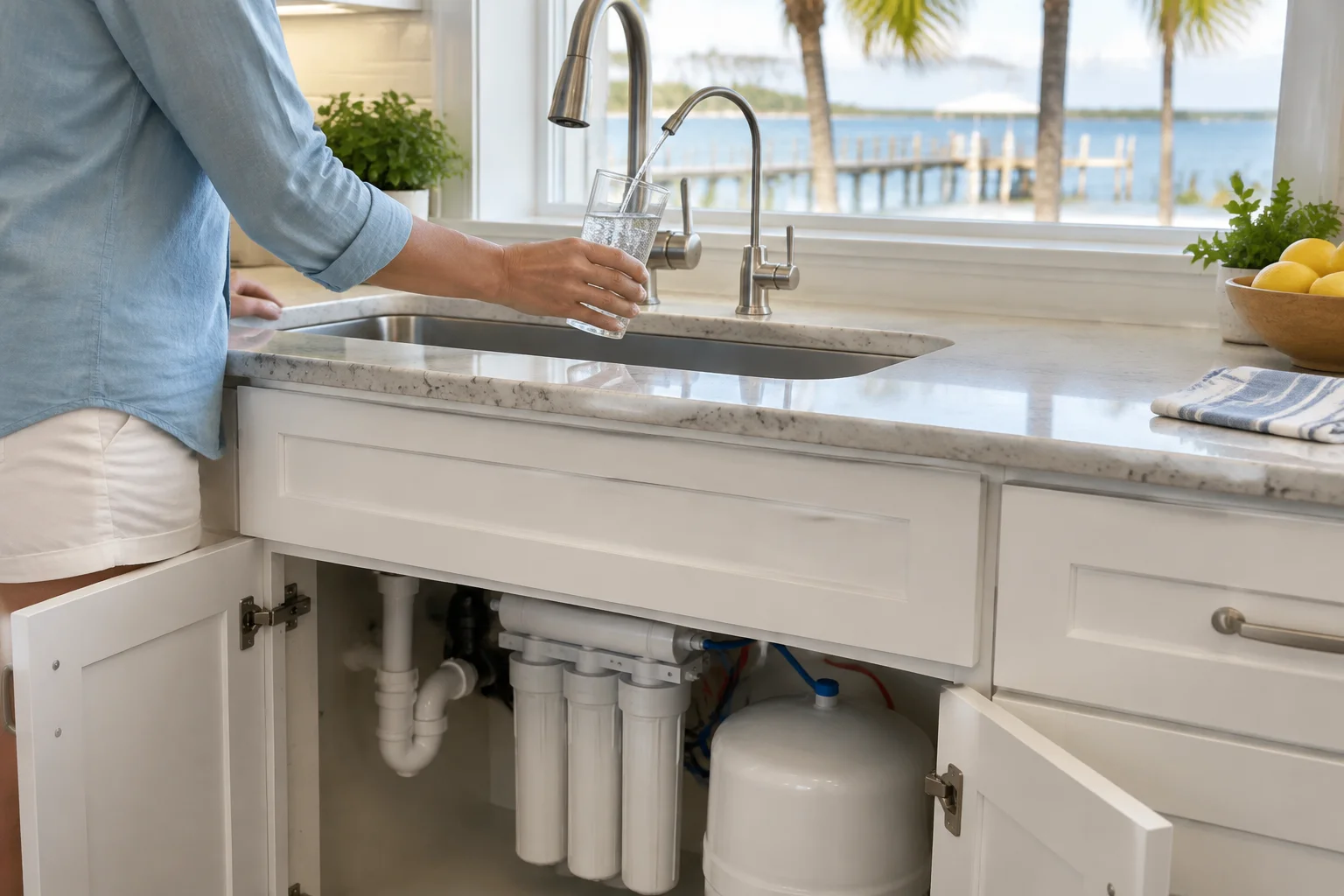
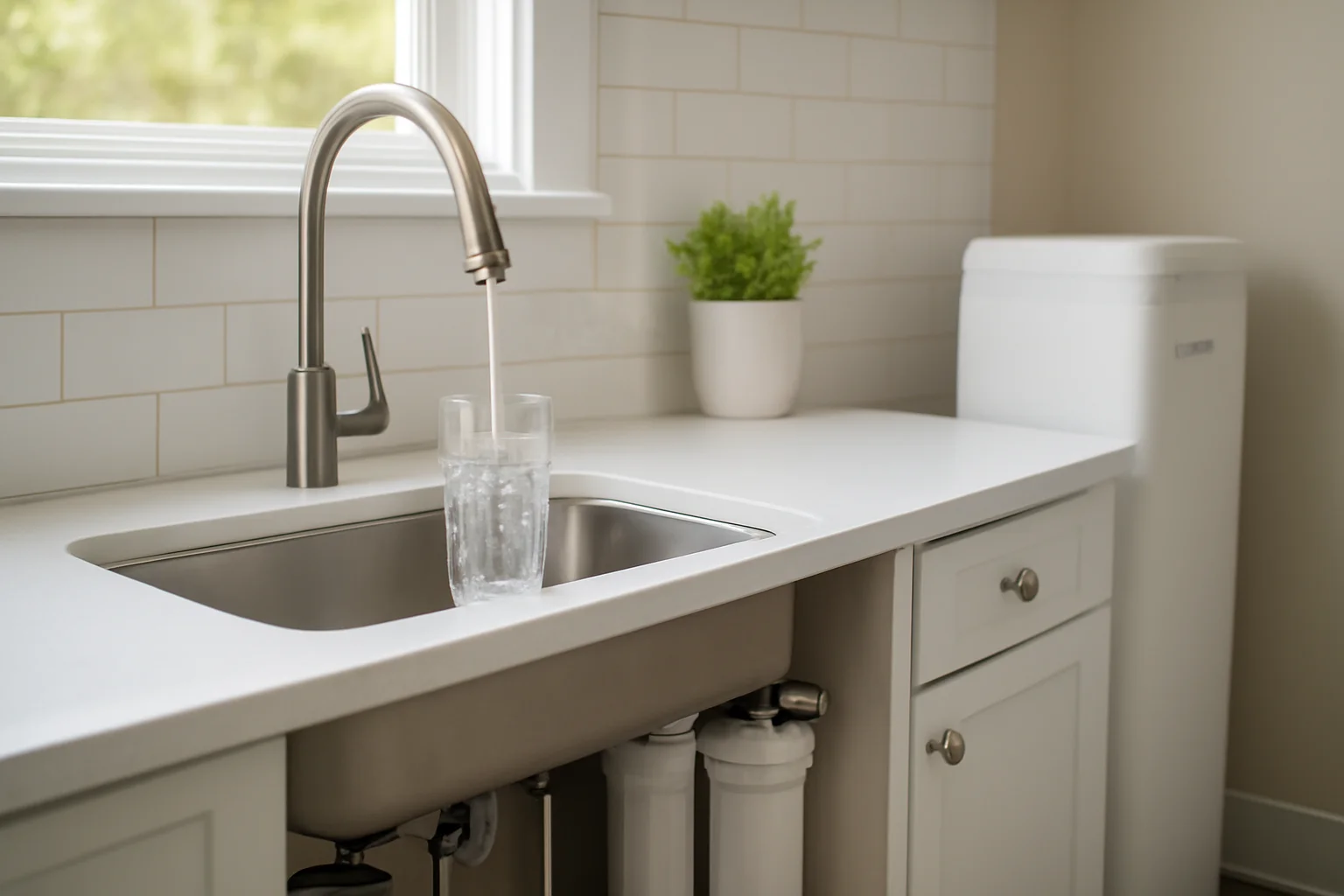
Reverse osmosis for drinking water and cooking water when you want the cleanest taste and best clarity.
AO Smith water filtration and whole home protection
A common path for homeowners is upgrading to AO Smith water filtration paired with softening. Whole home water filtration can help reduce sediment and help your home get more consistent water quality at every tap. That matters if you notice visible discoloration, odor concerns, or cloudy ice cubes. When filtration and softening work together, you can address both the mineral problem and the water clarity and taste concerns.
If you are comparing options for water softener installation near me or exploring water filtration and reverse osmosis systems, ask about how your home’s water chemistry will be handled at each stage. A good design prevents “double work” where one system is forced to compensate for another.
Reverse osmosis for better drinking and cooking water
Softened water can feel better and reduce scale, but drinking and cooking water often call for additional treatment. A reverse osmosis installation near me can be an excellent choice when you want better water for drinking and cooking, especially if you have metallic tasting water, chlorine taste in water, or odor concerns.
Many families notice the difference right away in the kitchen. Coffee tastes more balanced, tea tastes cleaner, and cooking water behaves more predictably. If your ice cubes are cloudy, reverse osmosis can help improve clarity and overall taste.
Catch problems early with a simple monitoring routine
You do not need lab equipment to spot early warning signs. You do need a consistent routine so you can notice patterns, not just one-off issues. Here are practical checks you can do in a Seaside home:
1) Track scale and spotting on specific fixtures
Pick two or three fixtures you use often, such as a bathroom faucet and the kitchen sink sprayer. Photograph them every couple of weeks. If you start seeing scale buildup around faucets and showerheads faster than before, it may indicate the softener is not regenerating properly or that water conditions have changed.
2) Pay attention to soap behavior
If you have been dealing with soap does not lather and rinse well, that is a strong indicator that minerals are interfering with cleaning. It can also impact laundry, leaving clothes feeling stiff or not fully clean.
3) Check drinking water cues
Notice metallic tasting water, chlorine taste in water, or unpleasant odor concerns. Cloudy ice cubes and sediment in a glass can also point to filtration needs, not just softening. If you see discoloration, do not ignore it. That is a sign to test and address the source.
4) Watch appliance performance
When water heaters, dishwashers, and coffee makers start acting sluggishly, scale may be involved. Early detection can help you avoid premature repairs. This is one reason many homeowners searching for water treatment near me choose ongoing water management rather than waiting for a failure.
Common causes behind “sudden” water quality changes
Sometimes water issues appear after a change in the home. When that happens, homeowners often assume the problem is temporary. In reality, it can reflect a system that needs tuning or service.
Possible causes include
The water softener is not regenerating on schedule or the settings are outdated.
Salt levels are low, which can reduce softening effectiveness.
Iron or sediment is entering the home, contributing to discoloration or odor concerns.
Plumbing changes, such as repairs or construction, stirred up sediment.
Water demand patterns changed, such as more laundry or guest stays, revealing issues that were previously less noticeable.
If you want to understand what is happening, a professional water test and system inspection can pinpoint whether you need water softener service, filtration upgrades, or both.
Water softener service and maintenance that keeps improvements consistent
Installing a system is only the start. Consistent results depend on correct settings, clean components, and proper regeneration. That is especially important in coastal climates where water use patterns and household demands can fluctuate.
When you schedule water softener service near me, ask the technician to check:
Regeneration timing and water hardness readings
Salt level and brine tank function
System condition, flow rates, and any signs of buildup
Whether whole home filtration or reverse osmosis needs attention
For families, maintenance is about keeping everyday routines steady. You want the shower to feel good, the dishwasher to clean reliably, and drinking water to taste right without constant spot cleaning.
How to choose a water softening and filtration setup for your Seaside home
Every household has different priorities. Some families focus on skin and bathing comfort. Others care most about coffee and cooking water. Many want to stop scrubbing scale buildup on faucets and showerheads. The best system matches your water quality and your lifestyle.
Consider your top goals
Kitchen and bath comfort: Softening helps reduce dry skin from hard water and improves soap performance.
Cleaner fixtures: Softened water reduces scale buildup around faucets and showerheads.
Better drinking water taste: Whole home filtration and reverse osmosis can help reduce metallic tasting water, chlorine taste in water, and odor concerns.
Clearer ice and better coffee: RO can improve clarity and taste, especially if you have cloudy ice cubes or poor tasting coffee water.
Appliance longevity: Reduced scale can help appliances wear out slower.
Look for a local service partner
Choosing a company that regularly supports Walton County families matters. Local water treatment service understands how homes are laid out, how utilities are used, and how to design systems that fit real Seaside needs. You can explore coverage and service options through Seaside service areas and Walton County service coverage.
If you are ready to move forward, you can start with the dedicated page for water softening services and then review how filtration and RO work together on the main water filtration and reverse osmosis landing page.
Real life examples: what better water looks like for a Seaside family
Think about a typical weekday routine. A teenager showers after the beach. Laundry runs because towels and swimwear are always in the mix. Then dinner happens, and the kitchen needs water that tastes clean for cooking. If your water is hard, the shower can leave skin feeling dry, shampoo can feel like it is not rinsing fully, and soap does not lather. In the kitchen, dishes can come out with a film, and coffee can taste flat or off. In the bathroom, scale buildup around faucets and showerheads can turn into a weekly cleaning chore.
When the right water treatment plan is in place, those scenes change. Softened water makes soap and shampoo work better. Whole home filtration can reduce sediment and improve water clarity. Reverse osmosis can make drinking water and cooking water taste cleaner, and ice cubes can freeze clear instead of cloudy. Over time, appliances run more efficiently because scale buildup is reduced.
When to call a professional water treatment technician
Some homeowners try to scrub and descale for months. That can help the surface, but it does not address what is building inside pipes and appliances. Call a professional when you notice:
Scale buildup around faucets and showerheads that keeps returning quickly
Persistent soap does not lather issues, dry skin from hard water, or dull hair after bathing
Metallic tasting water, chlorine taste in water, or odor concerns that affect drinking
Cloudy ice cubes, visible sediment, or discoloration
Appliances wearing out faster, reduced hot water performance, or frequent maintenance
A technician can test your water, review system performance, and recommend water softener service, whole home water filtration, or reverse osmosis installation based on what is actually in your water.
For more local guidance, you may also find these helpful: Cleaner Water, Clearer Living in Seaside: How Better Treatment Helps With Spots, Scale, Taste, and Odor, Keeping Seaside Homes Running Smoothly with Better Waterline Care, and Practical Plumbing Advice for Seaside Homeowners Living Near the Coast.
Find Water Softening Services in Seaside, FL
If you need Water Softening Services in Seaside, FL, visit our local service page or contact A Superior Mechanical today.
For a broader look at whole-home water filtration, reverse osmosis, and water softener options, visit our water filtration, RO, and water softener page.
Map of Seaside, FL
Frequently Asked Questions
Will a water softener fix hard water spots on glass and scale on faucets?
Yes, water softening is designed to reduce calcium and magnesium minerals that cause scale buildup around faucets and spots on glassware. You will still get water spots from normal drying, but the chalky, heavy buildup usually improves when the softener is working correctly.
Why do I still notice bad taste or odor even if I already have a softener?
A softener focuses on hardness. Taste and odor can be caused by chlorine taste in water, sediment, or other contaminants that require filtration. Many Seaside homeowners use whole home water filtration or a reverse osmosis system for drinking water and cooking water.
How do I know if I need reverse osmosis for drinking water?
If you have metallic tasting water, chlorine taste in water, cloudy ice cubes, or poor tasting coffee water, reverse osmosis can help improve clarity and flavor. A water test helps confirm whether RO is the right match.
How often should water softener service be scheduled in Seaside?
Many homeowners benefit from at least annual inspection and performance checks. If you notice changes like faster scale buildup around showerheads, soap does not lather, or inconsistent softening, schedule service sooner.
Can AO Smith water filtration work with water softening?
Often, yes. AO Smith water filtration can pair with water softening to address multiple water issues, such as sediment and overall water clarity, while softening helps protect fixtures and reduce scale buildup.
Related Articles
- Practical Plumbing Advice for Seaside Homeowners Living Near the Coast
- Cleaner Water, Clearer Living in Seaside: How Better Treatment Helps With Spots, Scale, Taste, and Odor
- Keeping Seaside Homes Running Smoothly with Better Waterline Care
- Reading the Warning Clues in Seaside Homes Before a Panel Upgrade Becomes Urgent
Photo Gallery