Between beach humidity, coastal landscaping, and the way water moves through local plumbing, many 30A homeowners end up dealing with hard water. The results show up everywhere: hard water spots on glass, soap that does not lather, and scale buildup around faucets and showerheads. Over time, scale can shorten the life of appliances and make cleaning more frustrating. The good news is that water softening can noticeably improve water quality across your home, from drinking and cooking water to laundry and bathing comfort.
Why 30A homes feel hard water in everyday life
Hard water is not just an inconvenience. It is water with high mineral content, especially calcium and magnesium. When that mineral-rich water heats up or evaporates, it leaves deposits behind. On 30A, where many homes are close to the water table and built with a mix of older plumbing runs and newer fixture upgrades, those deposits can build up quickly.
You may recognize hard water by what you see and feel:
- Hard water spots on glass, dishes, and fixtures, even after you wipe and rinse
- Scale buildup on faucets, showerheads, and plumbing lines
- Dry skin or dull hair after bathing, plus a film that feels like residue
- Soap does not lather and rinses poorly, so you use more product
- Metallic, chlorinated, or unpleasant taste in drinking water or cooking water
- Cloudy ice cubes or cloudy appearance that makes coffee taste off
- Visible sediment, discoloration, and odor concerns
- Appliances wearing out faster because mineral scale reduces efficiency and stresses heating components
If you have ever watched a water heater recovery time slow down or noticed that your dishwasher leaves a cloudy look on glass, that is often the same mineral problem working in the background. Water softening addresses the hardness that drives scale buildup, so your fixtures stay cleaner and your home water system runs more efficiently.
What water softening actually does to improve water quality
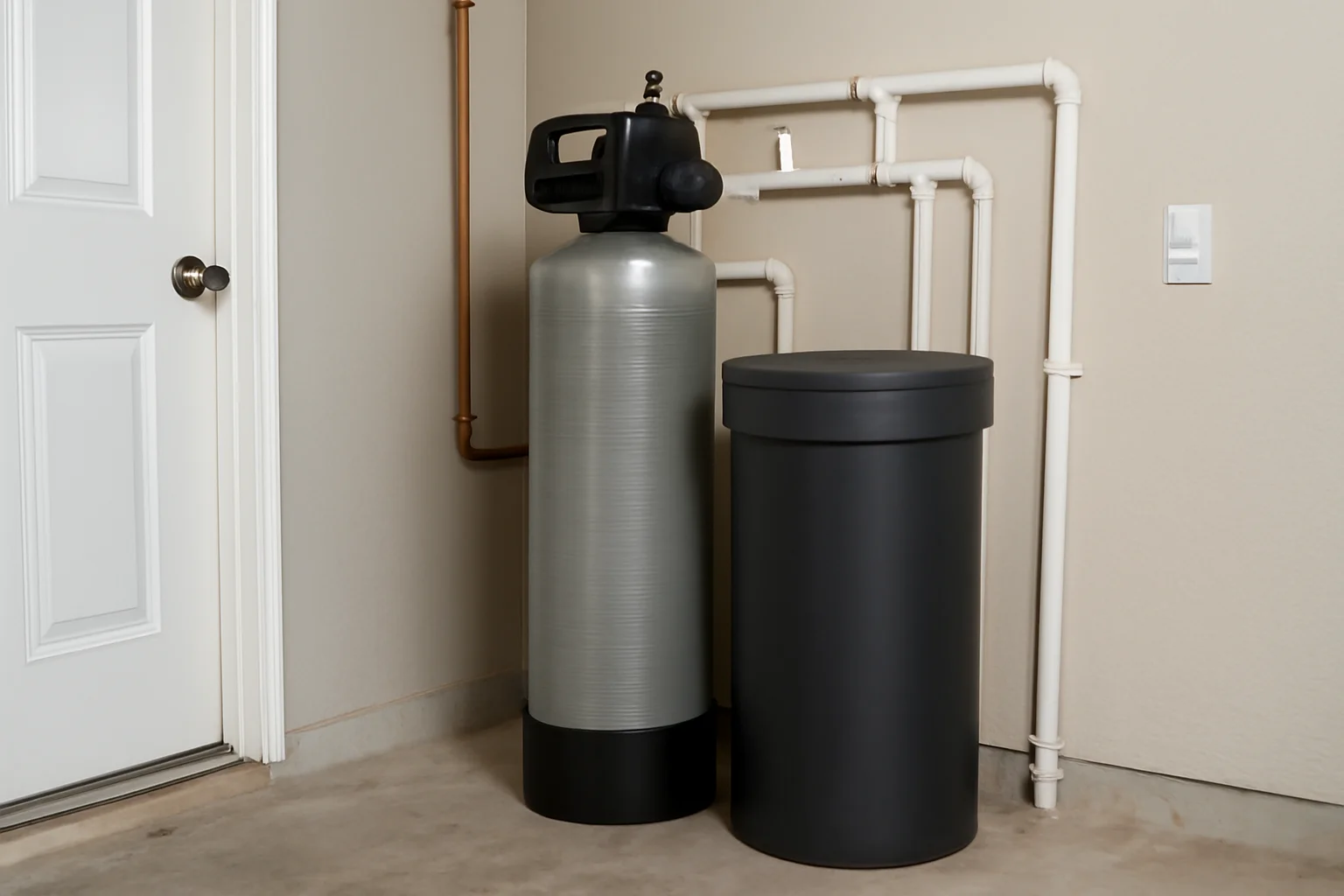
Water softening is designed to reduce hardness minerals before they reach your plumbing and appliances. Most residential systems use ion exchange to replace calcium and magnesium with sodium or potassium ions. The result is water that behaves differently in your home.
That difference matters for daily routines:
- Better water for drinking and cooking starts with improved overall water feel. If you are also dealing with taste or odor concerns, pairing softening with the right filtration approach can make a bigger impact.
- Bathing feels better because water is less likely to leave a mineral film. Many homeowners notice softer skin and hair after switching to softened water.
- Laundry gets cleaner because detergent works more effectively when it can lather and rinse well.
- Fixtures stay looking new with less scale buildup around faucets and showerheads.
- Appliances last longer because mineral scale forms more slowly on heating surfaces and internal components.
For families on 30A, that can mean fewer “why does this keep happening?” moments during vacation rental turnovers, weekend cooking marathons, and everyday showers after a day at the beach.
Water softening vs. water filtration: two different jobs
Homeowners often search for “water filtration near me” and “home water purification near me” expecting one solution to handle everything. In reality, hard water, taste, odor, and sediment concerns can come from different sources. Softening targets hardness minerals. Filtration targets other contaminants and particles.
Here is how the pieces fit together:
Water softening focuses on hardness
It reduces calcium and magnesium that cause scale buildup on plumbing, showerheads, and faucets. It also helps detergents work better, which is why you may see soap that does not lather become a problem of the past.
Water filtration improves water clarity, taste, and odor
Whole home water filtration can help with sediment, discoloration, and unpleasant tastes. If you have cloudy ice cubes or poor tasting coffee and cooking water, filtration may be part of the answer. Some systems also use carbon-based treatment or additional media stages to address taste and odor.
Reverse osmosis can be a targeted upgrade for drinking water
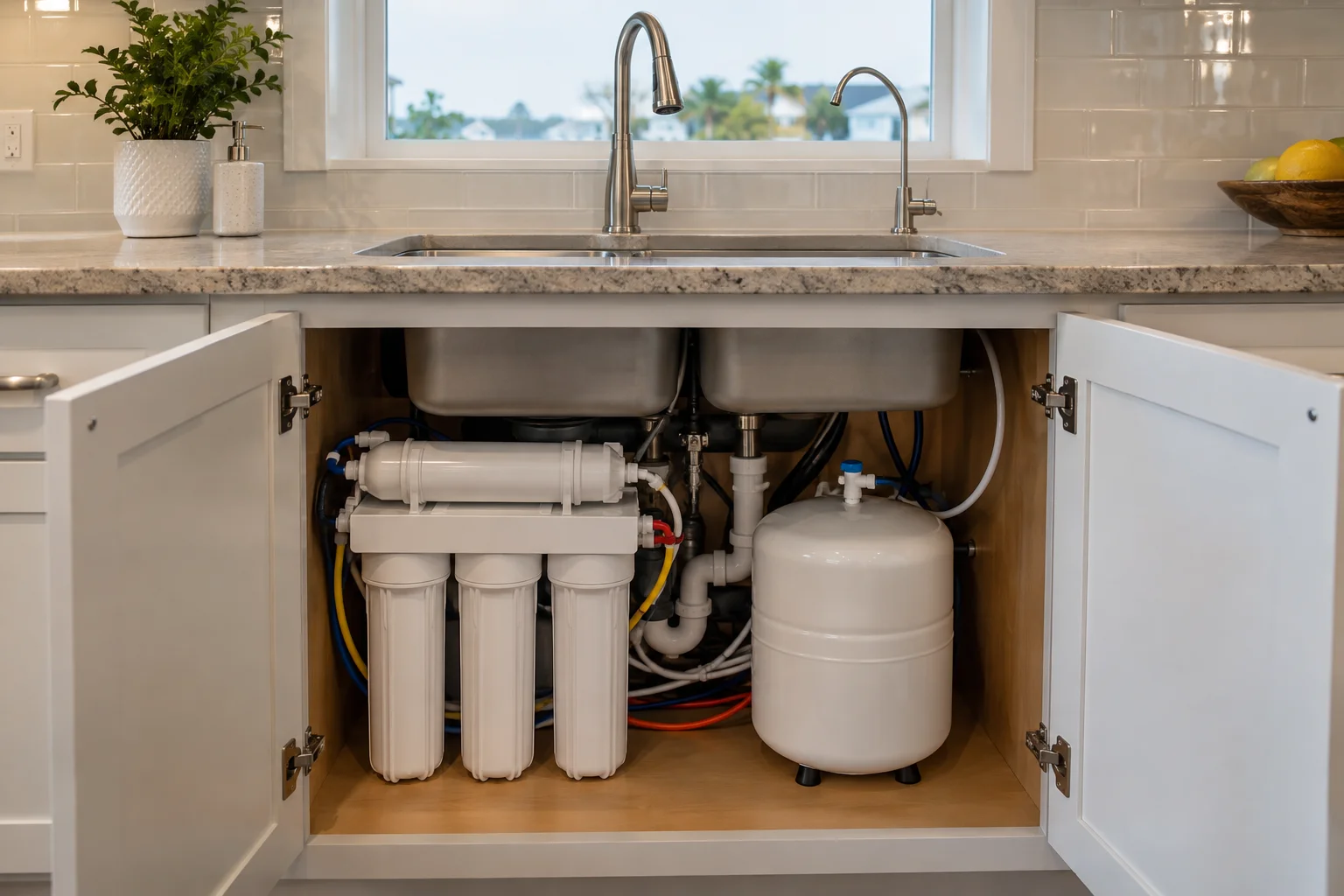
Reverse osmosis is commonly used for drinking water and ice because it can reduce a broad range of dissolved contaminants. If you are searching for reverse osmosis installation near me, it is usually best when paired with a plan that also handles hardness and protects the system from scaling. That is where coordination between softening and filtration matters.
If you are considering AO Smith water filtration options, talk with a water treatment professional about how your water softener and filtration equipment should work together. The goal is not only better water, but also fewer service calls and less wear on your equipment.
Signs your 30A home would benefit from a water softener
Hard water problems often start small and become routine. You may not notice the long-term effect until you see buildup everywhere.
Scale buildup becomes the “background noise”
Look closely at:
- Faucet aerators and showerhead nozzles
- Water heater and hot water lines (signs of reduced performance)
- Glassware and shower doors after cleaning
If your fixtures keep developing a chalky film, that is a strong clue that hardness is making itself at home.
Cleaning takes longer than it should
Hard water spots on dishes, a film on countertops near sinks, and soap that does not lather are all classic symptoms. You may find yourself using more detergent and still feeling like laundry is not getting that “fresh” finish.
Skin and hair do not feel as good after showers
Dry skin or dull hair after bathing is a common complaint. Softened water can reduce the mineral residue that contributes to that “tight” feeling.
Drinking and cooking water tastes or looks off
Some homeowners describe metallic tasting water, cloudy ice cubes, and poor tasting coffee and cooking water. While filtration is often the primary fix for taste and odor, hard water can still make water feel harsher and can contribute to scale in point-of-use equipment.
How to choose the right water softener for a 30A home
A Superior Mechanical helps homeowners match equipment to real water conditions, not guesswork. The right system size and setup depend on your household water use, plumbing layout, and how hard your water is.
When planning your water softening service, expect these factors to matter:
- Water hardness level measured from a local water test or lab analysis
- Household size and usage, including showers, laundry frequency, and dishwasher habits
- Whether you have a vacation rental, where high turnover can change water demand
- Existing filtration, including whether you already have a whole house water filter or sediment pre-treatment
- Plumbing configuration, such as the location of the water heater and how far hot water travels
Many homeowners benefit from combining softening with whole home water filtration near the point where water enters the house. That approach supports clean water systems that protect fixtures and appliances while also improving clarity and taste. If you are interested in a whole house water filter strategy, explore the water filtration options here: /water-filtration-ro-water-softeners.
Whole home water filtration plus softening: a practical setup for 30A
In Walton County, homes can have different plumbing ages and different exposure to sediment or taste issues. A coordinated system can make your water treatment feel seamless, not like a patchwork of separate devices.
A common approach looks like this:
- Whole home water filtration to reduce sediment, discoloration, and odor concerns before water reaches fixtures and appliances
- Water softening to reduce scale buildup on faucets, showerheads, and internal plumbing surfaces
- Reverse osmosis for drinking water and ice, if you want the most refined drinking water quality
For families who plan meals around what is in the glass and what is in the coffee maker, this kind of setup can help. It can also reduce the frustration of cloudy ice cubes and the “why does this taste metallic?” feeling during summer gatherings.
Maintenance that keeps softened water working well
A water softener is not a set-it-and-forget-it appliance. Regular maintenance helps it keep performing and prevents issues that can show up as new taste or performance problems.
Homeowners can watch for a few practical signals:
- Mineral scale returning on faucets or showerheads
- Detergent starting to feel less effective
- Changes in water taste or odor, which can indicate a filtration stage needs attention
- Salt or system settings not aligning with household use
For many 30A homes, seasonal occupancy matters. A vacation rental may sit empty between weekends, then get heavy use during peak season. That pattern can impact how you monitor regeneration cycles and salt levels. A professional service plan helps keep the system tuned for your schedule.
If you are also dealing with older fixtures, it can help to understand how water quality affects them. Pair your water treatment upgrades with smart fixture maintenance by reading What 30A Homeowners Should Know Before Replacing Plumbing Fixtures.
Protect your appliances and plumbing from the hidden cost of hard water
Hard water scale is not just visible. It builds up inside water heaters, washing machines, dishwashers, and any equipment that heats or uses water repeatedly. Over time, that buildup can reduce efficiency and increase energy use.
Homeowners often notice:
- Hot water recovery seems slower
- Appliances run longer to get the same results
- Cleaning takes more time because residue keeps returning
Water softening can reduce the scale that drives those problems. When hard water treatment becomes part of protecting fixtures and appliances, your home water system tends to run more smoothly for longer.
For 30A homeowners who want to go beyond water softening and reduce future water damage risks, this guide can help: How Water Softening Protects Rosemary Beach Plumbing from Costly Water Damage.
Getting help for water softening and water filtration in 30A
Choosing the right system depends on your water and your home layout, especially in Walton County where local conditions and plumbing variations can affect the best approach. Working with a local water treatment team matters because they know what homeowners in 30A are dealing with and can recommend equipment that fits real usage patterns.
If you are ready for professional water softening in 30A, FL, you can review the service area here: /service-areas/walton-county/30a/water-softening-30a-30A. You can also browse the broader coverage for Walton County at /service-areas/walton-county and see how A Superior Mechanical supports local homeowners at /service-areas/walton-county/30a.
Many homeowners also pair softening with smarter system planning for filtration equipment. If you are considering reverse osmosis installation, it helps to think about plumbing habits that protect your investment. This post is a good companion: Smart Plumbing Habits for Reverse Osmosis Systems in 30A Homes.
What to ask during a water treatment consultation
When you talk with a professional about water softeners and whole home water filtration near me, ask questions that connect the equipment to your results:
- What hardness level do you expect for my home and what test should we use?
- Will a water softener alone fix the scale, or do we need whole home filtration too?
- If I want better drinking water and cooking water, is reverse osmosis recommended for my setup?
- How do we protect appliances from scale while improving taste and odor?
- What maintenance schedule fits a 30A household or vacation rental?
Those answers help you build a clean water system that supports the way you live, cook, bathe, and clean in 30A.
How better water changes the feel of a 30A home
Picture a typical day: the kitchen is busy, you are brewing coffee, and someone is rinsing dishes after lunch. Later, kids shower after the beach, and laundry runs again because summer sand never fully comes off the first wash. With hard water, that day is filled with small irritations: spots on glass, soap that does not rinse clean, and a shower that leaves skin feeling dry.
When water softening and the right filtration support your home, those irritations shrink. You get fewer hard water spots on dishes and fixtures. Your soap lathers and rinses more easily. Your shower feels more comfortable. Your appliances work with less scale in the background. And when you upgrade the drinking water side with reverse osmosis or whole home filtration, you often notice the difference in taste, clarity, and how ice and coffee come out.
A Superior Mechanical provides professional water softening in 30A, FL for homes, vacation rentals, and commercial properties dealing with hard water across Walton County. If you are searching for water filtration near me or a whole house water filter solution, start by addressing hardness with the right water softener and then build a clean water plan that fits your goals for better drinking water and everyday comfort.
Find Water Softening in 30A, FL
If you need Water Softening in 30A, FL, visit our local service page or contact A Superior Mechanical today.
For a broader look at whole-home water filtration, reverse osmosis, and water softener options, visit our water filtration, RO, and water softener page.
Map of 30A, FL
Frequently Asked Questions
Will a water softener remove metallic or chlorinated taste from drinking water in 30A, FL?
A water softener mainly targets hardness minerals that cause scale. For metallic tasting water, chlorinated taste, or odor concerns, whole home water filtration and sometimes reverse osmosis for drinking water can be the better match. A professional water test helps determine the right combination.
How do I know if my problem is hard water or something else like sediment or odor?
Hard water usually shows up as scale buildup on faucets and showerheads, hard water spots on dishes, and soap does not lather well. Sediment, discoloration, and odor concerns point toward filtration needs. Many homes benefit from both softening and whole home water filtration.
Can reverse osmosis installation near me work well in a home with hard water?
It can, but it is important to protect the system from scale. Many homeowners pair reverse osmosis with water softening so the RO unit has less mineral buildup and performs more reliably over time.
How often should a water softener be serviced in a 30A household or vacation rental?
Service needs vary by water conditions and usage. A typical approach includes periodic checks of settings, salt levels, and system performance, especially for vacation rentals where occupancy changes seasonally. A local water treatment provider can recommend a schedule based on your household pattern.
What brands or system types does A Superior Mechanical install for water softening and filtration?
A Superior Mechanical can help homeowners evaluate water softeners and filtration options, including AO Smith water filtration solutions when appropriate. The best choice depends on your water test results and whether you want whole home water filtration, reverse osmosis for drinking water, or both.
Related Articles
Photo Gallery