Grayton Beach homeowners often ask why their water feels different from a neighbor’s, even when both homes are close by. The answer usually comes down to local water conditions in Walton County, how your plumbing was built, and how quickly scale forms as water moves through your home. Whether you live in an older beach cottage or a newer build near 30A, the right water softening and water filtration setup can make daily life easier and help protect plumbing, fixtures, and appliances.
Grayton Beach water conditions and why they matter for softening
In the Grayton Beach area, many homes experience hard water. Hard water is typically high in dissolved minerals, most commonly calcium and magnesium. Those minerals do not disappear when water enters your home. Instead, they stay in solution until water changes temperature or evaporates, leaving mineral deposits behind.
As a result, homeowners notice familiar problems: hard water spots on glass, scale buildup on faucets and showerheads, and rings or haze on dishes. Over time, that same mineral content can contribute to visible sediment, discoloration, and odor concerns. It can also show up as poor tasting coffee and cooking water, especially when chlorine taste in water or other treatment byproducts are present.
Even if you only see the symptoms in the bathroom and kitchen, the cost shows up elsewhere. Appliances that heat and spray water, such as water heaters, dishwashers, and washing machines, can wear out faster when mineral scale builds up inside them.
Older homes: more time for scale to build up
Older Grayton Beach homes can have plumbing layouts and materials that make hard water issues feel stronger. Even when the incoming water is the same for the neighborhood, what happens after it enters your home can vary based on pipe type, fixture design, and how long water sits in lines before use.
Here are common ways hard water becomes more noticeable in older homes:
More scale buildup on fixtures over time. If faucets, showerheads, and aerators have seen years of mineral exposure, you may see stubborn buildup that is hard to remove.
Soap does not lather or rinse well. Hard water reacts with soap, so you may end up using more product and still feel like clothing and skin are not getting fully clean.
Dry skin from hard water and dull hair. Many homeowners describe dry skin or dull hair after bathing when minerals reduce how well soap and shampoos rinse away.
Clogged or restricted flow points. Scale can narrow openings inside showerheads and valves, leading to weaker flow and uneven spray.
Older homes also tend to have more “touch points” where water changes direction or sits briefly, which can encourage mineral deposits. That is why homeowners searching for water filtration near me often end up needing more than a single quick fix. A coordinated approach, usually starting with water softening and followed by whole home filtration and optional reverse osmosis for drinking water, is often the most effective.
Newer homes: different plumbing, still the same mineral load
Newer Grayton Beach homes often include updated materials, modern fixtures, and improved installation practices. That can reduce some problems, but it does not eliminate hard water. If your incoming water is mineral-rich, scale formation is still possible even in freshly built plumbing.
In newer homes, the symptoms may show up differently:
Cleaner-looking plumbing at first, then faster “spotting.” New finishes can reveal mineral spots quickly, especially in bathrooms with hard water spots on glass or on chrome and brushed nickel.
More noticeable taste and odor issues at the sink. Homeowners may complain about chlorine taste in water, metallic notes, or unpleasant taste in drinking and cooking water.
Cloudy ice cubes. Cloudy ice cubes often come from dissolved minerals and air quality in the water. Even if the ice looks “off,” the source is usually water chemistry.
Appliances still need protection. Dishwashers and tankless or traditional water heaters can still accumulate scale if hard water is untreated.
New construction can still benefit from properly sized water softening and whole home water filtration. In fact, installing the right system early can help prevent the “learning curve” that many families go through after they move in, notice dull hair or poor tasting coffee water, and then retrofit treatment later.
Softening vs filtration: two different jobs in one clean water system
Homeowners often use “water softener” and “water filtration” interchangeably, but they are not the same. Understanding the difference helps you choose the right setup for Grayton Beach water.
Water softening targets scale-forming minerals
Water softening is designed to reduce hardness minerals that cause scale buildup around faucets, showerheads, and plumbing. When those minerals are reduced, you typically see fewer hard water spots on dishes and glass, and you help protect appliances that heat or spray water.
With proper softening, you may also notice that soap lathers better and rinses more completely. That can improve bathing comfort and reduce the dry skin from hard water that many families report.
Whole home water filtration improves taste, odor, and cleanliness
Whole home water filtration focuses on improving overall water quality before it reaches faucets, showers, laundry, and appliances. Depending on the system design, it can help with visible sediment, discoloration, and odor concerns, and it can make water more pleasant for everyday use.
For many Grayton Beach households, whole home filtration is the foundation. It supports better drinking water systems and can reduce the strain on downstream equipment.
Reverse osmosis provides the cleanest drinking and cooking water
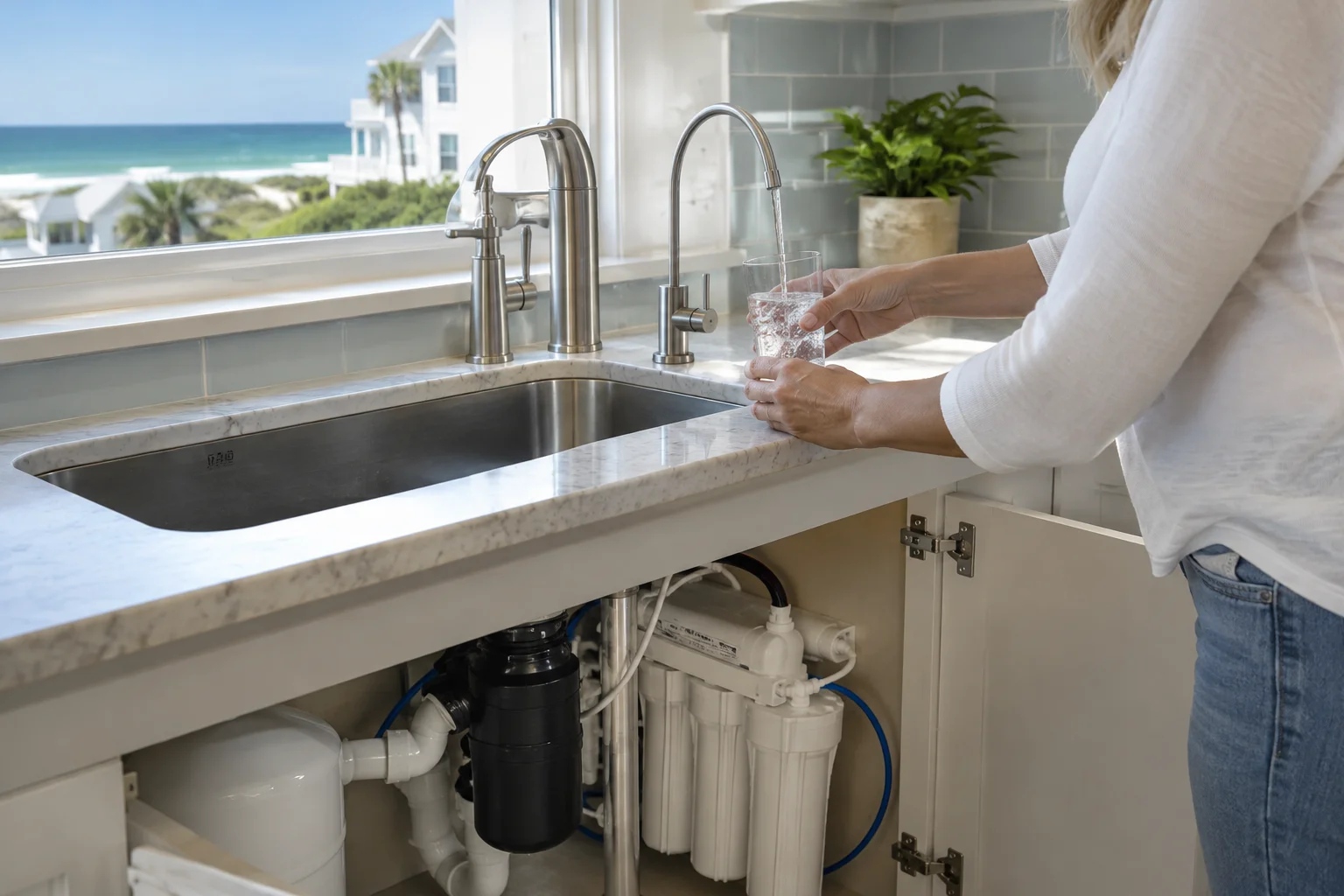
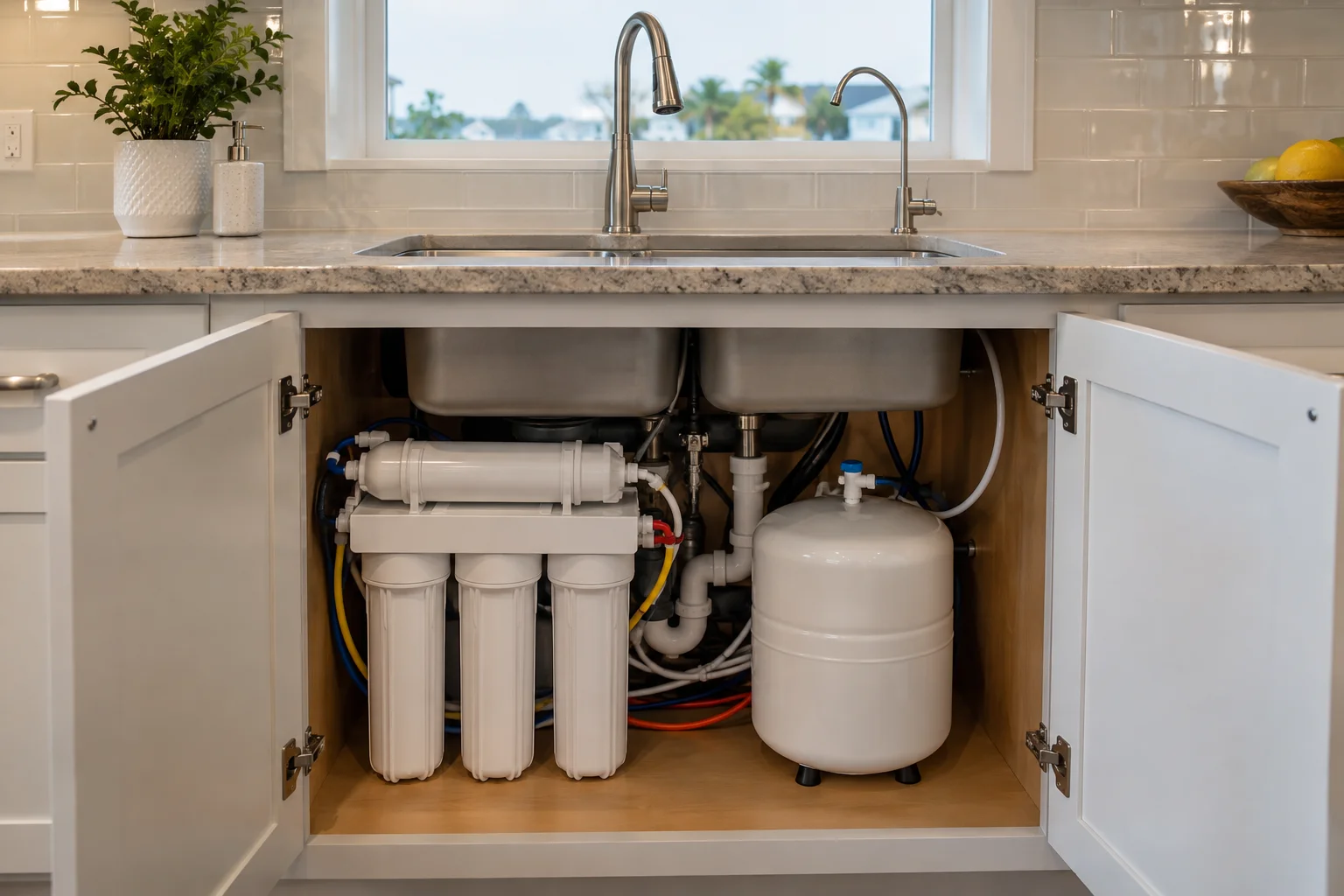
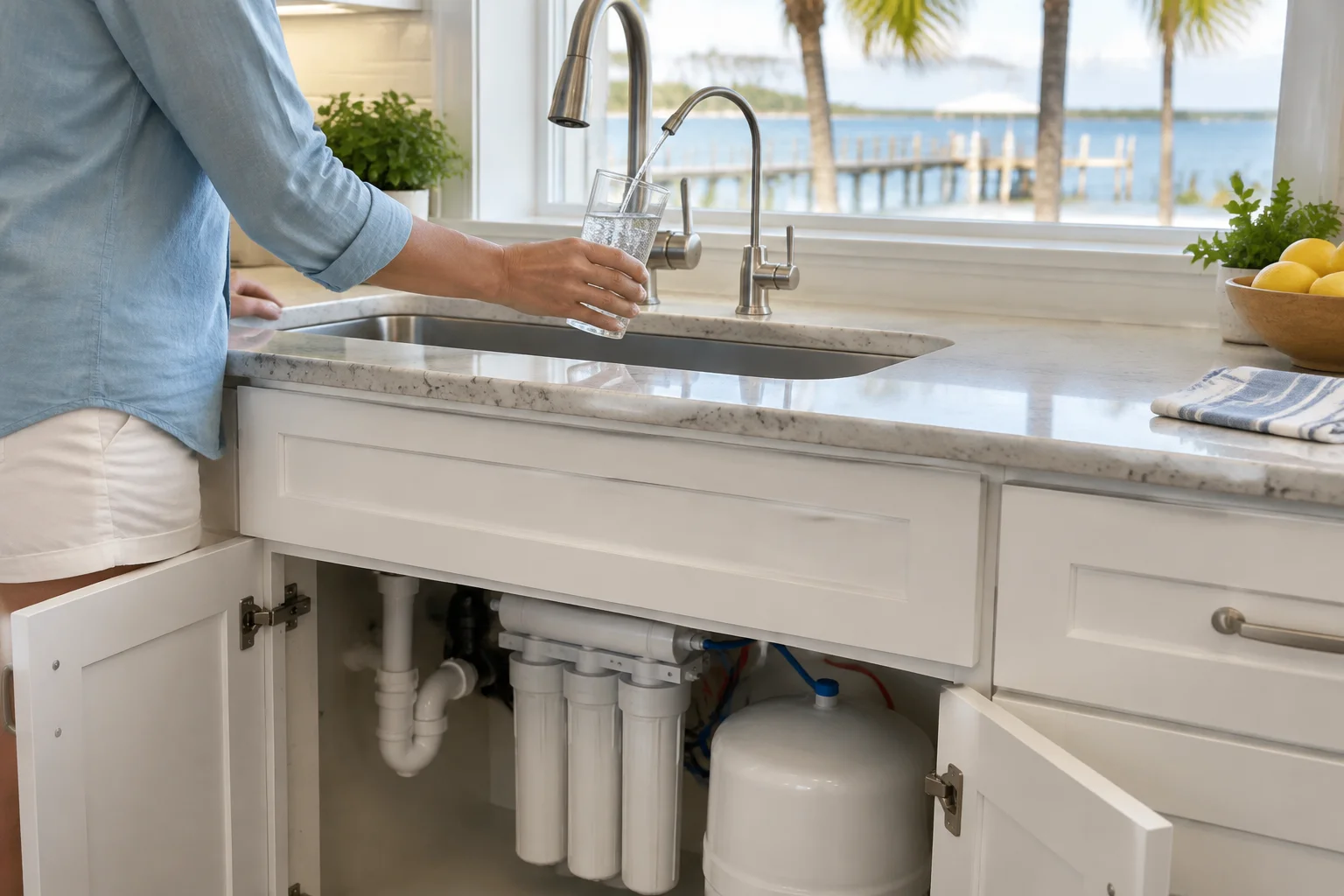
If your family cares about better water for drinking and cooking, reverse osmosis is often the next step. A reverse osmosis system can help address taste and purity concerns at the kitchen sink, making poor tasting coffee and cooking water less of an issue.
Many homeowners choose reverse osmosis installation near the kitchen because it delivers a dedicated supply of purified water for drinking, ice, and cooking. That can also help with cloudy ice cubes caused by minerals and other water quality factors.
What you might notice at home: common hard water symptoms
Hard water shows up in everyday places, especially in the kitchen and bathrooms where families use water multiple times a day.
Kitchen clues
Hard water spots on dishes after the dishwasher runs or when hand-washing.
Poor tasting coffee water or a noticeable metallic, chlorinated, or unpleasant taste.
Cloudy ice cubes that look different from what you remember before moving.
Water that leaves a film on glassware or makes cookware look dull over time.
Bathroom clues
Scale buildup on faucets and around showerheads.
Hard water spots on glass in the shower that return quickly after cleaning.
Dry skin from hard water and dull hair after bathing, especially for kids and people with sensitive skin.
Laundry and household clues
Soap does not lather or rinse well, leading to residue on laundry and towels.
Stiff fabrics or a “not fully clean” feeling after washing.
Appliance clues
Appliances wearing out faster than expected, especially water heaters and units that rely on heated water.
Reduced performance such as slower heating or diminished water flow due to scale inside components.
How Grayton Beach climate and home layout influence treatment needs
Grayton Beach sits in a coastal environment with humid conditions that can intensify how mineral deposits appear on surfaces. When humidity is high, water spots can be more visible and cleaning may feel like it never lasts. Coastal homes also often have unique plumbing runs, including longer supply lines to outdoor fixtures or irrigation connections that can affect how water moves and where scale accumulates.
Home layout matters too. A home with multiple bathrooms, a larger water heater demand, and frequent laundry loads will experience faster buildup if hard water is not treated. That is why water treatment service in Grayton Beach is not just about installing equipment. It is about matching the system to how your household uses water.
Choosing the right system: softening plus filtration for real-world results
Many homeowners get the best results with a layered clean water system:
Water softening to reduce scale-forming minerals and protect plumbing and appliances.
Whole home water filtration to improve general water quality, address sediment and odor concerns, and support better drinking water systems.
Reverse osmosis for drinking and cooking water, especially when you want better water for drinking and cooking and clearer ice.
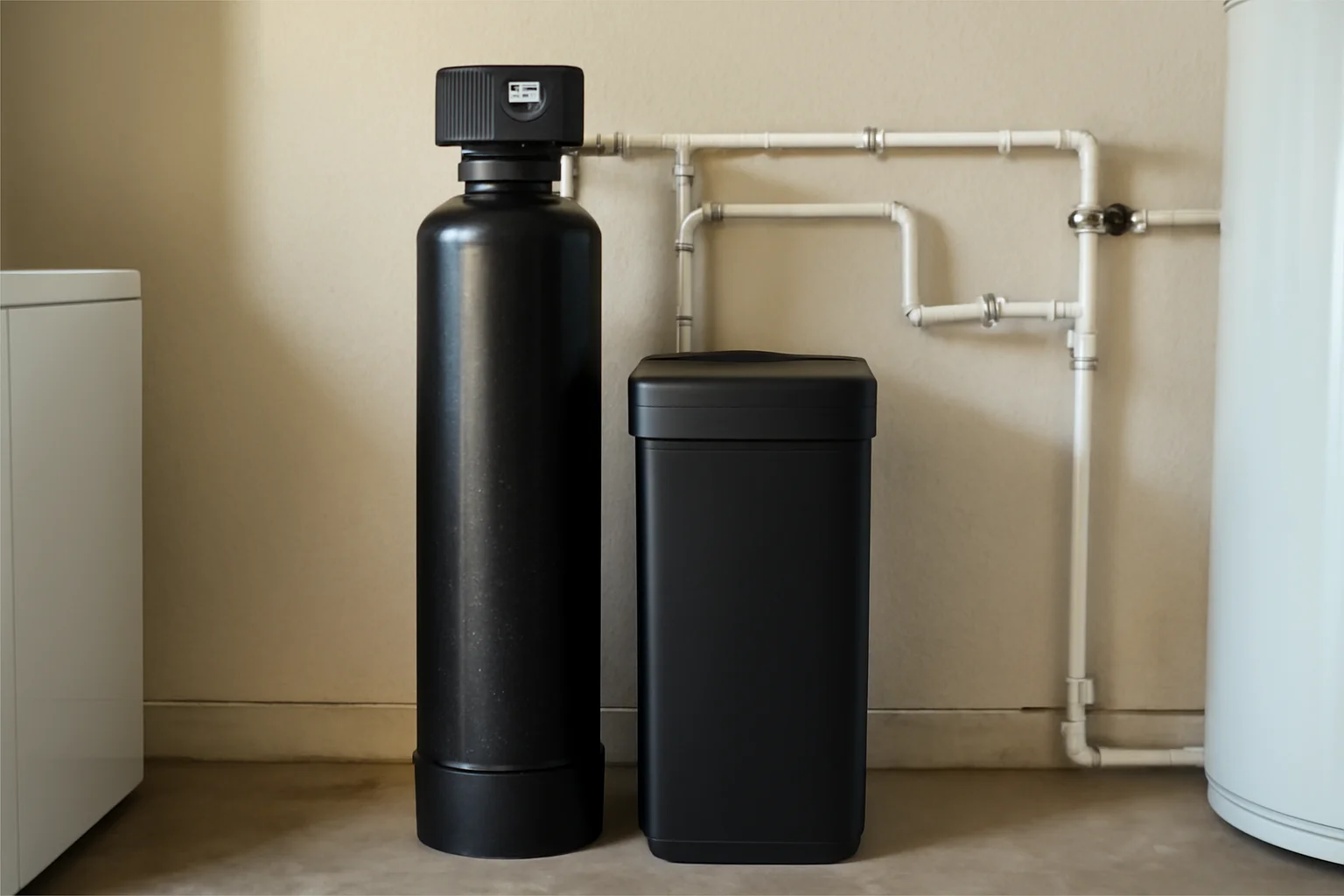
For homeowners interested in AO Smith water filtration, it is often used as part of a broader approach to whole home clean water systems. The exact setup depends on your water testing results, household size, and goals like reducing scale buildup around faucets or improving taste for the kitchen.
If you are searching for a reverse osmosis system near me or water filtration near me, the most reliable path is to start with local water testing and a system design that considers both hardness and taste or odor concerns. That is how you avoid buying equipment that treats only one problem while the rest of the symptoms continue.
Family life with better water: what changes day to day
When water treatment is dialed in, it shows up in the small moments families notice. Picture a morning routine in a Grayton Beach home: kids rinsing off after the beach, coffee brewing in the kitchen, and a load of towels heading to laundry.
With properly softened water and whole home filtration, you are more likely to see cleaner glassware, less scale buildup around showerheads, and soap that lathers and rinses more naturally. Bathing can feel more comfortable because dry skin from hard water is reduced. In the kitchen, improved water quality can make poor tasting coffee water less common, and your cooking water can taste fresher.
Over time, better water treatment also helps appliances run more efficiently. When scale buildup is reduced, the inside of water heaters and other components is less prone to mineral buildup, which can mean fewer repairs and longer service life.
Maintenance and prevention: keeping your system working as water conditions change
Water treatment performance depends on ongoing maintenance. Even the best water softening setup needs attention to keep it operating correctly.
Watch for early warning signs
Scale returns faster than usual on faucets and showerheads.
Soap does not lather or laundry feels filmy.
Water taste shifts, including metallic or chlorinated notes.
Cloudy ice cubes or lingering odor concerns come back.
Keep up with filter and softener service
Filters need replacement based on usage and water quality. Softener systems need correct settings and routine service so the resin and brine operation work as designed. If you are planning water softener service, it is also a good time to review your goals, household changes, and whether you need additional whole home water filtration or reverse osmosis support for drinking water.
When to call a water treatment professional in Grayton Beach
It is worth getting help when you see multiple symptoms at once, especially when they involve both scale and taste or odor. If you are seeing hard water spots on glass and scale buildup around faucets, plus unpleasant taste, visible sediment, or cloudy ice cubes, you likely need a coordinated solution rather than a single product.
Homeowners searching for water treatment near me often want the fastest relief. A professional can check your current setup, confirm whether hardness is being treated adequately, and recommend the right balance of water softening, whole home filtration, and reverse osmosis installation for the kitchen.
If you are ready to protect your plumbing and improve water quality, you can explore our water softening service page here: /service-areas/walton-county/grayton-beach/water-softening-gbwcfl. For broader options and clean water system planning, visit /water-filtration-ro-water-softeners. If you want to compare local coverage and service areas across the region, see /service-areas/walton-county/grayton-beach and /service-areas/walton-county.
How water treatment connects to plumbing longevity
Hard water can turn into a plumbing problem over time. Scale reduces flow, increases wear, and makes some repairs more frequent. If you are noticing fixture issues, it can help to understand how water quality affects the plumbing system as a whole.
You may also find these reads useful: Keeping Grayton Beach Water Cleaner Before Plumbing Problems Start, Why Grayton Beach Homes Do Better With Updated Plumbing, and Keeping Grayton Beach Plumbing Ahead of the Next Emergency. For additional household maintenance context, see A Homeowner’s Guide to Plumbing Repair in Grayton Beach.
Older or newer, your water softening plan should match your home
Grayton Beach water conditions can create real, visible impacts in both older and newer homes. Older plumbing may accumulate scale faster at valves, aerators, and showerheads, while newer homes can still show mineral spots quickly and experience taste and odor concerns at the kitchen sink. The goal is the same: reduce scale buildup around faucets and protect appliances, while improving bathing comfort and making drinking and cooking water taste better.
When you choose water softening alongside whole home water filtration and, when needed, reverse osmosis for drinking water, you get a cleaner water system designed for how families actually live in Walton County. That is where better water becomes more than a convenience. It becomes protection for your home.
Professional water softening services in Grayton Beach, FL are designed to reduce hard water problems and protect plumbing throughout Walton County. If you are comparing options like AO Smith water filtration, reverse osmosis system planning, or a full clean water approach, start with local guidance and a system that fits your home’s needs.
Find Water Softening in Grayton Beach, FL
If you need Water Softening in Grayton Beach, FL, visit our local service page or contact A Superior Mechanical today.
For a broader look at whole-home water filtration, reverse osmosis, and water softener options, visit our water filtration, RO, and water softener page.
Map of Grayton Beach, FL
Frequently Asked Questions
How do I know if my Grayton Beach home needs water softening?
If you see hard water spots on dishes or glass, scale buildup around faucets and showerheads, soap that does not lather, or dry skin from hard water, you likely need water softening. A local water test can confirm hardness and help size the system correctly.
Is a water softener enough, or do I also need whole home water filtration and reverse osmosis?
Often, homeowners benefit from both. Water softening reduces hardness and helps prevent scale. Whole home filtration can address sediment and odor concerns. Reverse osmosis is commonly added for better water for drinking and cooking, especially if you notice metallic or chlorinated taste in water or cloudy ice cubes.
Do older homes and newer homes need different water treatment approaches?
The water source is the same, but your plumbing layout, fixture age, and how water sits in lines can change how quickly symptoms appear. Older homes may show more scale buildup on faucets and showerheads, while newer homes may highlight taste and spotting faster. System sizing and filtration goals should match your specific home and household use.
How often should water softener service and filter changes be done?
Service intervals depend on your system type, household size, and local water conditions. A technician can review your settings, inspect performance, and recommend filter replacement and maintenance based on your usage and test results.
What’s the fastest way to improve drinking water quality in Grayton Beach?
If taste, odor, and cloudy ice cubes are your biggest concerns, reverse osmosis installation at the kitchen is often the quickest improvement. Pairing it with whole home water filtration and proper water softening can also help protect plumbing and appliances while making daily water quality noticeably better.
Related Articles
Photo Gallery