Parker, FL is the kind of place where HVAC systems work hard year-round. Hot afternoons, muggy humidity, and salty air near the coast can push air conditioners and heat pumps to run longer, cycle more often, and handle more stress on components. When homeowners schedule indoor air quality testing, HVAC wear and tear can influence what the test detects, how quickly problems show up, and what action is truly needed.
This matters because indoor air quality testing is only as useful as the conditions surrounding the test. If the HVAC system is pulling air from the wrong place, distributing air poorly, or failing to remove moisture and contaminants consistently, the readings can look different than they would in a properly functioning system. That is why a professional approach from a local HVAC contractor in Parker is so important.
HVAC wear and tear can change indoor air quality before testing even starts
Indoor air quality is not just about what is in the air. It is also about how your heating and cooling system moves air through your home, controls humidity, and captures or bypasses contaminants. Over time, HVAC systems in Parker can develop issues that affect test results.
Airflow problems can make contaminants linger
Many indoor air quality concerns are tied to airflow. When filters load up, blower motors weaken, ductwork leaks, or dampers do not open and close properly, air does not move the way it should. That can allow dust, pollen, and other particulates to accumulate in certain rooms and to remain suspended longer.
For indoor air quality testing, that means the test may detect higher particulate levels or show room-to-room differences that reflect distribution issues, not only the source of the contaminants. Homeowners often interpret this as “mold everywhere” or “the air is bad throughout the home,” when the reality may be that air is not being delivered or exhausted consistently.
If you are scheduling indoor air quality services near me, ask your HVAC contractor whether they will review airflow and system performance as part of the testing plan. A more thorough approach to testing can help you avoid chasing symptoms.
Humidity control failures can skew mold and allergen measurements
In Parker, humidity is not a seasonal inconvenience. It is a constant factor. Air conditioners and heat pumps manage indoor humidity by running the cooling cycle long enough and with the right airflow across the evaporator coil. If the system is struggling, short cycling can occur, condensate drainage can be impaired, or refrigerant systems can be out of balance due to issues that require an in-person diagnosis.
When humidity is not controlled, it creates conditions that support mold growth on surfaces and in hidden areas like duct interiors, drain lines, and coil surfaces. During indoor air quality testing, elevated moisture related concerns may become more noticeable because the home is already in a “supports growth” state.
It is also common for homeowners to notice musty odors or a “clammy” feel, but not realize that the HVAC system is not removing moisture effectively. Testing can help confirm the overall picture, but it is harder to interpret if the HVAC system is failing to manage humidity.
Dirty coils and clogged condensate drainage affect both air and moisture
Over time, evaporator coils gather dust and debris. Condensate drainage systems can accumulate slime or scale. Even when the HVAC is cooling, a dirty coil or slow drain can reduce dehumidification performance. In some homes, condensate drainage issues can also contribute to localized moisture where microbial growth can occur.
During indoor air quality testing, you might see results that point toward microbial concerns, but the “why” may be tied to coil cleanliness or drainage maintenance. This is one reason that indoor air quality testing and preventive HVAC maintenance should be treated as connected steps rather than separate projects.
Why Florida heat and humidity make HVAC wear and tear more likely
Parker homeowners do not experience mild swings. They experience long periods of heat and humidity. That intensity accelerates wear on parts and increases the likelihood of problems that affect air quality.
Refrigerant system strain can show up indirectly
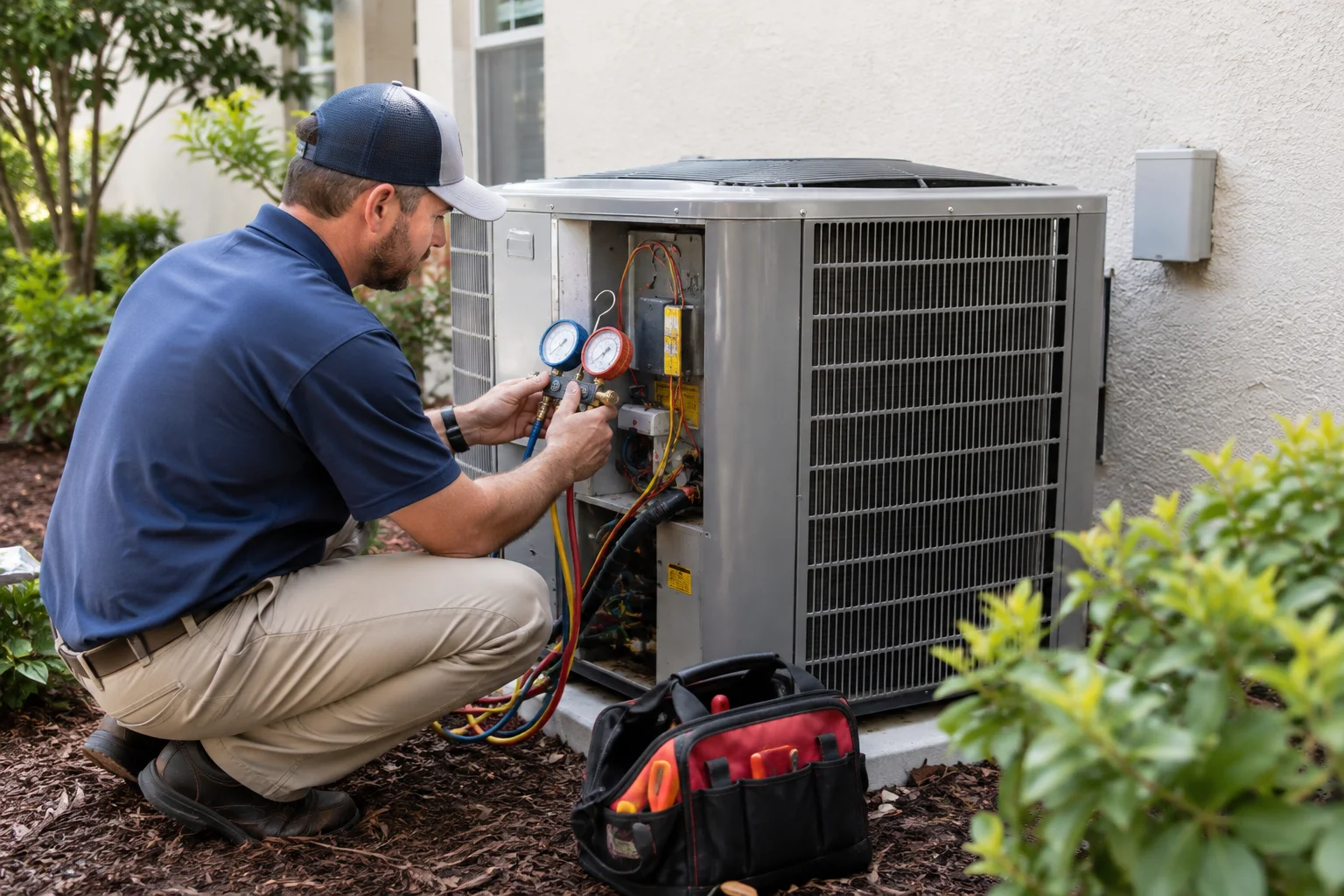
Refrigerant systems are designed to cool and dehumidify together, but several factors can lead to reduced performance. When a system is not operating correctly, it may not cool as effectively, it may run longer than expected, or it may not remove moisture the way it should. Those outcomes can influence indoor humidity levels, which in turn affects microbial growth risk and the comfort level of the home.
It is important for homeowners to note that refrigerant issues require professional evaluation. Avoid assuming a refrigerant problem based on test results alone. A qualified technician can assess system performance, airflow, and conditions in the home before drawing conclusions.
Salt air and corrosion can affect airflow components and drain lines
Bay County is known for coastal influence, and salt air can contribute to corrosion over time. That can affect components in and around the outdoor unit and may contribute to degraded performance. Indoors, drainage lines and fittings can also be affected by long-term moisture exposure and contamination.
When corrosion or buildup reduces system efficiency, the HVAC may operate differently than intended. That can alter humidity control and contaminate distribution patterns, making indoor air quality testing results harder to interpret without also addressing HVAC condition.
Thermostats and control settings can change when and how the system runs
Thermostats influence comfort and air mixing. If thermostat settings are off, if scheduling does not match occupancy patterns, or if the thermostat is not controlling cycles correctly, the system may not run long enough to properly dehumidify or to circulate air through filtration.
That is another reason to connect indoor air quality testing with HVAC service. If you are considering a thermostat installation near me or upgrading controls, the goal should include consistent humidity management and appropriate fan operation, not just temperature targets.
Ductwork issues often create a “false story” during indoor air quality testing
Ductwork is where indoor air quality becomes either manageable or unpredictable. Even if your HVAC equipment is operating properly, duct leakage or poor duct design can pull in contaminants from attics, crawl spaces, or other less controlled areas. It can also distribute air unevenly between rooms.
Leaky ducts can introduce unconditioned air
In Parker, attics and crawl spaces can be hot and humid. If ductwork leaks, the HVAC system can pull in air from those spaces and deliver it indoors. That can elevate humidity and increase the presence of dust and particles. During indoor air quality testing, that can look like “indoor contamination” when the actual source is outside the living space.
If your test results point to widespread issues, it is worth considering ductwork evaluation. Many homeowners search for planning duct sealing and Aeroseal work before Parker heat because improving duct performance can reduce unwanted air exchange and improve overall HVAC effectiveness.
Dirty ducts and airflow restrictions can increase particulate readings
Dust accumulation inside ducts can contribute to particulate levels. However, duct cleaning is not a universal solution for every indoor air quality problem. The right step depends on the source, the HVAC condition, and whether air movement is actually being improved.
Homeowners often look for air conditioning service strategies that reduce dust and improve comfort, but duct inspection and duct repair near me are part of the same system picture. If airflow is restricted, even clean air filters may not be enough to keep particulates from building up in certain areas.
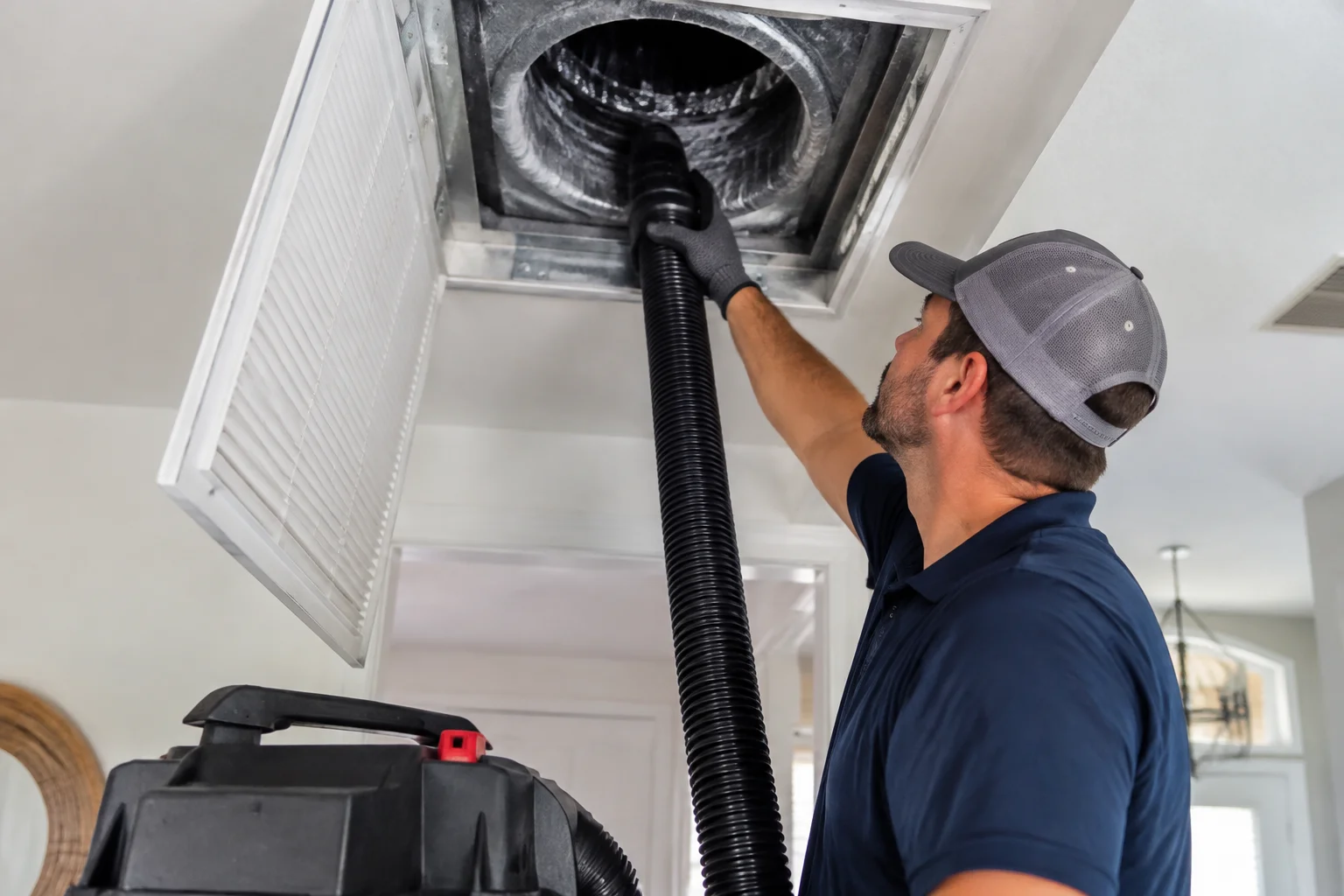
If you suspect ductwork is part of the problem, ask for a duct inspection near me that focuses on airflow paths, leakage concerns, and how the system is distributing air.
How the test process itself can be affected by HVAC runtime and system condition
Indoor air quality testing often involves measuring particles, humidity, and sometimes identifying potential contaminants. The timing of the test and the way the HVAC system is operating during the test can influence results.
Short cycling can make problems appear worse or harder to resolve
Wear and tear can cause an HVAC system to cycle more frequently. When the system cycles quickly, it may not run long enough for effective dehumidification or for the filtration system to capture contaminants at the rate you need. During testing, this can lead to higher readings or inconsistent results across rooms.
This does not automatically mean the home has a severe contamination issue. It can mean the HVAC is not operating long enough to stabilize conditions.
Filter condition and air filtration strategy change the baseline
A filter that is overly restrictive or extremely dirty can reduce airflow. A filter that is not matched to your system can also affect performance. Since indoor air quality testing is often used to decide next steps, knowing the filter condition and filtration approach matters.
If you are exploring HVAC air filtration near me or upgrading to air filtration and purifiers, coordinate that decision with your indoor air quality testing. The goal is to improve filtration and airflow without creating new airflow issues.
Common HVAC wear and tear issues in Parker that connect to indoor air quality
Homeowners in Parker frequently run into HVAC problems that show up as comfort issues first and indoor air quality concerns second. Here are the most common pathways.
- AC tune up needs and gradual performance loss: Reduced cooling capacity or airflow can allow humidity to remain higher than it should.
- Condensate drainage problems: Slow drains or buildup can contribute to localized moisture that feeds microbial growth.
- Dirty evaporator coils: Dust buildup reduces heat transfer and dehumidification performance.
- Thermostat behavior: Incorrect fan runtime settings can affect air mixing and filter contact time.
- Leaky or poorly designed ductwork: Can pull in hot, humid air from attics or crawl spaces.
- Energy use and longer run times: When the system works harder, it may still not achieve the humidity and airflow targets that healthy indoor air depends on.
Because these issues are interconnected, indoor air quality testing should not be treated as a stand-alone fix. A licensed HVAC contractor near me can help interpret test outcomes alongside system performance and maintenance history.
How to use indoor air quality testing results the right way
When you receive indoor air quality testing results, the most helpful questions are about sources and controllable pathways.
Ask what the HVAC system is doing during the period being evaluated
Were the AC or heat pump running long enough to control humidity? Was the fan cycling normally? Were airflow conditions stable? These answers help clarify whether the test is measuring a persistent contamination issue or a temporary outcome of HVAC operation.
Look for recommendations that address both air and moisture control
In Parker, you typically need solutions that manage humidity, improve filtration, and ensure airflow pathways are functioning. If recommendations focus only on air purifiers or only on cleaning without addressing moisture and HVAC performance, you may not be solving the root cause.
Be cautious with “test-driven” conclusions
It is not appropriate to assume refrigerant diagnosis, electrical diagnosis, or equipment replacement based solely on test results. Those determinations require an in-person professional evaluation. A good indoor air quality testing process will connect findings to practical next steps while still verifying HVAC performance on-site.
Preventive maintenance that protects indoor air quality year-round
Preventive HVAC maintenance can reduce the chance that your next indoor air quality testing session produces confusing results. Maintenance helps keep airflow steady, supports humidity control, and reduces the likelihood of moisture related problems.
Schedule maintenance before the busiest cooling weeks
In Parker, AC demand spikes in the hottest stretches. When homeowners search for AC maintenance or HVAC maintenance near me, it is often because they want fewer surprises. Maintenance supports better dehumidification, cleaner coil conditions, and more reliable condensate drainage.
Maintain filtration and plan for whole home air purification when appropriate
Filters are part of indoor air quality. But filtration is not only about filter media. It is also about airflow and system compatibility. If you are considering whole home air purifier near me options, coordinate them with your test findings and HVAC condition so you do not unintentionally reduce airflow.
Support duct performance with inspection and targeted duct repair
When duct leakage or restrictions contribute to humidity and particulate issues, duct repair near me can be a key piece of the indoor air quality plan. In many homes, ductwork improvements make the HVAC more effective, which helps the system manage moisture and contaminants better.
When indoor air quality becomes an emergency cooling concern
Indoor air quality problems are not always urgent, but emergency cooling concerns can be. In Parker, if your AC is failing to cool or dehumidify, humidity can rise quickly, which can worsen comfort and increase the conditions that support microbial growth.
Also, when the system is not operating properly, homeowners may notice symptoms like:
- Rapid indoor humidity increases
- Musty odors that become stronger when the system runs
- Uneven cooling, with some rooms feeling clammy
- Frequent cycling or reduced airflow
If you are dealing with these issues and you are also planning indoor air quality testing, it is smart to address the HVAC performance concerns promptly. A local HVAC contractor can help you decide whether to test first or service first based on how the system is behaving.
Why homeowners in Parker trust A Superior Mechanical for indoor air quality testing
A Superior Mechanical provides indoor air quality testing in Parker, FL to help identify mold, allergens, humidity problems, VOCs, and ventilation issues. Because HVAC wear and tear can influence what testing reveals, the process should be connected to HVAC realities like airflow, condensate drainage, thermostat behavior, and ductwork performance.
For homeowners searching for licensed HVAC contractor near me support, the most reliable path is a coordinated plan that considers both the air you breathe and the system conditions that move that air. If you are also dealing with comfort issues, you may benefit from pairing testing with HVAC services like air conditioning installation planning, improved controls with smart thermostats, or ongoing reliability through air conditioning maintenance.
If your home uses a ductless mini split setup, or if you are considering one, also consider how airflow and filtration will be managed with that system. For ductless projects, homeowners often search for ductless mini split installation near me when they want zoning and control. The same indoor air quality principles apply: correct humidity management, appropriate filtration, and clean airflow paths.
To get started, explore indoor air quality testing in Parker, FL and learn more about service coverage across Parker and Bay County.
If you are preparing for testing, gathering recent HVAC maintenance notes, filter change dates, and any observations about humidity or odors can help your technician interpret results. That small bit of homeowner context can make a big difference in whether you get answers you can act on.
Find Indoor Air Quality Testing in Parker, FL
If you need Indoor Air Quality Testing in Parker, FL, visit our local service page or contact A Superior Mechanical today.
Map of Parker, FL
Frequently Asked Questions
Can HVAC wear and tear cause indoor air quality testing to show mold or allergens even if the source is something else?
Yes. If the HVAC system has airflow problems, poor humidity control, dirty coils, or condensate drainage issues, it can create conditions that support microbial growth or keep particulates circulating. Testing can reflect that environment, so it is important to interpret results alongside HVAC performance.
Should I run my AC or heat pump before indoor air quality testing?
Often, testing plans are built around how the system is operating during the evaluation period. The best approach is to follow the testing technician’s instructions for HVAC runtime, thermostat settings, and filtration so results are accurate for your home.
How do duct leaks affect indoor air quality test results in Parker, FL?
Duct leaks can pull in hot, humid air from attics or crawl spaces and distribute it indoors. That can raise humidity and particulate levels, making indoor air quality appear worse than it would with properly sealed, functioning ductwork.
Do I need duct cleaning before indoor air quality testing?
Not automatically. Duct cleaning is most helpful when it is targeted to the specific source of contamination and when airflow issues are addressed. A professional can review duct conditions and help decide the best sequence for testing and HVAC service.
What should I do if my indoor air quality testing results are concerning but my AC seems to be cooling normally?
Cooling “normally” does not always mean humidity control and airflow are correct. Ask your technician to review airflow, filtration, coil condition, and condensate drainage as part of interpreting the results, and avoid assuming a refrigerant or electrical issue without an in-person evaluation.
Related Articles
- Protecting Parker Homes Starts With Better Indoor Air Quality Testing
- Planning Duct Sealing and Aeroseal Work Before Parker Heat and Humidity Push Your HVAC Harder
- Keeping Parker Homes Cooler, Longer: Smart Ways to Manage Air Conditioning Service in Bay County
- Keeping Commercial HVAC Problems Small in Parker, FL
Photo Gallery