Sandestin, FL is beautiful, but homeowners here can still fight a familiar enemy: hard water. When your water softener is working well, you get easier rinsing in the bath, cleaner dishes, and better tasting water for coffee and cooking. When it is not, hard water shows up fast, from hard water spots on glass to scale buildup around faucets and showerheads.
This article walks through the most common causes of water softening problems, what to watch for in everyday life, and how the right combination of water softening, whole home water filtration, and sometimes reverse osmosis helps protect your home and your routine. If you are searching for water filtration near me or home water purification near me, you will also find practical guidance on what to ask a local pro.
How hard water problems start when softening fails
In Sandestin and across Walton County, many homes deal with minerals that create scale. Water softeners are designed to reduce those minerals by exchanging them with sodium or potassium. When the process is interrupted or the system is undersized, misconfigured, or contaminated, the signs you notice at home can look like the water is getting worse overnight.
Common household clues include:
- Hard water spots on dishes and glass even after running the dishwasher or wiping with a towel
- Scale buildup around faucets, showerheads, and plumbing connections
- Dry skin or dull hair after bathing, plus soap that does not lather or rinse well
- Metallic, chlorinated, or unpleasant taste in drinking water
- Cloudy ice cubes or ice that looks hazy in the freezer
- Visible sediment, discoloration, and odor concerns that show up in sinks or tubs
- Appliances wearing out faster, including water heaters and scale-sensitive components in dishwashers and washing machines
Any one of these can have more than one cause. The key is understanding what typically breaks down in a softening setup and what homeowners can do to prevent repeat problems.
1) Salt problems and incorrect settings
Low salt or the wrong salt type
Water softeners rely on salt to regenerate the resin bed. If the salt level is too low, or if the wrong product causes bridging or crusting, the system cannot clean the resin correctly. The result is hard water slipping through during normal use.
Homeowners often notice it in patterns: water feels softer early in the week, then gradually gets “hard again.” That is a strong hint the system is not regenerating properly.
Incorrect hardness settings
Many systems are programmed based on initial water test results. If your water hardness changes, if the household size changes, or if the system was set using incomplete data, the softener may not regenerate often enough. That can lead to scale buildup around faucets and continuing hard water spots on glass.
Regeneration schedule that does not match real usage
Sandestin homes vary widely in occupancy, laundry loads, and irrigation habits. A regeneration cycle that is too infrequent, or a timer that does not reflect your current usage, can leave the resin depleted. When this happens, you get the everyday impacts: soap that does not lather, tub rings that return, and dull hair that feels coated even after shampoo.
2) Resin issues and channeling inside the softener
Even when salt and settings are correct, the resin bed can develop problems. Over time, impurities can foul the resin, and resin can degrade. Another issue is channeling, where water finds paths through the bed instead of being properly exchanged.
When resin performance drops, homeowners see the same familiar symptoms: hard water spots on dishes, scale on showerheads, and appliances working harder. The water may also feel “slick” in the shower but still leave scale behind, especially on metal fixtures.
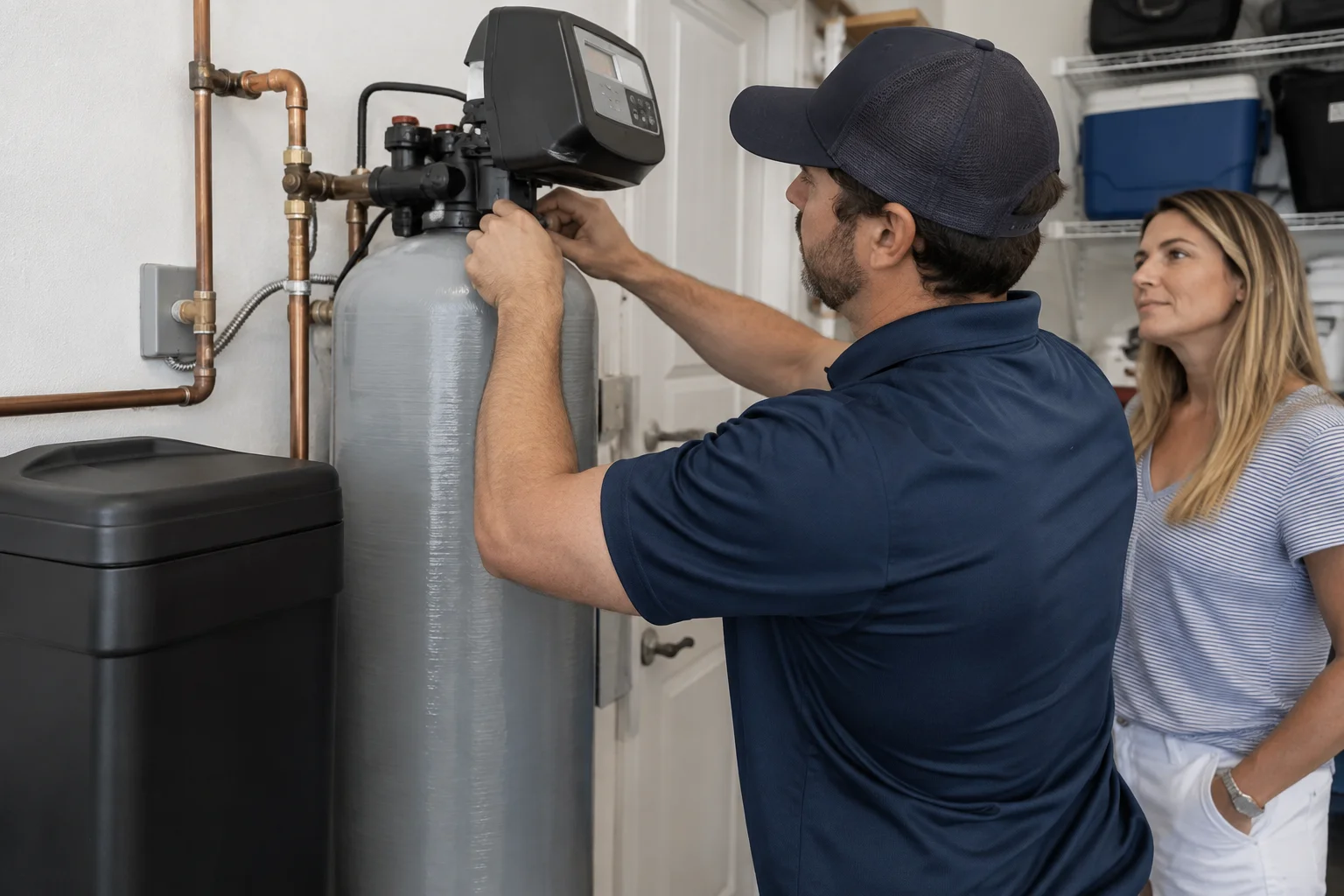
Resin problems usually require professional inspection and service, not just adding more salt. If you have recurring softening issues, a technician can check flow rates, regeneration performance, and whether the resin needs cleaning or replacement.
3) Water pressure and bypass mistakes
Some homes have valves that control flow through the softener. If a bypass is partially open, or if a valve was mispositioned after maintenance, the system may not treat water consistently. Changes can happen after plumbing work, filter replacements, or even utility access during storms.
Pressure problems can also make softener performance inconsistent. If another part of the water system is causing fluctuations, the softener may not regenerate correctly or may not deliver the expected softened water.
A quick clue is inconsistent results from different taps. If kitchen water tastes more “metallic” while the shower still shows scale, the issue might be localized to the treatment path or a configuration problem.
4) Sediment and taste problems that softening alone cannot fix
Water softeners are excellent for hardness and scale. They are not always the best tool for every water quality concern. In real homes, you can have more than one issue happening at the same time.
Sediment in household water
If you see visible sediment, discoloration, or odor concerns, hardness reduction will not address those particles. Sediment can also foul components and shorten the life of your softener.
Metallic, chlorinated, or unpleasant taste
Some homeowners describe metallic tasting water or a chlorinated, unpleasant flavor. That is a separate category of water treatment needs. If you only rely on softening, you may eliminate scale but still struggle with taste and drinking water quality.
Cloudy ice cubes
Cloudy ice cubes often point to dissolved minerals, air, or filtration issues. Even if your water is softened, the ice can still look hazy if you have turbidity, taste, or particulate concerns.
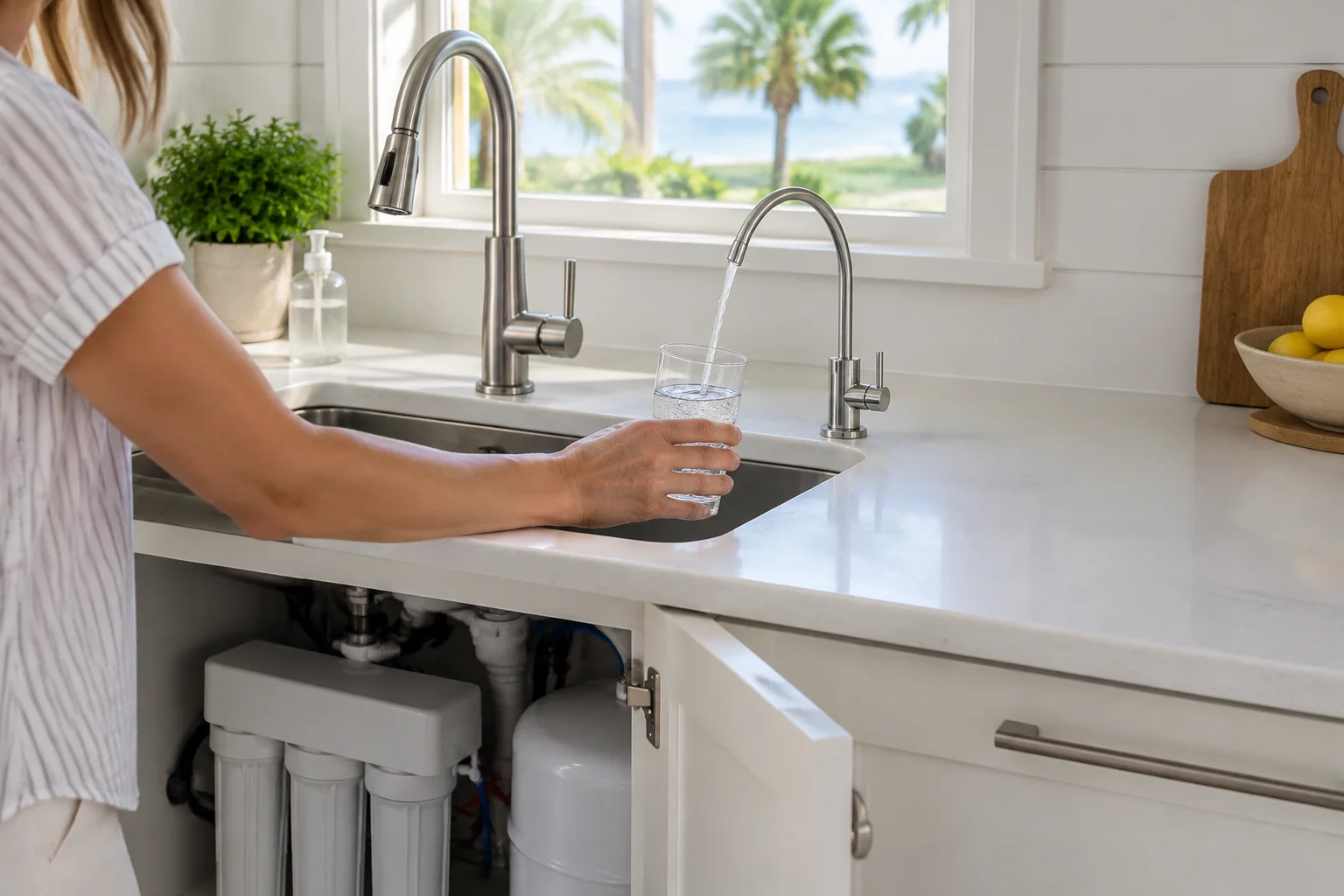
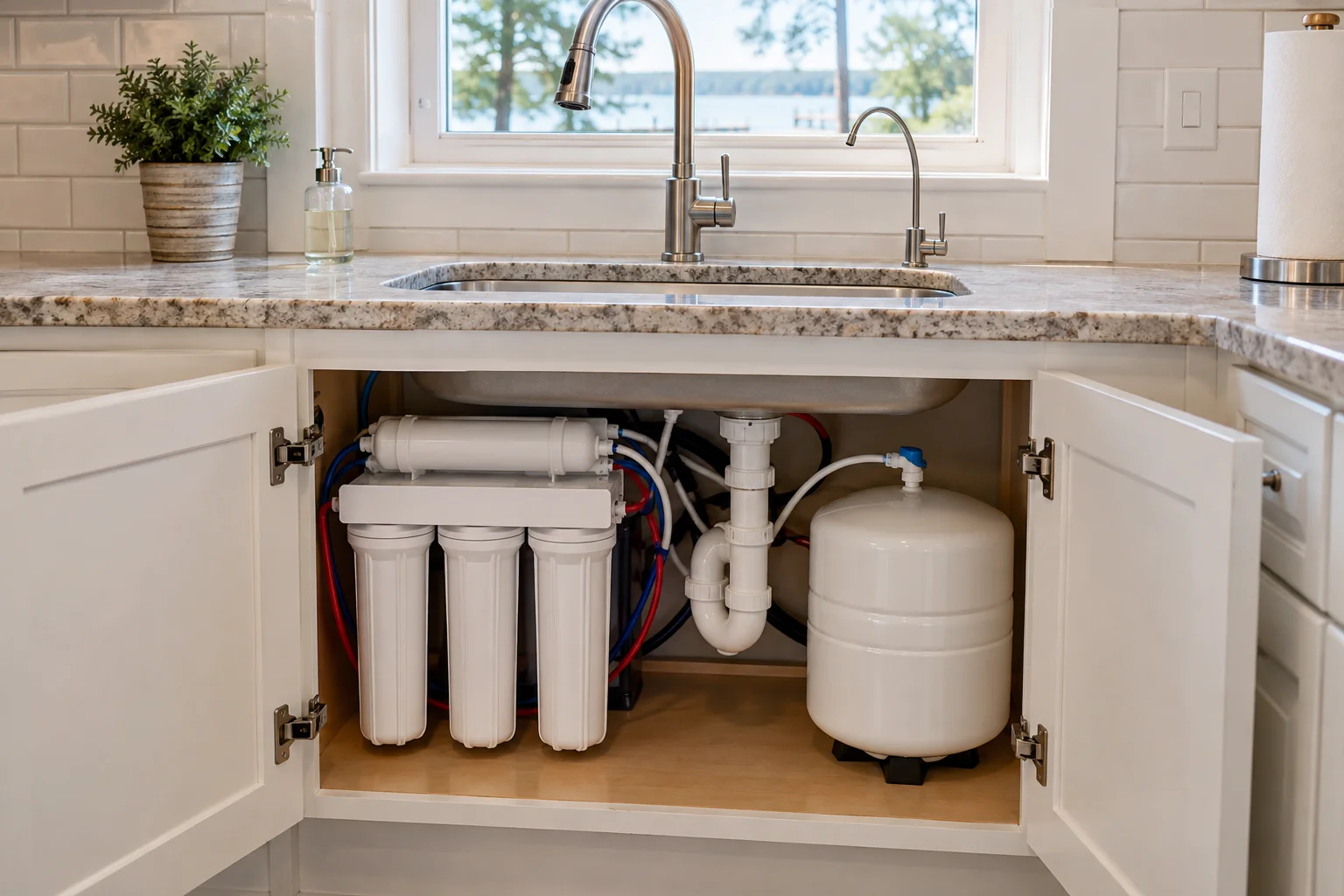
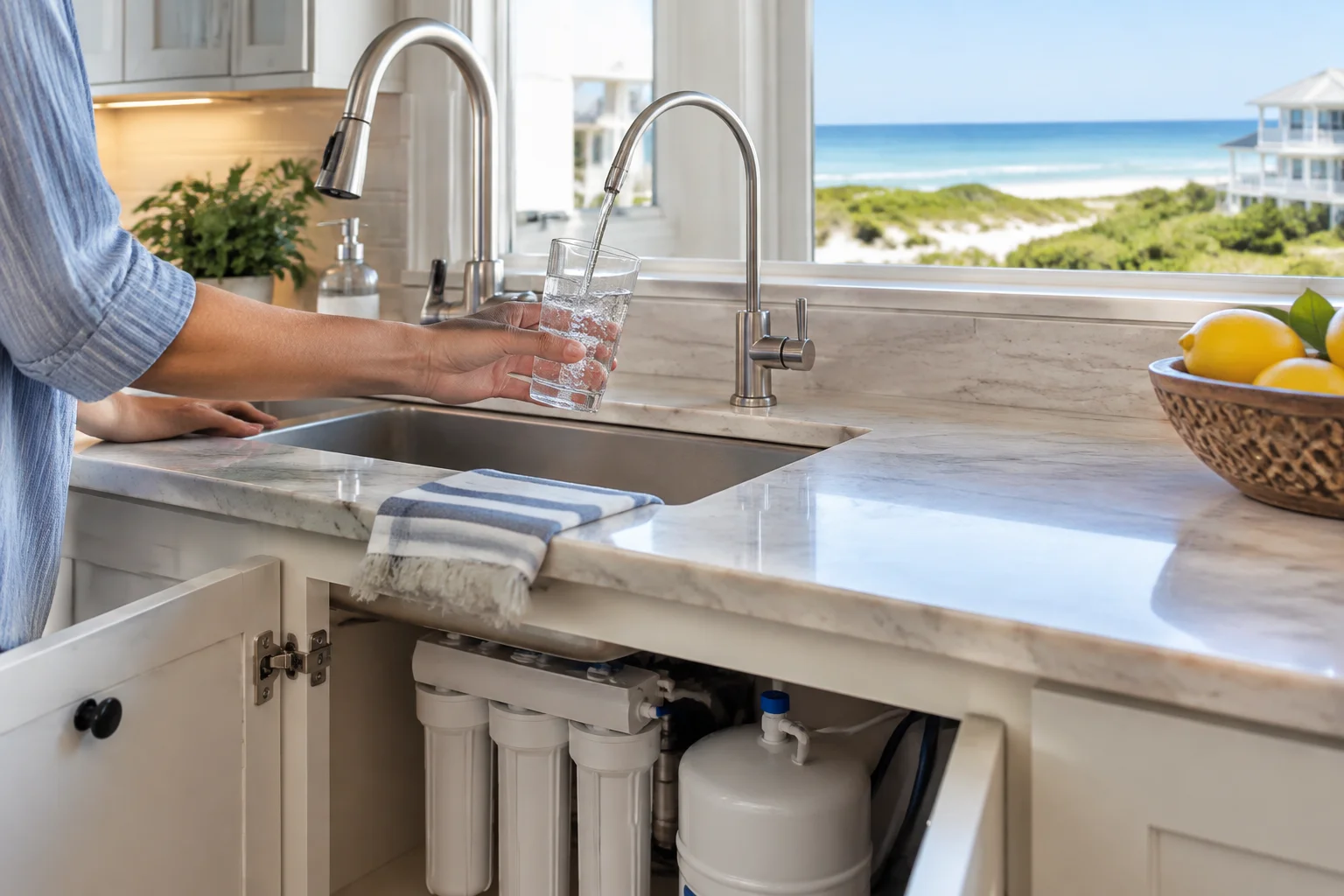
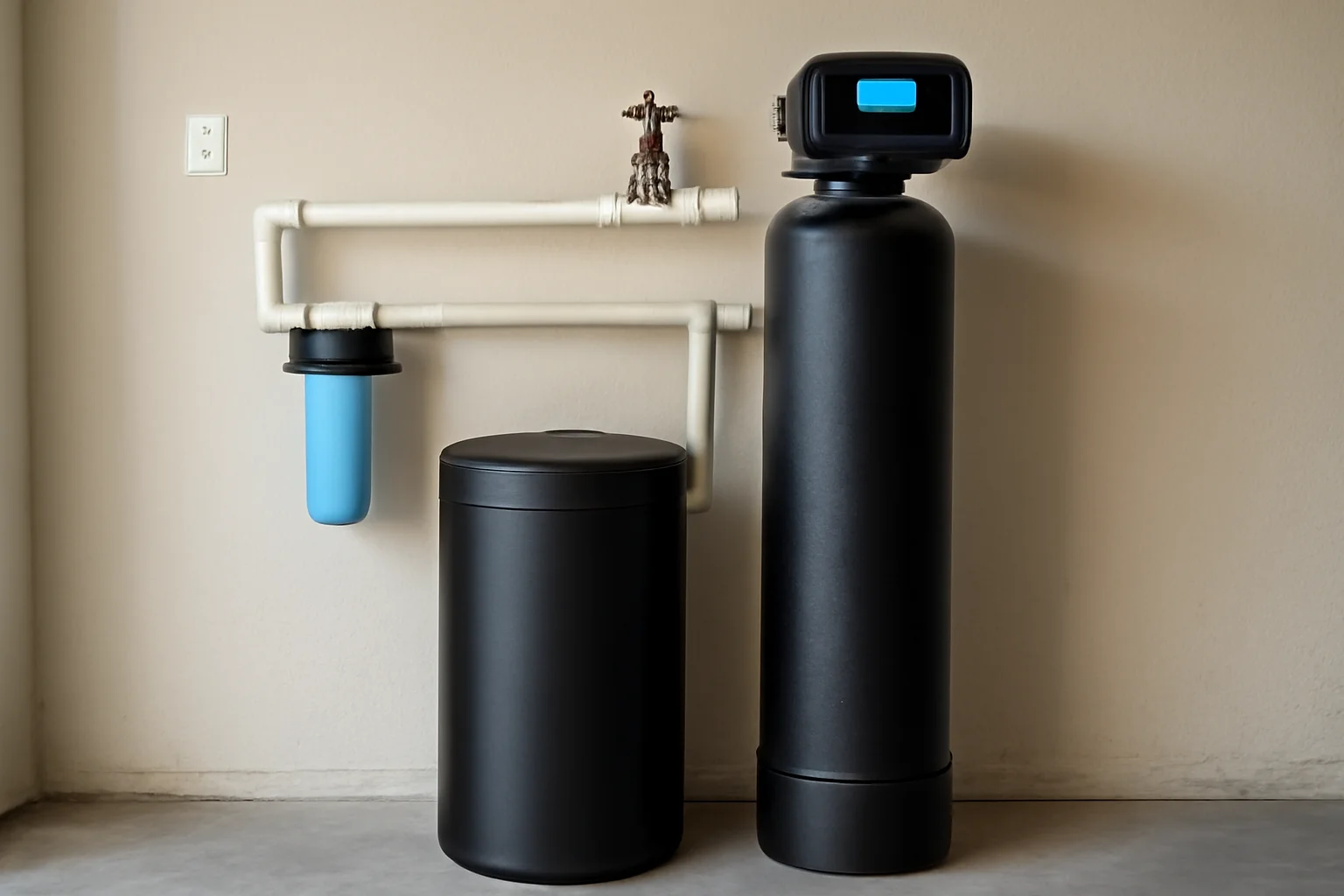
This is where whole home water filtration and targeted systems like reverse osmosis can make daily life easier. Whole home filtration helps protect plumbing and appliances from sediment and reduces nuisance particles throughout the house. Reverse osmosis is commonly used for drinking water, giving you clean water for coffee, cooking, and ice.
5) The coffee, ice, and cooking water connection
Sandestin households often build routines around the kitchen. A morning cup of coffee, a family dinner, and a weekend batch of iced drinks are where water quality becomes obvious.
When softening and filtration fall short, you may notice:
- Poor tasting coffee and cooking water, especially if water has an off flavor or lingering odor
- Ice that looks hazy, leading to drinks that do not look as clear as they should
- Mineral buildup on kettles and coffee equipment, which can reduce performance and taste
Softening can help with minerals that contribute to scale, but taste and clarity often need additional treatment. Many homeowners choose a combination approach: water softening to reduce hardness, whole home water filtration to address sediment and nuisance particles, and reverse osmosis installation near me for drinking water at the tap.
If you are comparing options, ask about system sizing and how each stage addresses a specific issue. That is the difference between “better water” and consistently great water for drinking and cooking.
6) Appliances and fixtures that keep paying the price
Hard water does not just show up visually. It also affects performance behind the scenes. When scale accumulates, appliances can wear out faster, heating elements work less efficiently, and plumbing fixtures can become harder to clean.
Homeowners often notice:
- Water heater efficiency dropping sooner than expected
- Dishwashers leaving spots or a film on glassware
- Washing machines failing to rinse detergent cleanly, leaving fabric feeling stiff
- Showerheads clogging or building mineral deposits that reduce water flow
When hard water treatment becomes part of protecting fixtures and appliances, you are not only improving comfort. You are also reducing the frequency of deep cleanings and repairs.
What helps protect bathing, laundry, and the “feel” of water
Soft, conditioned water can change how your home feels. It can improve how soap works, how shampoo rinses, and how towels and sheets come out of the wash.
When softening is working, many homeowners report:
- Soap that lathers more easily and rinses without leaving residue
- Less dry skin or dull hair after bathing
- Cleaner laundry with fewer mineral deposits
- Fewer stubborn rings in tubs and less scale on shower doors
When softening is not working, you may see the opposite. Water can feel slick but still leave minerals behind. That can create a “coated” feeling on skin and hair that does not improve with extra rinsing.
That is why it helps to think about the full clean water system, not just one component. Whole home water filtration near me can reduce sediment and help keep treated water consistent at every tap. A reverse osmosis system near me can give you cleaner drinking water for coffee, cooking, and ice.
How AO Smith water filtration and whole home systems fit in
Many Sandestin homeowners ask about trusted brands and dependable whole home water filtration solutions. AO Smith is a common name in water treatment, and it is often selected because of its focus on system design for real household needs.
In practice, the best results usually come from matching treatment stages to your water problems:
- Water softening to reduce hardness and scale buildup around faucets, showerheads, and plumbing
- Whole home water filtration to help capture sediment and improve overall water clarity and consistency
- Reverse osmosis to improve drinking water taste and provide cleaner water for coffee, cooking, and ice
If you are building a plan for better drinking water and better bathing water, a local pro can help you choose the right equipment and set it up correctly. That includes proper sizing, correct hardness settings, and maintenance schedules that keep your system performing season after season.
Sandestin climate and home setup: why local service matters
Sandestin homes can vary from primary residences to rentals, and the household patterns may change throughout the year. In coastal Florida, water quality challenges can show up differently depending on plumbing age, fixture types, and how often a property is occupied.
Seasonal usage changes matter for softeners. A system that works well for a family living full time can struggle during months when a rental is vacant or lightly used. When the system does not regenerate based on actual demand, you can see renewed hardness symptoms.
That is why local water treatment service matters. A technician familiar with Walton County conditions can help you test, diagnose, and design a setup that fits your home, not a one-size-fits-all approach. You can explore local options here: /service-areas/walton-county/sandestin.
Maintenance that prevents fewer hard water headaches
Preventing softening problems is mostly about staying ahead of the “small” issues before they become visible scale and ongoing taste problems.
Check salt levels and look for bridging
Make it a habit to confirm salt is sufficient and not crusted. If you see a hard salt bridge, the softener can run low even when the tank looks full.
Watch for early signs in the bathroom and kitchen
Hard water symptoms often appear in the same places: glassware, shower doors, and faucet handles. If you start seeing hard water spots on glass more frequently, do not wait until scale is heavy. Early intervention makes service faster and less expensive.
Keep an eye on soap performance
If soap does not lather or rinses poorly, that can mean the softener is not performing or that another water quality issue is present. It is a useful clue that your clean water system needs attention.
Schedule water testing and system checks
Even well-maintained systems benefit from periodic review. A technician can verify hardness reduction, check for sediment, inspect filters, and confirm regeneration performance.
When to call A Superior Mechanical for water softener service
If you are dealing with recurring scale buildup, taste concerns, or inconsistent softening, it is time to get a professional diagnosis. A Superior Mechanical supports homeowners who want dependable whole-home solutions and better everyday water quality in Sandestin.
You can review the specific service page for softening here: /service-areas/walton-county/sandestin/water-softening-sandestin-fwbsdfl. If your priority includes drinking water clarity and taste, start with the broader filtration approach at /water-filtration-ro-water-softeners.
Calling sooner is especially helpful when you see multiple categories of symptoms at once, like cloudy ice cubes plus hard water spots, or metallic taste plus soap that does not lather. Those combinations often mean you need more than one treatment stage.
Related reading for Sandestin homeowners
If you want to connect the dots between water quality and everyday plumbing performance, these posts can help:
- Cleaner Everyday Water Starts With Plumbing Services in Sandestin, FL: Hard Water Spots, Scale, Taste, and Odor
- Smart Plumbing Habits for Cleaner Water and Fewer Repairs in Sandestin
- How Water Softening Protects Rosemary Beach Plumbing from Costly Water Damage
- What Sandestin Homeowners Should Know About Cleaner Water at Home
For many households, the best results come from pairing water softening with the right filtration strategy. That is how you protect coffee, ice, cooking, bathing, laundry, fixtures, and appliances, without chasing the same hard water headaches month after month.
Find Water Softening in Sandestin, FL
If you need Water Softening in Sandestin, FL, visit our local service page or contact A Superior Mechanical today.
For a broader look at whole-home water filtration, reverse osmosis, and water softener options, visit our water filtration, RO, and water softener page.
Map of Sandestin, FL
Frequently Asked Questions
Why does my water softener work sometimes but not all the time?
Intermittent softening is often tied to salt or regeneration issues, incorrect hardness settings, or a partial bypass after maintenance. If you also notice taste or odor concerns, you may have a filtration problem that softening alone cannot fix.
Can a water softener fix metallic tasting water and cloudy ice cubes?
Not usually. Softening targets hardness and scale. Metallic or chlorinated taste and cloudy ice cubes often call for whole home water filtration and, for drinking water, reverse osmosis or another targeted treatment stage.
What should I look for to confirm hard water is getting through?
Look for hard water spots on glass and dishes, scale buildup around faucets and showerheads, soap that does not lather, and dry or dull feeling skin and hair after bathing. If scale is increasing, schedule a check for softener performance and water quality.
How often should water softeners be serviced in Sandestin?
Many systems benefit from periodic maintenance and inspection, especially if household usage changes between seasons or if you notice early symptoms like spots on fixtures. A local technician can recommend a schedule based on your system type and water test results.
Related Articles
- Cleaner Everyday Water Starts With Plumbing Services in Sandestin, FL: Hard Water Spots, Scale, Taste, and Odor
- Smart Plumbing Habits for Cleaner Water and Fewer Repairs in Sandestin
- How Water Softening Protects Rosemary Beach Plumbing from Costly Water Damage
- What Sandestin Homeowners Should Know About Cleaner Water at Home
Photo Gallery