Living in Crestview, FL means you want clean, comfortable water for the whole household. When your water is too hard, everyday moments turn frustrating: the glassware never stays spotless, shower water leaves skin feeling tight, and laundry can feel less clean. Many families solve these issues with water softening services, but problems can still show up when maintenance is skipped, settings are off, or the system is not matched to local water conditions.
This guide breaks down what can cause water softening problems for families searching for water treatment near me in Crestview, plus practical maintenance steps that help protect fixtures, appliances, and the quality of drinking and cooking water.
Start with the problem: how hard water shows up in Crestview homes
Hard water is not usually harmful, but it can be hard on your home. In Crestview, homeowners often notice the results quickly around kitchens and bathrooms.
Common signs scale and hard water are winning
- Hard water spots on glass, dishes, and fixtures, especially after the water dries
- Scale buildup around faucets, showerheads, and plumbing connections
- Dry skin or dull hair after bathing, sometimes paired with soap that does not lather well
- Metallic, chlorinated, or unpleasant taste in drinking water or cooking water
- Cloudy ice cubes that look milky or hazy
- Poor tasting coffee and cooking water that affects everyday meals
- Visible sediment, discoloration, and odor concerns that come and go
- Appliances wearing out faster such as water heaters, dishwashers, and washing machines due to mineral scale
When these symptoms appear, it does not always mean the softener is failing. Sometimes the system is underperforming, the salt is wrong, the unit is not sized properly, or the water treatment plan needs an extra layer such as whole home water filtration or reverse osmosis for drinking water.
What can cause problems with water softening services in Crestview
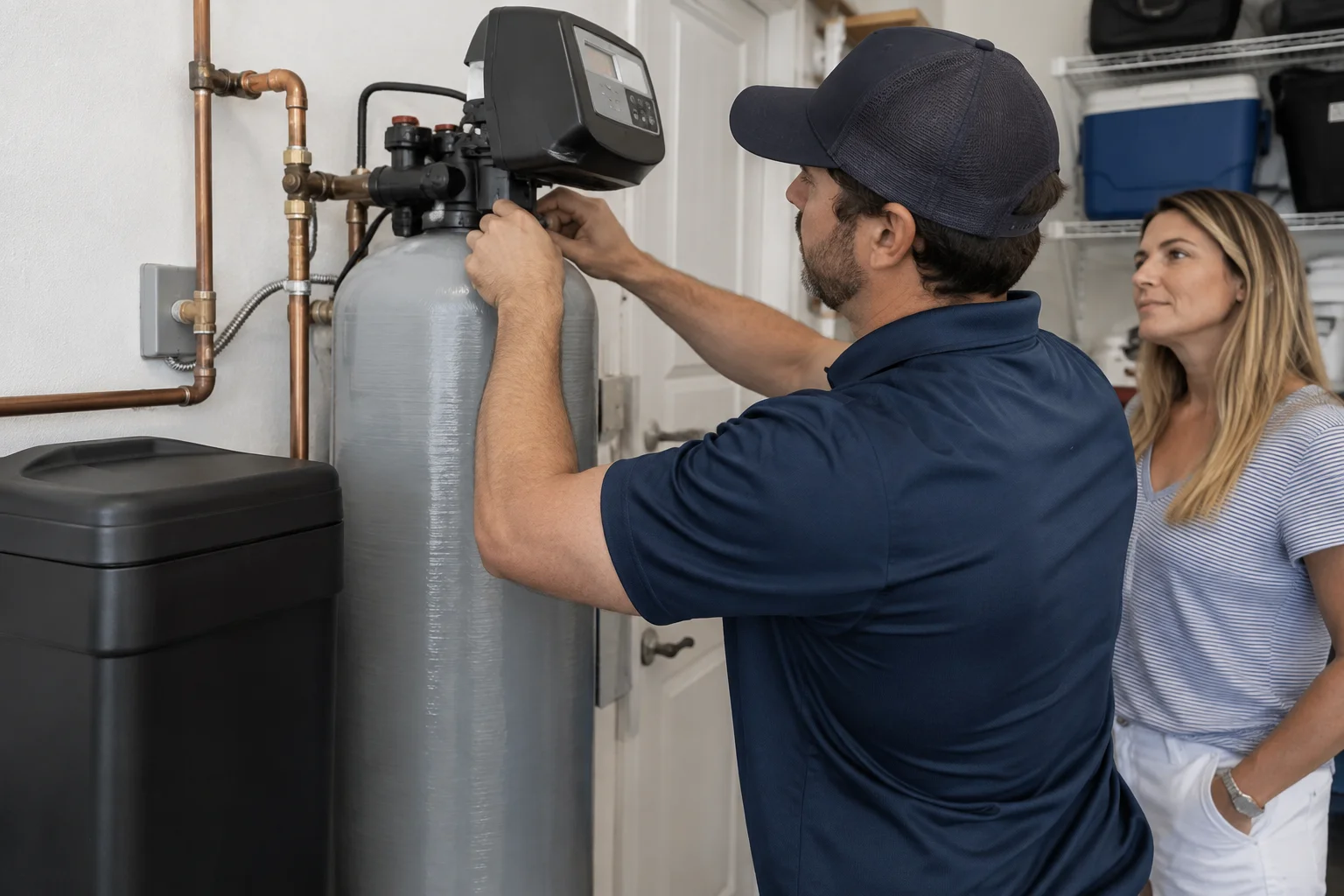
Water softeners are mechanical systems with settings, flow rates, and schedules. Even a well-installed system can struggle when something changes in the home or when routine care is inconsistent. Here are the most common causes A Superior Mechanical technicians see when families call about water softener service or water filtration near me needs.
1) The softener is not sized for your household and water use
A frequent issue is capacity mismatch. If the system is too small for your family’s water demand, it may regenerate before it fully softens the water, leaving minerals to keep building up. That can show up as scale buildup on faucets, soap scum that feels stubborn, and hard water spots that return too quickly after cleaning.
In Crestview, household routines also matter. More showers, more laundry, and higher dishwasher use can increase demand, especially during warm months when people spend more time at home.
2) Salt issues: wrong type, poor quality, or inconsistent filling
Salt is a core part of how a softener regenerates. Using the wrong salt type, letting the brine tank run low, or skipping refills can reduce performance. Homeowners may notice:
- Water that still feels “hard” even after softener service
- More spotting on glass and dishes
- Dry skin from hard water that does not improve
If you use salt pellets that do not dissolve as expected, or if the tank bridges (salt forms a hard crust), the system may draw brine incorrectly. That can make the softening schedule unreliable.
3) Incorrect settings or a regeneration schedule that does not match your water
Modern systems often use meters or time-based regeneration. If settings are wrong, the system can regenerate too often or not often enough. Too frequent regeneration can waste water and salt, while too infrequent regeneration can allow hardness to slip through.
Family changes can also throw off performance. New landscaping irrigation, a larger household, a new laundry routine, or a change in how long showers run can alter water use.
4) Clogged or aging components that limit flow
Over time, parts inside the softener can wear or collect scale. When valves, injectors, or filters become restricted, the system may not regenerate properly. Homeowners might see:
- Reduced water pressure at certain fixtures
- Persistent hard water spots on dishes
- Scale buildup around showerheads and plumbing
In some cases, mineral buildup can also affect how quickly the water heats, which can contribute to faster wear on water heaters and other appliances.
5) Bypass valves left open or plumbing connections changed
Sometimes the softener is installed correctly, but a bypass valve is accidentally left in the wrong position after maintenance. Other times, a plumbing change can alter flow paths. If hardness is still showing up, it is worth checking whether the unit is actually treating the water entering your home.
6) The water issue is not only hardness
Hardness is only one part of water quality. A home can have softened water and still experience unpleasant tastes, cloudiness, or odor concerns. Families in Crestview may notice chlorine taste in water, sediment, or cloudy ice cubes even when the softener is working.
That is where whole home water filtration, reverse osmosis, and clean water systems near me searches can make sense. For many households, the best results come from combining approaches: softening for scale control, filtration for sediment and taste, and reverse osmosis for drinking and cooking water.
Maintenance that protects fixtures, appliances, and comfort
Homeowners can do a lot to keep water softening performance steady. Below are practical steps that help protect plumbing, reduce scale buildup, and support better water for daily life.
Check salt levels and avoid salt bridging
Make it a habit to check the brine tank periodically. If you notice salt crusting, clumping, or a hard cap on top of the salt, the system may not be drawing brine properly. Keep the tank filled and use the recommended salt type for your system.
If you are using an AO Smith water softener, follow the manufacturer guidance for salt and operation. When in doubt, ask a technician to confirm the correct salt type and settings for your model.
Inspect the softener’s performance and look for “slip”
Even with good maintenance, performance can drift. Watch for trends:
- Hard water spots on glass returning sooner than usual
- Soap that does not lather or rinse well
- Scale buildup around faucets and showerheads getting worse
These are not always immediate “breakdowns.” They often point to reduced softening capacity or a regeneration issue.
Keep an eye on water heaters and appliance scale
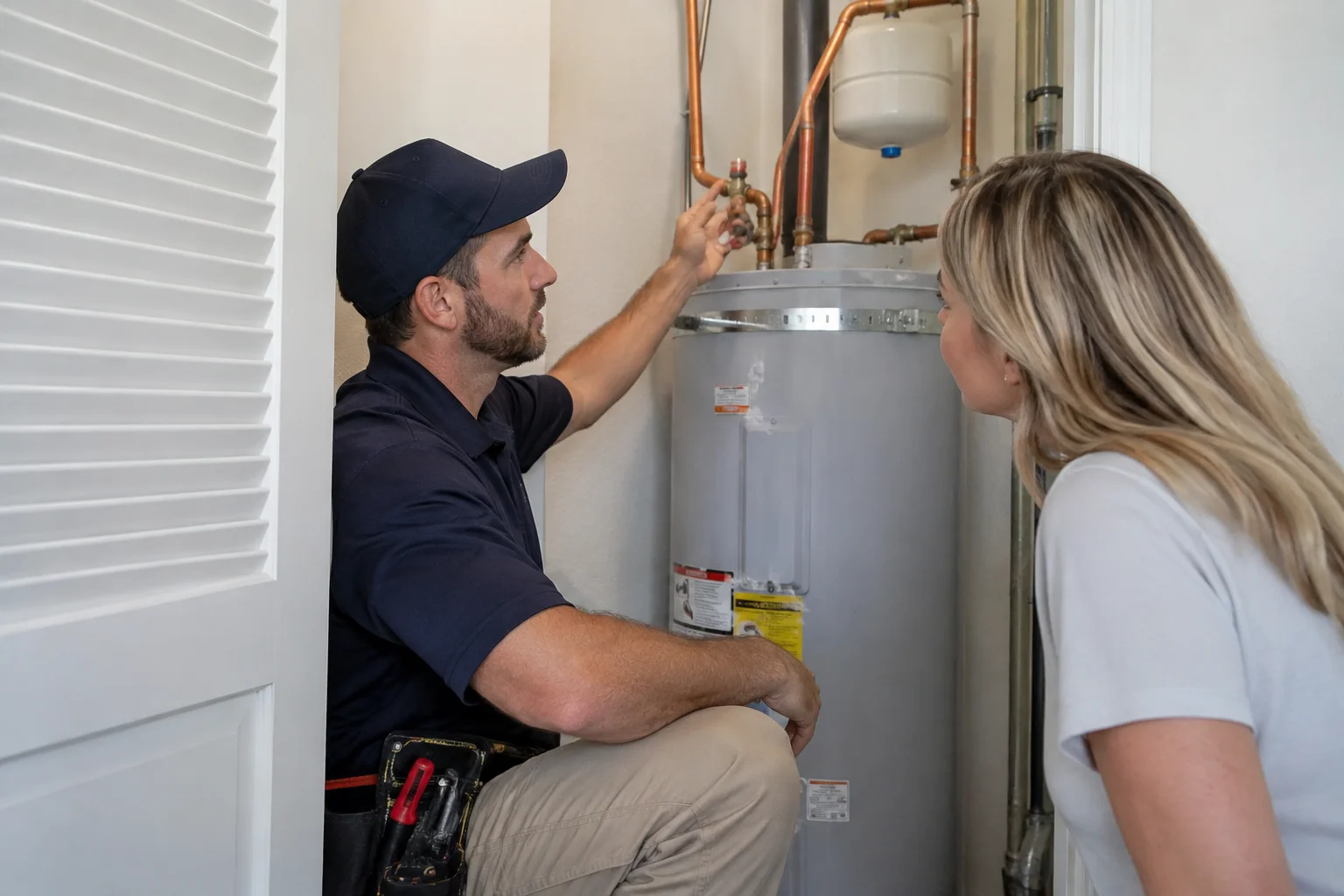
Scale buildup inside water heaters and appliances can reduce efficiency and shorten service life. If you see more frequent repairs or rising energy use, it can be tied to hardness that is not being controlled. When hard water treatment becomes part of protecting fixtures and appliances, you are not just preventing ugly spots. You are also improving long-term reliability.
Use the right cleaning routine for fixtures
Even with a properly working softener, minerals can build up where water sits. Regular cleaning helps. For example, wiping shower glass and faucets after use can reduce the chance of scale hardening. If you have heavy deposits, use products that are safe for your fixtures and avoid harsh methods that damage finishes.
This matters for Crestview homes where families may use well water or local water sources that can vary seasonally. Consistency helps you spot early performance changes.
Test water quality at the right times
For homeowners planning water softener installation near me or who already have a system, testing is the fastest way to confirm what is happening. A technician can check hardness levels and evaluate whether softening is effective.
If you also notice chlorine taste in water, cloudiness, or odor concerns, you may need filtration beyond softening. That can include reverse osmosis system near me solutions for drinking water or whole home water filtration to protect the entire plumbing system.
How reverse osmosis and whole home filtration fit with softening
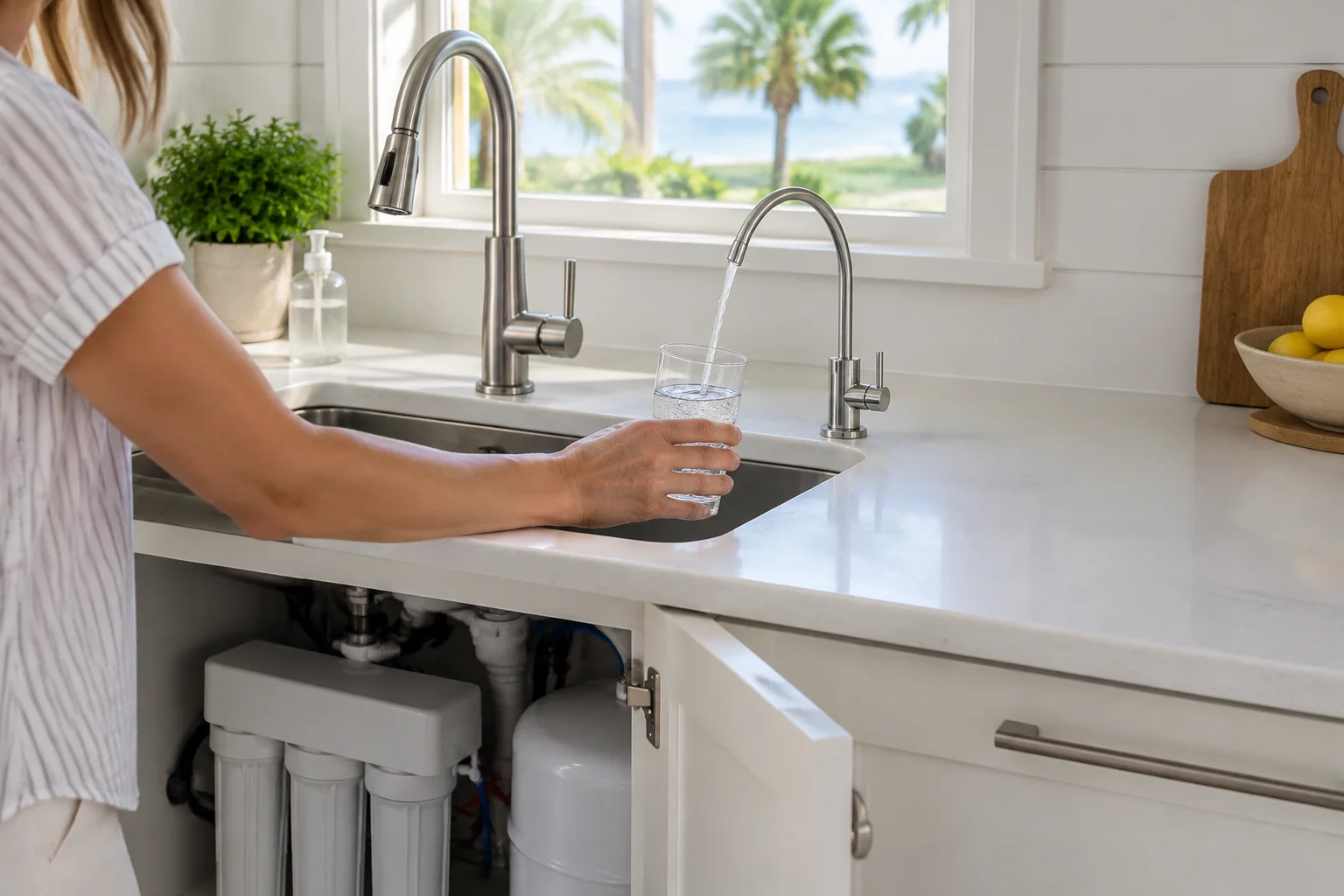
Many Crestview families want two things at once: protect plumbing from scale and improve what they drink and cook with. Softening helps with mineral scale, but it does not always address taste, odor, sediment, or dissolved contaminants.
Whole home water filtration: cleaner water across every tap
Whole home water filtration can reduce sediment and improve water clarity and taste throughout the house. That can help with:
- Clarity, including concerns like cloudy ice cubes
- Less sediment in fixtures and plumbing
- Better performance of appliances that depend on consistent water quality
For families searching for home water purification near me, whole home filtration often pairs well with softening. It supports a “clean water systems” approach rather than treating only one symptom.
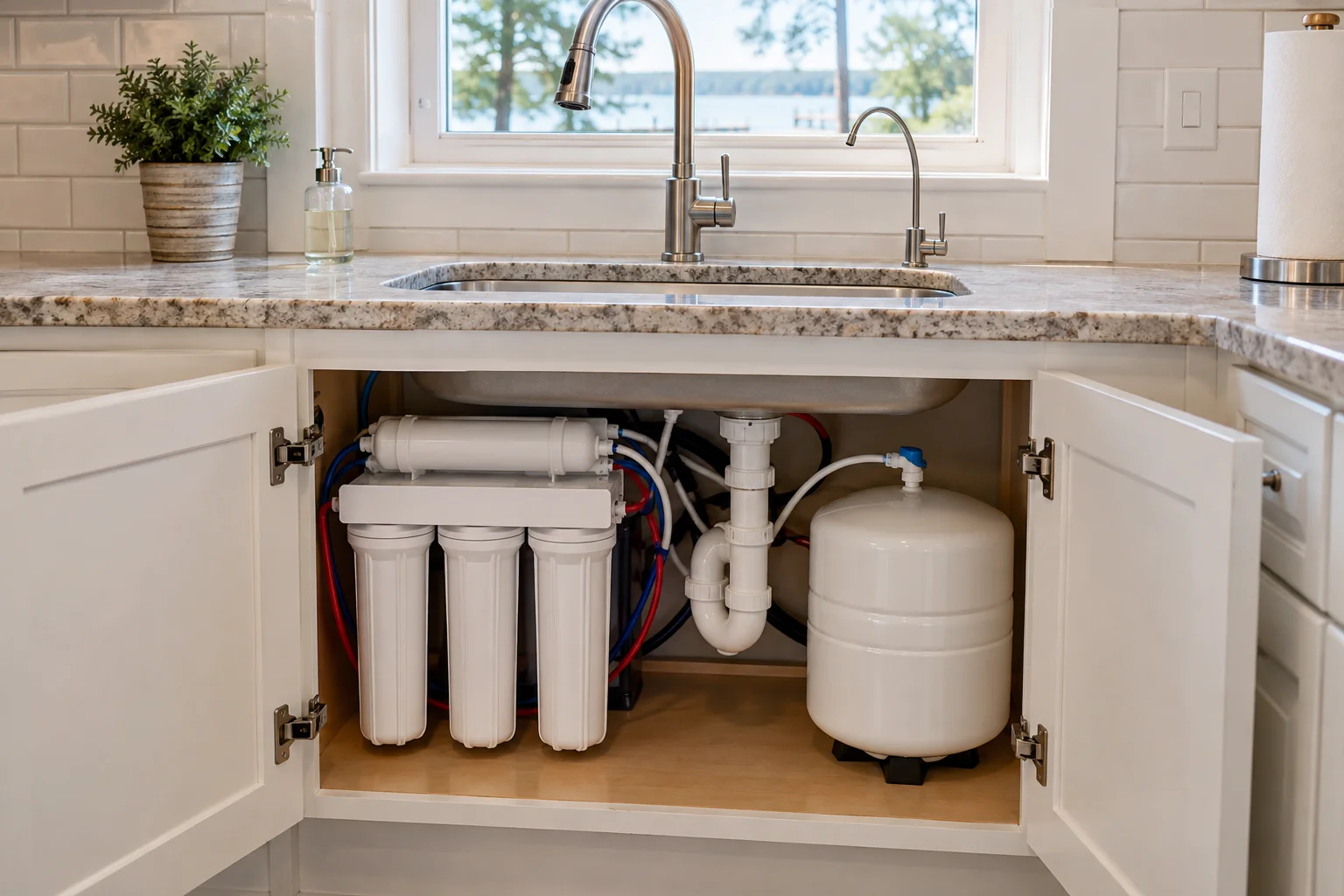
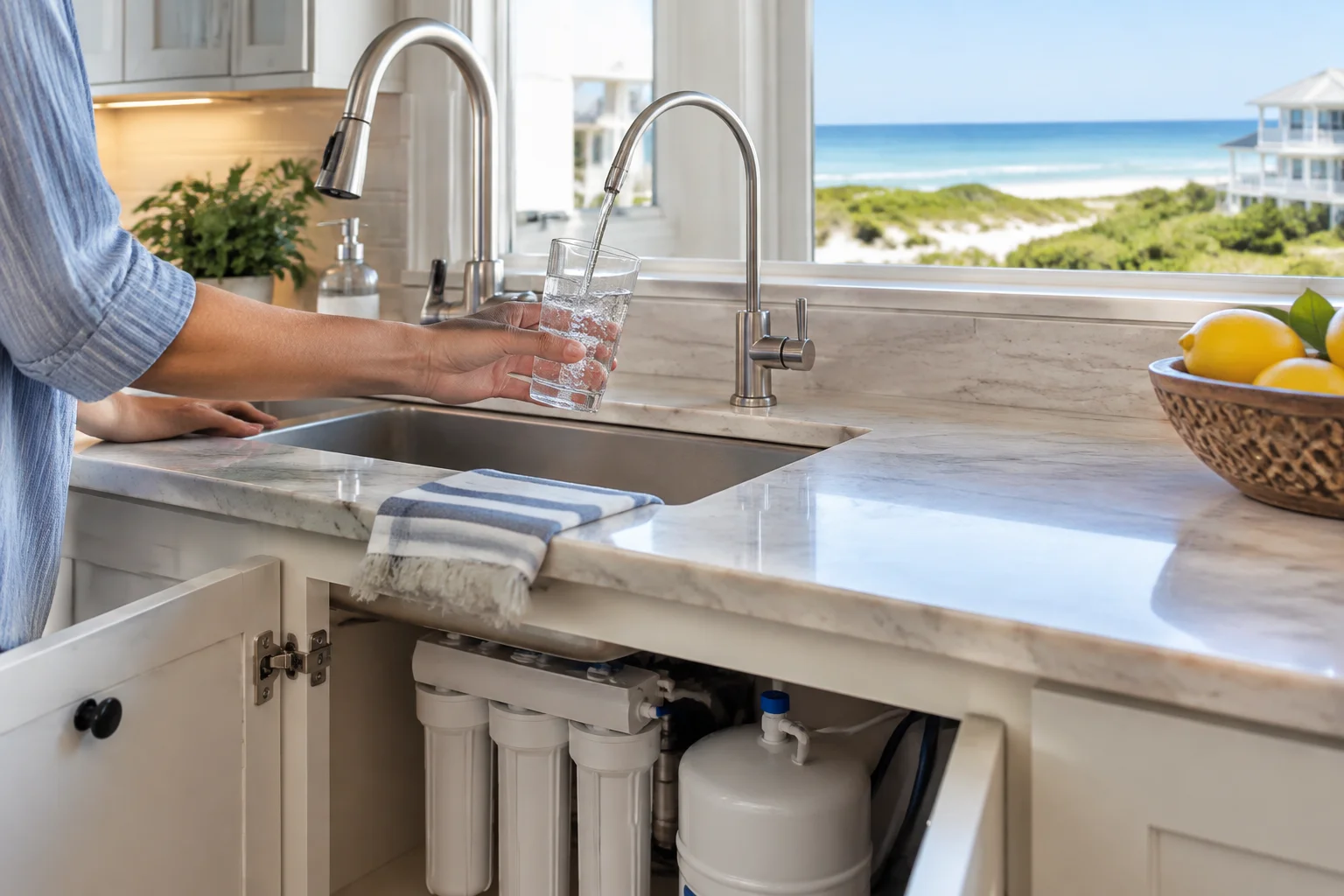
Reverse osmosis: focused improvement for drinking and cooking
Reverse osmosis is a popular choice when homeowners want better drinking water and better cooking water. It can help reduce contaminants that affect taste and odor, which is why many households notice a difference in:
- Coffee taste
- Cooking water flavor
- How ice looks and tastes
If you already have a softener and still notice unpleasant taste or odor, a reverse osmosis installation near me may be the next step. Many homes use RO at the kitchen sink while softening and filtration protect the rest of the plumbing.
Local Crestview factors that make service and maintenance matter
Crestview homes experience everyday water use patterns shaped by Florida’s climate and lifestyle. Warm seasons often mean more showers, more laundry, and more time at home. Changes in household demand can affect how a softener performs, especially if settings or capacity are not updated.
Seasonal variations can also influence water clarity and how minerals show up at fixtures. When homeowners notice scale buildup around faucets and showerheads, it is not only a visual issue. It is a clue that the water treatment plan may need adjustment.
This is why choosing a local water treatment service matters. A technician familiar with Crestview and Okaloosa County can help you select the right equipment, confirm proper settings, and maintain performance over time.
Practical troubleshooting: what to check before calling
If you see signs of hard water spots on dishes or scale buildup on faucets, it can help to do a quick check first. These steps can narrow down the cause.
Look at your daily “water moments”
Think about the last week in your home. Did the problem start after a water outage? Did you refill the brine tank and notice no improvement? Is the kitchen sink and dishwasher showing spots while the rest of the home seems better?
Those observations help a technician determine whether the issue is capacity, a bypass condition, salt problems, or a need for additional filtration.
Check for soap lather and rinse behavior
If soap does not lather or rinse well, it often points to hardness slipping through. That is when hard water treatment becomes part of protecting your home comfort, not just your fixtures.
Pay attention to taste and odor separately
If you are dealing with metallic, chlorinated, or unpleasant taste, or you are concerned about visible sediment, discoloration, and odor, softening alone may not solve it. In that case, homeowners often explore water filtration near me solutions such as whole home filtration or reverse osmosis for drinking water.
When to call A Superior Mechanical for water softener service
Some water softening problems are simple maintenance items, but others require a professional check of settings, components, and performance. Call A Superior Mechanical when you see persistent issues like:
- Hard water spots on glass and dishes continue despite regular salt refills
- Scale buildup around faucets and showerheads keeps increasing
- Dry skin from hard water does not improve
- Cloudy ice cubes, chlorine taste in water, or unpleasant odors persist
- You suspect sediment, discoloration, or odor concerns beyond hardness
You can review our Crestview service area information here: /service-areas/okaloosa-county/crestview. For water softening services specifically, visit /service-areas/okaloosa-county/crestview/water-softening-services-cocfl.
If your household wants to improve both scale control and drinking water quality, explore our water filtration options at /water-filtration-ro-water-softeners. Many families find that pairing water softening with the right filtration plan leads to better drinking water, better cooking water, and fewer mineral headaches across the home.
For homeowners who are also thinking about home maintenance beyond water treatment, these related reads may help you plan smarter home care: How Crestview Homeowners Can Make Smarter Choices About Plumbing Services and Smart Plumbing Replacement Habits for Crestview Homes That Help Prevent Costly Repairs.
How to keep your water softener and clean water systems performing year-round
When water softening services run smoothly, the impact shows up in the everyday scenes that matter to families. Kids come out of the shower with skin that feels comfortable. You load the dishwasher and notice fewer stubborn spots. Laundry feels better. The kitchen sink water makes coffee taste more balanced, and ice looks clearer.
To keep that momentum, focus on three pillars:
- Match the system to your home so capacity and settings fit your household water use
- Maintain the softener by keeping salt levels stable and addressing performance drift early
- Use the right treatment layers so taste, odor, sediment, and drinking water quality do not rely on softening alone
With the right approach, you protect fixtures and appliances from scale buildup, reduce visible hard water spots on glass and dishes, and support better drinking water throughout Crestview and Okaloosa County. If you are searching for water treatment near me and want a plan that fits your household, A Superior Mechanical helps you move from guesswork to clear results.
If you want broader context on service options in the region, Okaloosa County coverage details are available at /service-areas/okaloosa-county.
Find Water Softening Services in Crestview, FL
If you need Water Softening Services in Crestview, FL, visit our local service page or contact A Superior Mechanical today.
For a broader look at whole-home water filtration, reverse osmosis, and water softener options, visit our water filtration, RO, and water softener page.
Map of Crestview, FL
Frequently Asked Questions
Why does my water still have hard water spots even after softening?
Hard water spots on glass and dishes can mean the softener is not regenerating correctly, the system is under-sized for your household, a bypass valve is open, or there is an issue with salt or internal components. A technician can test hardness and check settings and flow to pinpoint the cause.
Can water softeners help with chlorine taste in water and cloudy ice cubes?
Water softeners focus on hardness and scale. They may not fully address chlorine taste, odor, or cloudiness. Many Crestview homeowners pair softening with whole home water filtration and use reverse osmosis for drinking and cooking water to improve taste and clarity.
How often should I schedule water softener maintenance in Crestview, FL?
A good rule is to have your system inspected at least once a year, and more often if you notice changes like increased scale buildup around faucets, soap that does not lather, or persistent dry skin from hard water. Annual service helps confirm settings, clean relevant parts, and keep performance steady.
What salt type should I use for an AO Smith water softener?
AO Smith systems typically have specific guidance for salt type and operation. The safest approach is to follow the manufacturer instructions for your exact model. If you are unsure, a technician can confirm the recommended salt and check for issues like salt bridging.
When should I consider reverse osmosis instead of only water softening?
If you have concerns like metallic or unpleasant taste, odor, sediment, discoloration, or cloudy ice cubes, reverse osmosis can target drinking and cooking water quality more directly than softening. Many homes use RO at the kitchen sink while softening and whole home filtration protect the rest of the plumbing.
Related Articles
- How Crestview Homeowners Can Make Smarter Choices About Plumbing Services
- Smart Plumbing Replacement Habits for Crestview Homes That Help Prevent Costly Repairs
- Understanding Electrical Financing Before Small Problems Turn Unsafe in Crestview
- Protecting Crestview Homes With Smarter Electrical Integration
Photo Gallery