When Florida heat and humidity hit hard, an HVAC system can go from “working fine” to “not keeping up” faster than homeowners expect. In Springfield, Bay County, where summer air often feels thick and coastal conditions can add extra stress to equipment, emergency cooling concerns are real. The good news is that smart planning can help you respond quickly, reduce comfort problems, and make professional HVAC service more efficient when you need it most.
If you are searching for emergency HVAC services in Springfield, FL, this guide focuses on what you can do right away, what to watch for, and how to prepare for AC repair, heat pump service, ductwork issues, and indoor air quality concerns when the system is struggling.
Springfield comfort problems often start with airflow and moisture
Many emergency HVAC calls in Springfield are not caused by one single dramatic failure. Comfort issues often build up through airflow restriction, moisture management problems, or thermostat and control settings that do not match the current conditions.
Florida summers are humid, and that humidity has to be managed by the system’s air handling process. When airflow is weak or the system cannot move air across the evaporator coil effectively, you may notice:
- Air feels warm or only cools part of the home
- Humidity stays high even when the thermostat says the system is running
- Musty odors or a “stale air” feeling
- Condensate drainage concerns, such as water collecting near an indoor unit
- Frequent cycling, where the system turns on and off repeatedly
Airflow and moisture are closely connected. If condensate drainage is blocked or if airflow is restricted by dirty filters or ductwork issues, the system can struggle to dehumidify. That can create a feedback loop: the home feels hotter and damper, the thermostat runs longer, and the system works harder.
Common emergency HVAC symptoms homeowners can recognize
When you are dealing with emergency cooling concerns, time matters. Look for patterns that suggest the system needs urgent attention from a licensed HVAC contractor.
AC repair emergencies that show up as “not cooling”
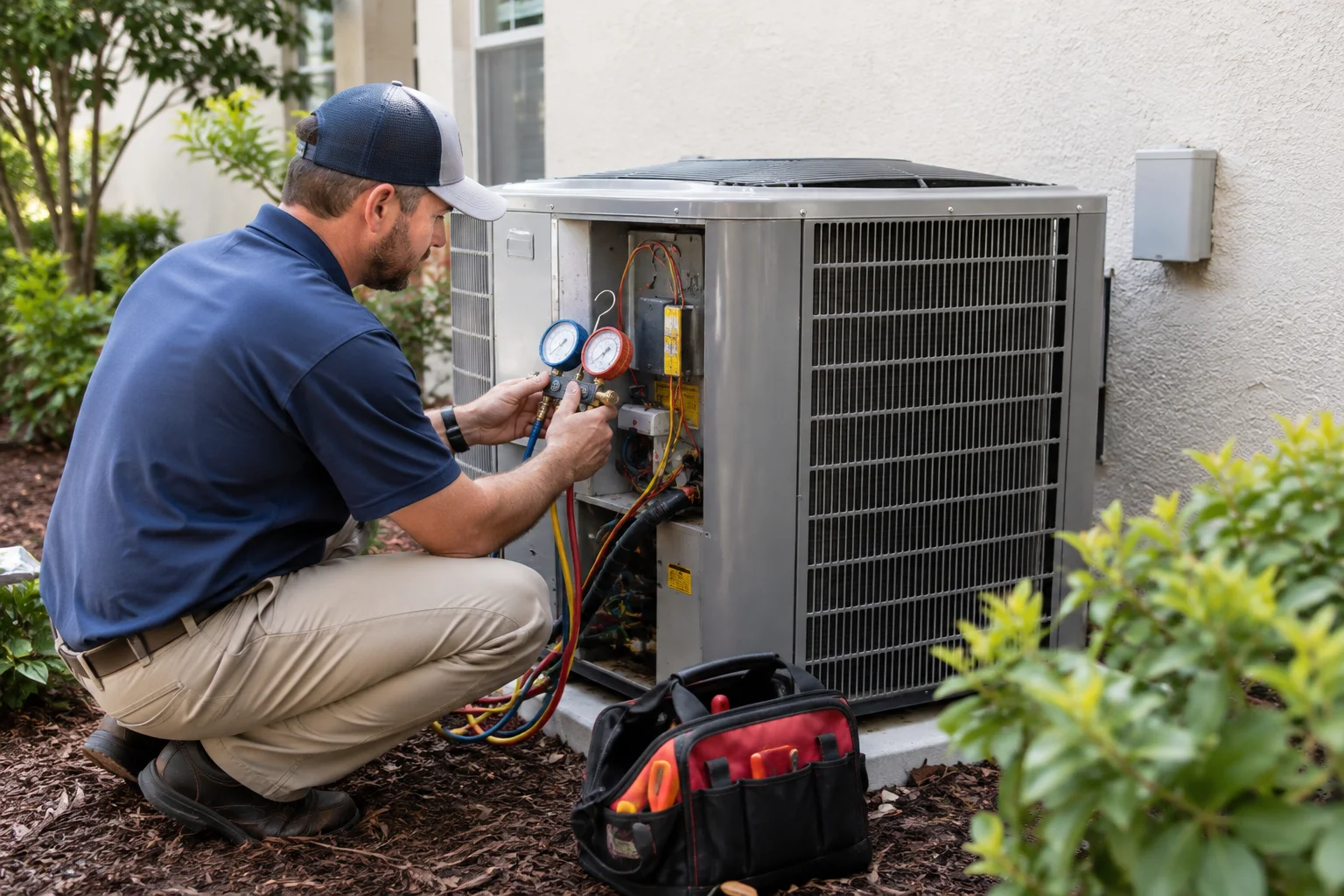
Homeowners often call for air conditioner repair near me when the system runs but does not cool. Common causes can include issues within refrigerant systems, airflow restrictions, thermostat miscommunication, or condensate drainage problems. Because refrigerant systems involve safety and performance considerations, any refrigerant-related troubleshooting should be handled by a professional after an in-person evaluation.
Heat pump service issues during humid Florida weather
If you have a heat pump, it may still face comfort problems during the cooling season. A heat pump relies on controlled airflow and proper refrigerant system operation. If the unit is not achieving expected comfort, the issue could involve airflow, controls, or refrigerant system performance. A professional can assess the setup and confirm what is actually happening.
Thermostat and control problems that mimic mechanical failure
Sometimes the HVAC “breakdown” is really a control issue. Examples include incorrect mode settings, a thermostat that is out of calibration, or a thermostat that is not communicating properly with the indoor unit. If your system is running in an unexpected way or the temperature readings seem off, check basic settings before calling. Still, a qualified technician should verify operation to avoid chasing the wrong problem.
Condensate drainage signs that should not be ignored
In humid conditions, proper condensate drainage is essential. If a drain line is clogged or the condensate system is not managing water correctly, you can see:
- Water pooling around the air handler or near the furnace/air handler closet
- Signs of moisture on nearby surfaces
- Unpleasant odors that worsen as humidity rises
These issues can lead to indoor air quality problems and can also affect system operation. Professional inspection helps prevent damage and restores safe operation.
Smart emergency planning: what to do before the crisis
Emergency HVAC service works best when homeowners have a plan. You do not need to become a technician. You do need a few practical steps that reduce confusion and help your HVAC company diagnose faster.
Create a “comfort log” for faster troubleshooting
Write down what you observe when comfort starts slipping. A quick note can save time during an emergency call:
- When the problem started (morning, afternoon, after a storm, after a power flicker)
- What changed (temperature, humidity feel, unusual odors, airflow differences)
- Whether the system cycles on and off
- Any visible water around the indoor unit
- Thermostat settings and mode
This is especially helpful when the issue is intermittent or when airflow problems come and go with outdoor conditions.
Know where your filters, registers, and drain area are
Before an emergency happens, familiarize yourself with basic parts of your system. In Springfield’s humidity, filters and airflow restrictions can contribute to comfort breakdowns. Make sure you know:
- Where the air filter is located and how to check it
- Which registers are blocked or closed
- Where the indoor unit is and whether you ever see water nearby
For ductwork and airflow concerns, even small obstructions can affect performance. If you have a home with long duct runs or older ductwork, airflow issues can surface during the hottest weeks.
Understand energy use during emergency cooling
When a system is struggling, it may run longer and cycle more often, which can increase energy use. Homeowners may notice higher utility bills during prolonged comfort problems. While energy costs matter, the bigger priority is getting the system back to safe, efficient operation. A professional HVAC service can help identify what is limiting performance, including airflow, indoor air quality factors, and refrigerant system operation.
What you can safely check during an emergency AC repair
When comfort breaks down, start with simple, safe checks that do not require opening equipment or handling refrigerant systems.
Confirm thermostat mode and temperature settings
Verify that the thermostat is set to cooling mode and that the target temperature is realistic for the conditions. If your home is very humid, lowering the setpoint too aggressively may not fix the underlying issue. It can also cause the system to run longer while the comfort problem persists. If the thermostat is set correctly and the system still fails to cool, move to the next checks and plan for professional assistance.
Check airflow at supply vents
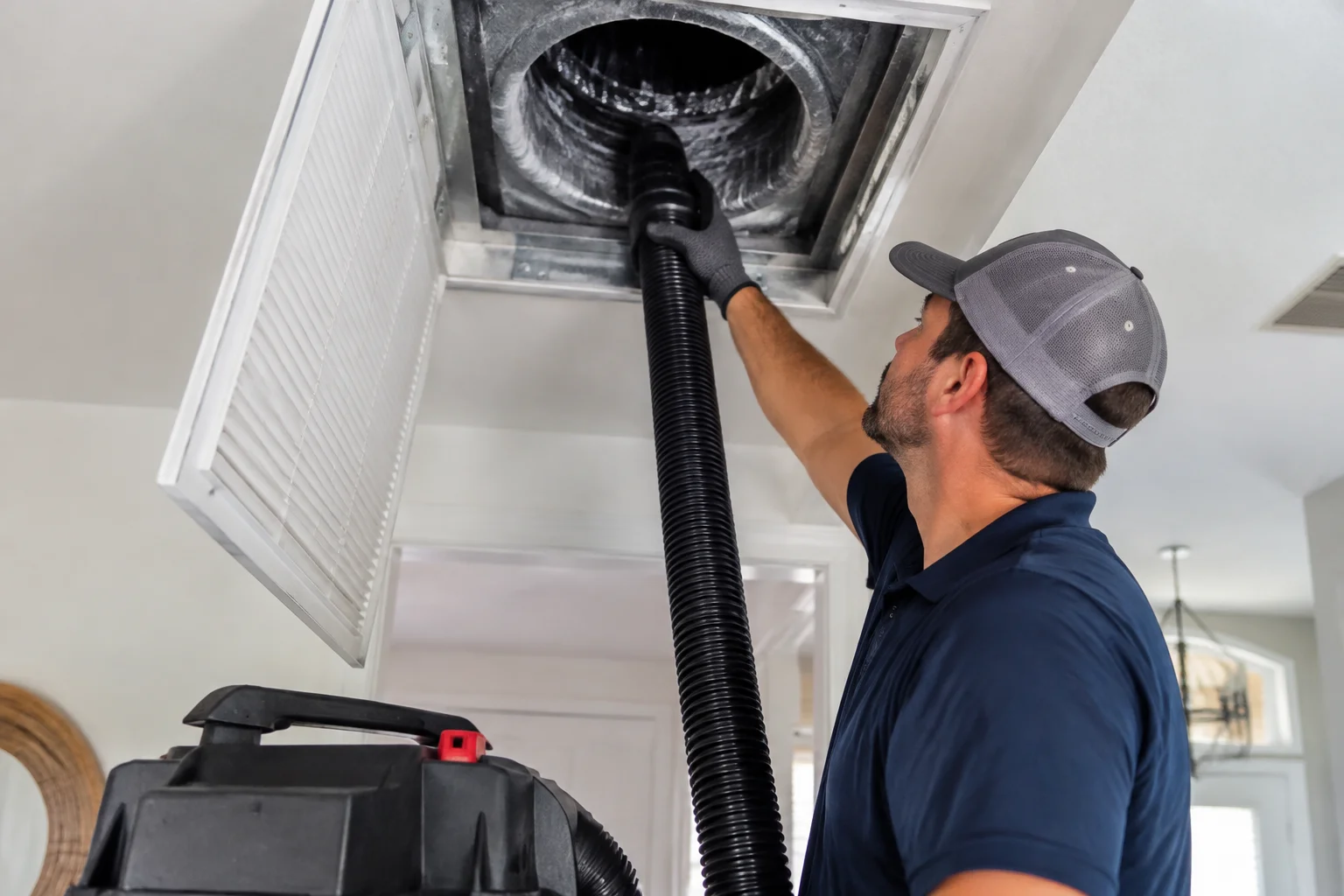
Walk room to room. Is airflow weak everywhere or just in certain areas? Uneven airflow can point to ductwork restrictions, return air issues, or problems with the air handler. If you feel strong airflow in some rooms but not others, it may indicate ductwork or register balancing concerns that a technician can assess with duct inspection.
If you are considering air filtration and purifiers to support indoor air quality, remember that filtration upgrades should not replace emergency repairs. Airflow must be adequate for filtration to work properly.
Inspect the filter and replace it if it is obviously clogged
A dirty filter can reduce airflow and contribute to coil icing or poor dehumidification. If the filter is heavily clogged, replacing it is a reasonable step. If airflow does not improve after filter replacement, the problem likely involves more than filtration.
Look for condensate drainage problems
If you see water where it should not be, or if you notice a wet smell, treat it as an urgent maintenance concern. Condensate drainage problems can worsen humidity and create indoor air quality issues. Do not attempt to clear drain lines without proper training and equipment.
Why coastal and Bay County conditions can complicate HVAC emergencies
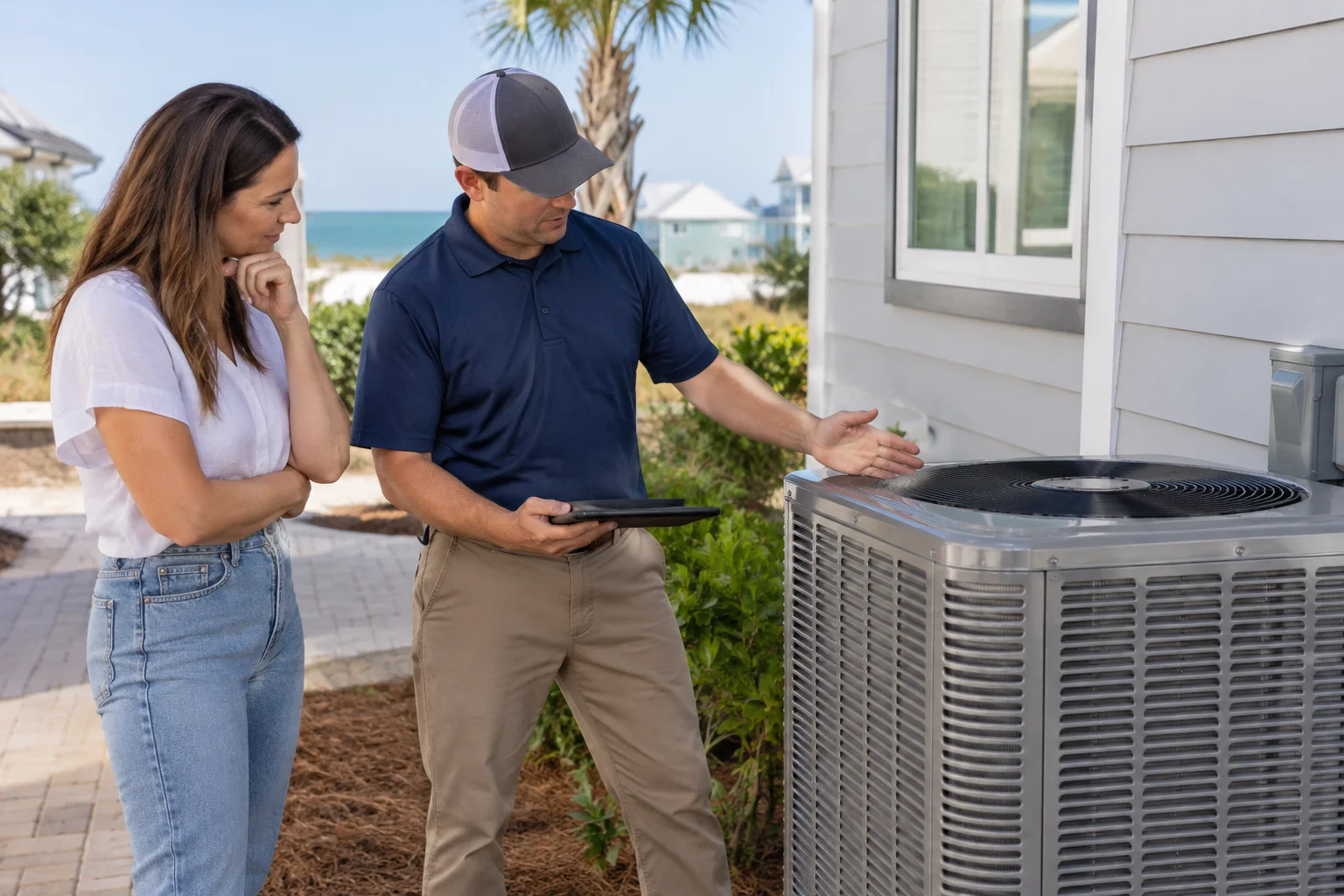
Springfield is part of Bay County, and local conditions can be tough on HVAC systems. Salt air can contribute to corrosion over time, and high humidity increases the system’s workload. If your home is near coastal areas, you may also notice more frequent maintenance needs for outdoor units, airflow components, and condensate management.
Coastal exposure does not mean you should ignore emergency signs. It means professional service matters even more. A licensed HVAC contractor can evaluate how environmental factors are affecting performance and recommend preventive HVAC maintenance steps that fit local conditions.
How professionals plan emergency repairs without guessing
Homeowners sometimes worry that technicians will “throw parts” at the problem. A Superior Mechanical focuses on practical diagnosis and comfort restoration. That usually starts with understanding how the system is operating, how air is moving through the home, and whether moisture management is working properly.
Because refrigerant systems are safety and performance critical, and because electrical and control systems require careful evaluation, a refrigerant diagnosis should not be done remotely and equipment replacement should not be decided without an in-person assessment.
During emergency HVAC service, a technician may evaluate:
- Thermostat operation and system control response
- Airflow through the indoor unit, supply registers, and return paths
- Condensate drainage and moisture handling
- Refrigerant system performance indicators, only after appropriate on-site checks
- Ductwork airflow limitations that can affect cooling and dehumidification
- Indoor air quality factors tied to comfort and humidity
That approach helps avoid unnecessary steps and supports more reliable long-term performance.
Emergency cooling concerns and safety priorities
During extreme heat, comfort problems can become health and safety issues. If anyone in the home is at higher risk, prioritize cooling stability and indoor air quality. If the system is not cooling, do not rely on temporary fixes for long. Arrange urgent HVAC service so the home can return to safe, manageable temperatures and humidity levels.
Also pay attention to unusual sounds, burning smells, or repeated system failures. Those are not DIY troubleshooting situations. A licensed HVAC contractor near you can assess the situation safely and determine the next steps.
Preventive HVAC maintenance that reduces emergency calls
Emergency repairs are sometimes unavoidable, but preventive HVAC maintenance can reduce how often problems reach “urgent” status. In Springfield’s humidity and heat, the goal is to keep airflow strong, moisture management consistent, and controls accurate.
Schedule maintenance before peak cooling weeks
Whole-home comfort depends on steady operation. Preventive maintenance typically includes cleaning and inspection tasks, plus verification of key components that affect cooling performance. This is also a good time to review your thermostat settings and confirm that the system is configured properly for the home’s layout.
Support indoor air quality during humid months
Indoor air quality is not only about air filters. It is about how humidity is managed, how air is circulated, and whether the system is maintaining consistent comfort. If you are dealing with allergies, dampness, or stale air, consider pairing maintenance with indoor air quality services. You can explore indoor air quality services to address comfort-related concerns.
For homeowners who use whole home dehumidifiers, maintenance matters because dehumidification is part of the same comfort system. If you want more context, read Why Better HVAC Maintenance Matters for Whole Home Dehumidifiers in Sandestin.
Plan ductwork and airflow improvements if distribution is uneven
Some emergency comfort problems are really airflow problems. If certain rooms never cool properly, you may need duct inspection near me and airflow verification. Ductwork issues can also contribute to higher energy use because the system runs longer to compensate.
If you suspect duct restrictions or you have ongoing hot spots, ask for a duct inspection as part of your HVAC service planning.
When Springfield homeowners should call for emergency HVAC services
Contact A Superior Mechanical’s emergency HVAC services when comfort problems are active and you need cooling restored quickly. Call right away if you notice:
- The system runs but air is not cooling
- Airflow is weak or uneven across the home
- Humidity remains high even though the system runs frequently
- You see signs of condensate drainage issues or water near indoor equipment
- The thermostat seems correct but the system behavior is abnormal
- Unusual odors, repeated tripping, or alarming system behavior
For homeowners who want to explore broader options for new setups, Springfield also has opportunities for upgrades that match the home’s needs. You can review the city overview at /service-areas/bay-county/springfield and the county service area at /service-areas/bay-county.
Planning repairs alongside upgrades: airflow, ductwork, and system type
Some homeowners use emergency repairs as a turning point to improve long-term performance. If you are considering changes, focus on comfort and airflow first. Upgrades should align with the home’s layout, ductwork condition, and indoor air quality goals.
For example, if your home has room-by-room temperature challenges, ductless mini-splits may be part of the solution for certain spaces. If you are building or upgrading new construction, review New Construction Air Conditioning. If you want a planning perspective, these upgrades still rely on good airflow and proper system design.
If you have questions about how airflow and comfort planning work in coastal conditions, you may find helpful reading in Smart HVAC Planning for Rosemary Beach Homes: Comfort, Airflow, and Coastal Protection.
Smart steps for Springfield renters and property managers
Rentals and multi-unit properties face the same humidity and cooling demands, but the operational stakes can be higher. When a tenant reports emergency cooling concerns, documented observations help. Ask tenants to note:
- When the issue started
- Whether other units are affected
- Whether there are any water leaks or musty odors
For property owners, emergency HVAC service planning can also support energy use control and reduce repeated callouts. A professional HVAC contractor can help coordinate repairs and preventive HVAC maintenance across units.
Smart HVAC service planning around heat pump installation and AC repair
Some Springfield homeowners are weighing repair versus replacement, or preparing for a heat pump installation near me during future seasons. Emergency comfort problems can be a clue that it is time to plan for long-term performance.
Still, it is important to separate immediate repair needs from future planning. A technician should evaluate system condition on-site. That evaluation can inform whether repairs are appropriate or whether a broader plan, such as heat pump installation or system replacement, should be discussed.
If you want a deeper look at maintenance planning for cooling performance, read Smart HVAC Planning for Air Conditioning Maintenance in Laguna Beach, FL. While that article focuses on another coastal market, the comfort principles around airflow and humidity management translate well to Florida homes.
How to choose an HVAC company when you need emergency AC repair
Not every HVAC company handles emergencies the same way. When you are searching for HVAC service near me or HVAC repair near me, prioritize clear communication and professional evaluation. Look for:
- Technicians who take time to understand comfort symptoms and airflow concerns
- Service that addresses condensate drainage and indoor air quality factors
- Safety-first troubleshooting, especially around refrigerant systems and controls
- A plan for preventive HVAC maintenance after repairs
Choosing a licensed HVAC contractor near me who works in Springfield and Bay County can also reduce delays and help ensure the right parts and tools are ready for the job.
Find Emergency HVAC Services in Springfield, FL
If you need Emergency HVAC Services in Springfield, FL, visit our local service page or contact A Superior Mechanical today.
Map of Springfield, FL
Frequently Asked Questions
What should I check first if my AC is running but the house is still warm?
Start with the thermostat mode and set temperature, then check airflow at multiple supply vents. If airflow is weak or uneven, or if humidity feels high, the issue may involve airflow, condensate drainage, or other system performance factors that require professional evaluation. You can review emergency options at emergency HVAC services in Springfield, FL.
Can high humidity mean I need ductwork service or indoor air quality help?
High humidity can be related to airflow limits, poor moisture removal, or condensate drainage problems. Ductwork restrictions can contribute to uneven cooling and dehumidification. If you are also dealing with stale air or allergy triggers, ask about indoor air quality services alongside HVAC repair.
Is it safe for me to try to diagnose refrigerant issues during an emergency?
No. Refrigerant systems require proper tools and safety procedures. A professional should perform an on-site evaluation before any refrigerant diagnosis or repair decisions. Focus on safe checks like thermostat settings, airflow observation, and filter condition, then contact a licensed HVAC contractor.
What are the most urgent signs of a condensate drainage problem?
Look for water pooling near the indoor unit, wet spots on nearby surfaces, or musty odors that worsen when the system runs. Condensate drainage concerns can affect indoor air quality and comfort, so it is best to schedule urgent service.
Related Articles
- Smart HVAC Planning for Rosemary Beach Homes: Comfort, Airflow, and Coastal Protection
- Why Better HVAC Maintenance Matters for Whole Home Dehumidifiers in Sandestin
- Why Commercial HVAC Service Matters in Ocean City Homes and Mixed-Use Properties
- Smart HVAC Planning for Air Conditioning Maintenance in Laguna Beach, FL
Photo Gallery