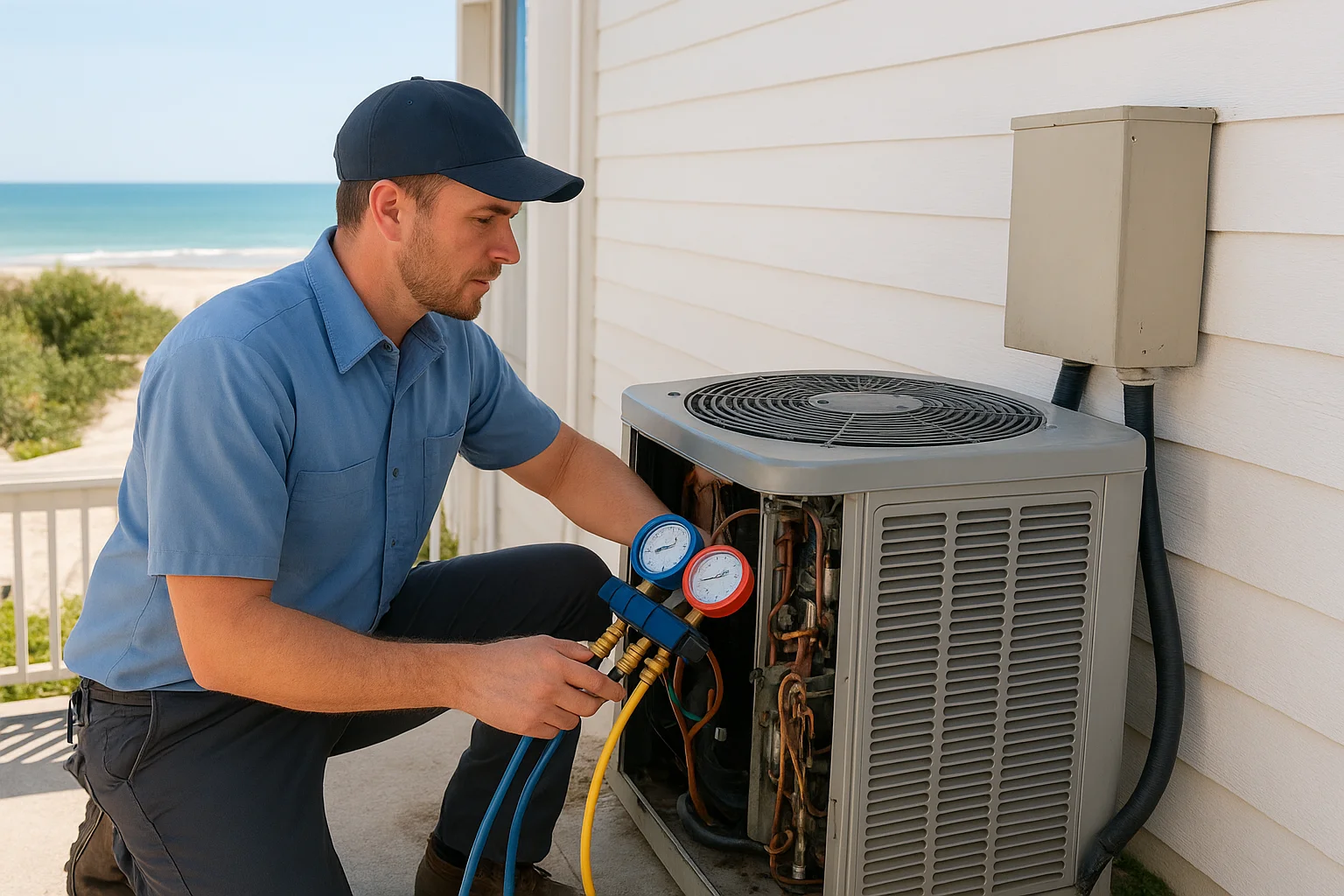
Living in Seagrove Beach, you already know the weather does not take a break. The coast brings persistent humidity, salty air, and long stretches of high temperatures. For many homeowners, that means the air conditioner runs far more often than people in cooler climates. When something goes wrong, it is not just an inconvenience. It can become an emergency HVAC situation, especially when indoor temperatures climb quickly and humidity control slips.
This article explains what can cause problems with 24/7 emergency HVAC services in Seagrove Beach, FL, and why long cooling seasons stress HVAC equipment. You will also find practical steps for prevention, plus guidance on the types of issues that should be handled by a licensed local HVAC contractor.
Why Seagrove Beach cooling seasons put extra load on HVAC systems
In the Gulf Coast region, cooling is not a short seasonal project. For many homeowners, the air conditioner may be running much of the year, with only brief transitions. That longer run time matters because HVAC systems are designed for steady cycles, not constant strain without relief.
When outdoor temperatures stay high, the system has to work longer to maintain indoor comfort. In Seagrove Beach homes, the humidity load is often the bigger challenge. Air conditioners cool and dehumidify at the same time, but high moisture levels can increase condensation and stress parts that help move air, transfer heat, and drain moisture safely.
Salt air in coastal areas can also contribute to corrosion over time. Even if your system is installed properly, the environment can accelerate wear on metal components and the surfaces that handle airflow and condensate drainage.
Common emergency cooling problems that show up after long AC run times
When homeowners call for emergency AC repair near me, the issue often has a pattern. The system may have been struggling for weeks, then a failure triggers the urgent call. Long cooling seasons can push small problems into noticeable breakdowns.
1) Airflow problems that cause the system to overwork
Airflow is central to AC performance. If air cannot move through the system efficiently, the indoor coil and other heat-transfer surfaces do not perform as designed. This can lead to poor cooling, uneven temperatures, and higher energy use because the system runs longer to reach the thermostat setpoint.
Airflow issues can come from dirty filters, blocked returns, closed vents, or ductwork that does not distribute air well. In coastal Florida homes, ductwork can also be affected by humidity-related buildup over time. When airflow drops, the system can become more likely to trip safety controls, freeze up, or short-cycle.
If you suspect uneven cooling or weak airflow, it is worth reviewing ductwork and airflow paths. If you need duct repair or a ductwork assessment, see Ductwork Services.
2) Condensate drainage challenges during humid stretches
Air conditioners remove moisture from indoor air. That moisture collects on the indoor coil and drains through condensate lines. In a long, humid cooling season, condensate drainage systems can face more volume and more frequent cycling.
When condensate drainage is restricted, you may notice water around the indoor unit, musty odors, or rising indoor humidity even though the thermostat is calling for cooling. Some systems also use safety switches that can shut the unit down if water is not draining properly. That can turn a comfort issue into an emergency cooling concern.
Condensate drainage problems are not always visible, and troubleshooting requires careful inspection. A licensed technician can check the condensate line, confirm proper drainage, and inspect related components without guessing.
3) Refrigerant system strain and symptoms homeowners notice
Refrigerant systems are engineered to move heat in a specific way. If refrigerant levels are off or components are not operating correctly, cooling performance can degrade. In severe cases, the system may fail to cool adequately or may behave erratically.
It is important to be clear: homeowners should not attempt refrigerant diagnosis or charging on their own. Refrigerant work must be performed by trained professionals with the right tools and procedures. If you are experiencing persistent warm air, repeated shutdowns, or cooling that never reaches the thermostat target, a professional HVAC service visit is the right next step.
For homeowners searching for air conditioner repair near me, the goal is not just to get the unit running. The goal is to restore correct operation by identifying the underlying cause.
4) Thermostat issues that make the system cycle incorrectly
Thermostats control when the system runs and help maintain indoor comfort. During long cooling seasons, small thermostat problems can create bigger comfort problems. A thermostat that is misreading temperature, set up incorrectly, or struggling with sensors can cause frequent cycling or prevent the system from running when it should.
Some homeowners also switch between vacation rental schedules and full-time occupancy. If the thermostat schedule is not aligned with actual occupancy, the system may run harder than expected when the home is occupied, then feel like it is “catching up” during peak hours.
If you want to improve comfort control, consider Smart Thermostats for better scheduling and monitoring, but installation and setup should still be handled by a qualified HVAC professional.
5) Electrical and control board failures after sustained heat exposure
While the electrical side of HVAC should always be evaluated by a licensed technician, it is still helpful to know the kinds of symptoms that often show up after long run times. Control boards, relays, and other components can fail due to heat stress, cycling, or corrosion-related wear in coastal environments.
Homeowners may notice the system will start briefly and then shut down, or it may not start at all. In these cases, forcing operation is not a good idea. Safety controls exist for a reason, and proper troubleshooting matters.
How humidity, salt air, and airflow combine to accelerate wear
In Seagrove Beach, it is rarely one factor. Humidity increases moisture on surfaces and can contribute to microbial growth when indoor air is not properly ventilated or when system maintenance is inconsistent. Salt air can accelerate corrosion, particularly on metal components exposed to outdoor conditions.
At the same time, airflow and duct distribution determine whether the system can remove heat and moisture efficiently. If ductwork is undersized, poorly sealed, or restricted, the system may struggle to deliver the conditioned air your home needs. That increases runtime and energy use, which then increases wear on compressors, fans, and motors.
When all of these pressures stack up, the system may still “work” for a while, then fail during the hottest stretch of the year. That is when 24/7 emergency HVAC services become essential.
Signs your HVAC system may be heading toward an emergency
Not every breakdown is sudden. Many emergency calls start with warning signs that homeowners notice but do not connect to a larger HVAC problem. If you see any of the following, it is smart to schedule service before conditions worsen.
Cooling performance drops
The air feels warmer than usual, rooms do not cool evenly, or the system runs constantly without reaching the thermostat setting.
Humidity control slips
You notice sticky indoor air, condensation on surfaces, or musty odors. These can be linked to airflow, condensate drainage, or indoor air quality issues.
Strange sounds or frequent cycling
Short cycling, repeated start and stop, rattling, or grinding noises can indicate problems that worsen with heat and humidity.
Water issues around the indoor unit
Any signs of leaking or pooled water should be treated seriously. Condensate drainage problems can damage nearby materials and create indoor air quality concerns.
Thermostat behavior seems off
If the system runs when it should not, fails to respond, or the display seems inconsistent, do not just ignore it. Thermostat problems can lead to improper cycling and comfort issues.
What homeowners can do right now during a cooling emergency
If your air conditioner fails during a hot, humid day, the priority is safety and comfort. While you wait for professional help, a few steps can reduce strain on the system and help you manage indoor temperatures.
Check basic airflow and settings
Make sure vents are open, return paths are not blocked, and the thermostat is set to cooling mode. Replace a severely dirty filter if you have one available. If the filter is clean or you are unsure, stop and wait for a technician rather than guessing.
Do not repeatedly reset the system
Constantly turning power on and off can add stress to components. If the unit is tripping safety protections, it needs inspection.
Watch for moisture and odors
If you see water around the indoor unit or notice a strong musty smell, that can indicate condensate drainage or indoor coil issues. Keep the area clear and let the technician know what you observed.
For homeowners searching for HVAC service near me, the best next step is professional diagnosis on site. That is the only reliable way to assess refrigerant system performance, airflow, condensate drainage, and control operation without guessing.
Preventive maintenance that helps your system survive long cooling seasons
Preventive HVAC maintenance is not just a “nice to have” in the Florida heat. It is a practical way to reduce the odds of emergency breakdowns by improving system efficiency and catching problems early.
In Seagrove Beach, a maintenance plan typically focuses on the components that are under the most stress during long run times: airflow, indoor coil cleanliness, condensate drainage, thermostat operation, refrigerant system performance as observed during operation, and overall system controls.
Improve airflow and duct performance
Start with filter management and keep returns clear. If you have persistent hot spots or weak airflow, ductwork inspection can reveal issues like leaks, poor balancing, or restrictions. If you need help, ductwork services can be part of a broader comfort strategy.
Address indoor air quality while you maintain the system
Humidity and airflow problems can affect indoor air quality. Scheduling maintenance before the busiest months can help your system remove moisture more effectively and keep airflow consistent. If cleaner air and reliable HVAC are priorities, read A Practical Plan for Cleaner Air and More Reliable HVAC in Seagrove Beach.
Keep thermostats accurate and schedules realistic
During long cooling seasons, thermostat accuracy matters. If you use scheduling for a vacation rental or for times when the home is empty, confirm that the system is set up correctly. Smart thermostat options can help, but proper installation and configuration are key. See Smart Thermostats.
Plan for coastal wear and corrosion
Salt air and high humidity mean outdoor components can wear differently than they do inland. Maintenance should include checks of outdoor unit performance and attention to areas where corrosion can affect airflow and heat transfer.
Why local, licensed HVAC service matters in Walton County
Homeowners often search for licensed HVAC contractor near me during a breakdown because they need help that fits the local climate. A contractor familiar with Seagrove Beach conditions understands how long cooling seasons influence system behavior, how humidity affects condensate drainage, and how salt air can accelerate wear.
It also matters that emergency HVAC service is handled by professionals who can safely evaluate the system on site. That includes inspecting airflow, checking condensate drainage, reviewing thermostat behavior, and assessing refrigerant system performance based on observed operation. Homeowners should avoid DIY refrigerant work and avoid attempts to “fix” electrical or control issues without training.
If you want to explore the broader service area, you can also visit /service-areas/walton-county and the Seagrove Beach overview at /service-areas/walton-county/seagrove-beach.
When you should choose AC repair versus planning for replacement
Many emergency situations can be resolved with repairs, especially when the underlying issue is caught early. However, some homes end up needing system replacement after repeated failures or when the unit cannot maintain comfort efficiently.
Only an in-person evaluation can determine whether repair is the right path or whether air conditioning replacement is more appropriate. A technician should consider system condition, performance history, airflow and ductwork compatibility, and the overall ability to control humidity.
If you are comparing options, it can help to also consider how indoor comfort and energy use are affected by airflow and ductwork. A system that is mechanically sound but paired with restricted ducts can still underperform during peak summer conditions.
Extra considerations for heat pumps, rentals, and homes with different occupancy
In addition to standard air conditioning service, many homeowners in the region rely on heat pumps for both cooling and heating. Heat pump service can face similar stress factors during extended cooling periods, including airflow demands and humidity control requirements.
For vacation rentals and second homes, the schedule changes can create sharp swings in indoor temperature and humidity. A system that is stable during normal occupancy can struggle when the home is turned up or down aggressively. If you manage a rental property, you may find helpful guidance in Keeping Seagrove Beach Rentals Comfortable with Smarter HVAC Management.
How emergency HVAC service fits into a bigger comfort plan
Emergency repairs are necessary when comfort and humidity control break down during peak conditions. But the most homeowner-friendly approach is to treat emergency service as part of an ongoing plan rather than a recurring cycle.
After an emergency call, ask your technician to explain what was causing the failure and what maintenance or airflow improvements can reduce future risk. If your home has ductwork issues, addressing those can make air conditioning service more effective. If indoor air quality is a concern, maintenance can help the system manage moisture and airflow more consistently.
If you are comparing residential and commercial considerations, it can also be useful to review how proactive repair strategies support comfort and protection. See How Better Commercial HVAC Repair Helps Seagrove Beach Homes Stay Protected.
Where to start if you are worried about an upcoming failure
If you are noticing early warning signs or your system is already running constantly, schedule a professional HVAC service visit before the hottest stretch hits again. For homeowners searching for air conditioner service near me, choosing a local team that understands Seagrove Beach conditions can help you plan repairs, maintenance, and airflow improvements that support reliable cooling.
When the situation becomes urgent, you can turn to A Superior Mechanical’s 24/7 emergency HVAC services in Seagrove Beach to restore comfort and address the underlying cause safely.
Find 24/7 Emergency HVAC Services in Seagrove Beach, FL
If you need 24/7 Emergency HVAC Services in Seagrove Beach, FL, visit our local service page or contact A Superior Mechanical today.
Map of Seagrove Beach, FL
Frequently Asked Questions
Why do AC breakdowns feel more common in Seagrove Beach during peak summer?
Long run times in Florida heat and humidity increase wear on moving parts and raise condensate drainage demands. Coastal salt air can also accelerate corrosion, and restricted airflow can make the system work harder than it should.
What should I check first if my air conditioner stops cooling?
Confirm the thermostat is set to cooling and that vents and returns are not blocked. If you have a very dirty filter, replacing it may help airflow. If the unit still will not cool, an in-person HVAC inspection is the safest next step, especially if you notice shutdowns or water issues.
Can ductwork problems cause emergency AC repair calls?
Yes. Poor airflow from duct leaks, restrictions, or imbalanced distribution can reduce cooling performance and increase runtime. That extra strain can contribute to failures that turn into urgent breakdowns.
Is it safe to try to diagnose refrigerant problems myself?
No. Refrigerant diagnosis and charging require proper tools and trained procedures. A licensed technician can evaluate system operation on site and determine whether refrigerant issues are actually present.
How does condensate drainage relate to indoor comfort and emergencies?
If condensate drainage is restricted, moisture can build up around the indoor unit and indoor humidity can rise. Some systems may also shut down to protect equipment, which can create an emergency cooling concern during hot weather.
Related Articles
- Building Better HVAC Reliability for Seagrove Beach Businesses Starts With the Installation
- A Practical Plan for Cleaner Air and More Reliable HVAC in Seagrove Beach
- How Better Commercial HVAC Repair Helps Seagrove Beach Homes Stay Protected
- Keeping Seagrove Beach Rentals Comfortable with Smarter HVAC Management
Photo Gallery