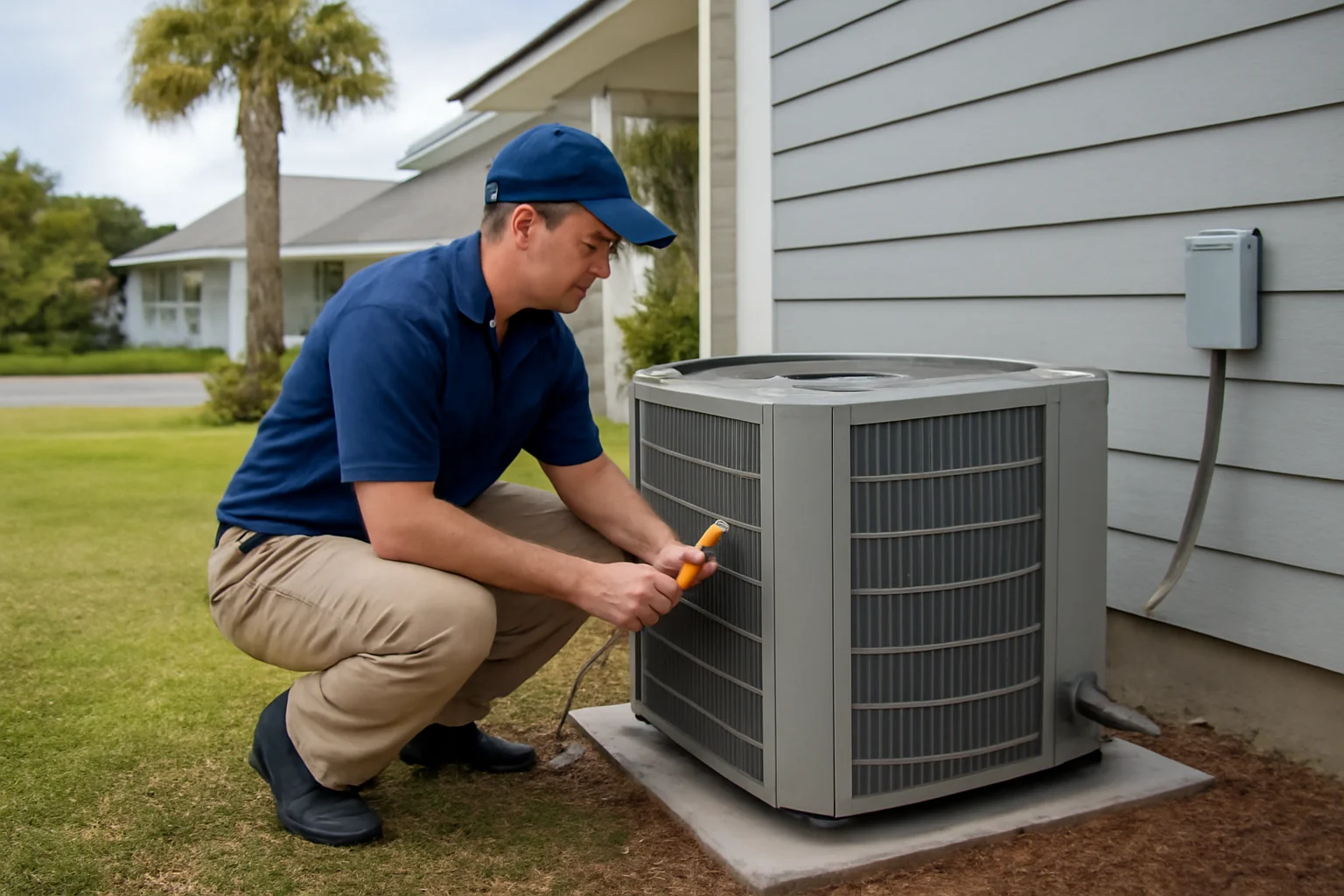
Living in Latitude Margaritaville Watersound means your air conditioner works hard, often for long stretches. Florida heat and humidity push cooling systems toward their limits, while salt air from the coast can add extra stress. Over time, everyday wear and tear can change what an air conditioning inspection needs to catch, what issues show up first, and how quickly problems can become emergency cooling concerns.
This guide explains how HVAC wear and tear affects the inspection process for air conditioning service in Latitude Margaritaville Watersound, FL. It is written for homeowners who want to understand what a professional HVAC company looks for, why it matters for indoor air quality, and how preventive HVAC maintenance can reduce the risk of an uncomfortable breakdown.
Why Florida conditions make “normal wear” show up faster
Most homeowners assume wear and tear is gradual and predictable. In a coastal Florida climate, it often is still gradual, but it can be faster and more noticeable. Air conditioners are designed to cool and dehumidify. When the air is hot and humid, the system has to run longer to keep indoor temperatures steady and control moisture. That extra runtime increases the chances that components will drift out of ideal operating conditions.
In Latitude Margaritaville Watersound, common environmental factors include:
- Heat load: Summer temperatures and frequent humidity mean the cooling system cycles more often and runs longer.
- Humidity and moisture: Moisture can contribute to coil and drain-area buildup, which affects airflow and condensate drainage.
- Salt air: Coastal air can accelerate corrosion on outdoor units, metal fasteners, and nearby ductwork supports.
- Airflow challenges: Dust, pollen, and debris can accumulate in filters, return paths, and ductwork.
These factors do not automatically mean the system is failing. They do mean that what might be a mild inefficiency in a cooler climate can become a bigger problem in Bay County.
How wear and tear changes what your inspector checks
A solid air conditioning inspection is not just a quick look at the thermostat and the outdoor unit. Wear and tear changes the inspection priorities because it affects airflow, refrigerant systems performance, condensate drainage, and how the thermostat controls the cycle.
Here are the main areas where wear often shows up during an inspection.
1) Airflow and ductwork performance
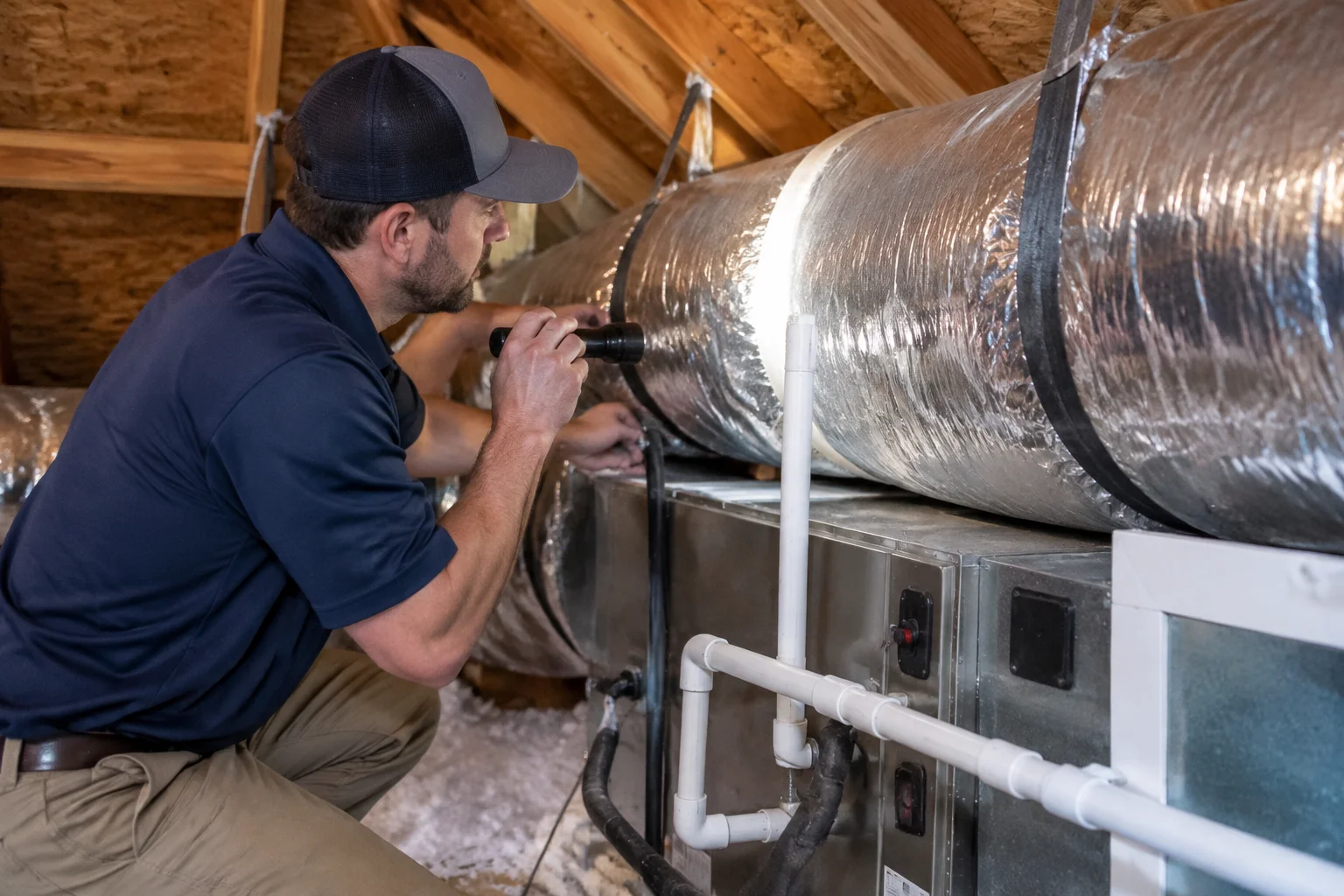
Air conditioners rely on consistent airflow to move heat out of your home. Over time, filters get loaded, return air pathways can become blocked, and ductwork can develop leaks or restrictions. Coastal homes can also experience changes in ductwork conditions due to installation settling or exposure to humid air.
During an inspection, a technician may focus on:
- Filter condition and filter fit: A filter that is dirty or not seated properly can reduce airflow.
- Supply and return airflow balance: Poor airflow can cause the indoor coil to behave differently than expected.
- Ductwork leaks or restrictions: Leaks can move conditioned air into attics or crawl spaces, increasing energy use and reducing comfort.
When airflow is restricted, the system can run longer to reach the thermostat setting. That extra runtime can create more wear on the compressor and fan systems. If you are trying to improve comfort, it is worth reading Keeping Coastal Homes Comfortable Starts with Better Ductwork in Latitude Margaritaville Watersound.
2) Indoor coil buildup and moisture management
Wear and tear does not always look like a broken part. Sometimes it looks like buildup. Dirt and humidity can affect coil surfaces and the way the air conditioner handles condensation. The indoor coil and drain area are especially important in Florida because the system is actively removing moisture from the air.
During inspection, technicians commonly look for:
- Coil cleanliness: Dust and debris reduce heat transfer and can increase temperature differences across the coil.
- Condensate drainage condition: A drain line that is partially blocked can lead to slow draining, overflow risk, or recurring moisture issues.
- Signs of moisture-related problems: Water staining near the unit, musty odors, or recurring damp spots can point to drainage or airflow problems.
Homeowners often notice these issues through indoor air quality symptoms such as stale smells, higher humidity, or uneven comfort. If you have been searching for indoor air quality services near me, it is also a good idea to ask how your inspection addresses moisture control and airflow.
3) Refrigerant system health and operating conditions
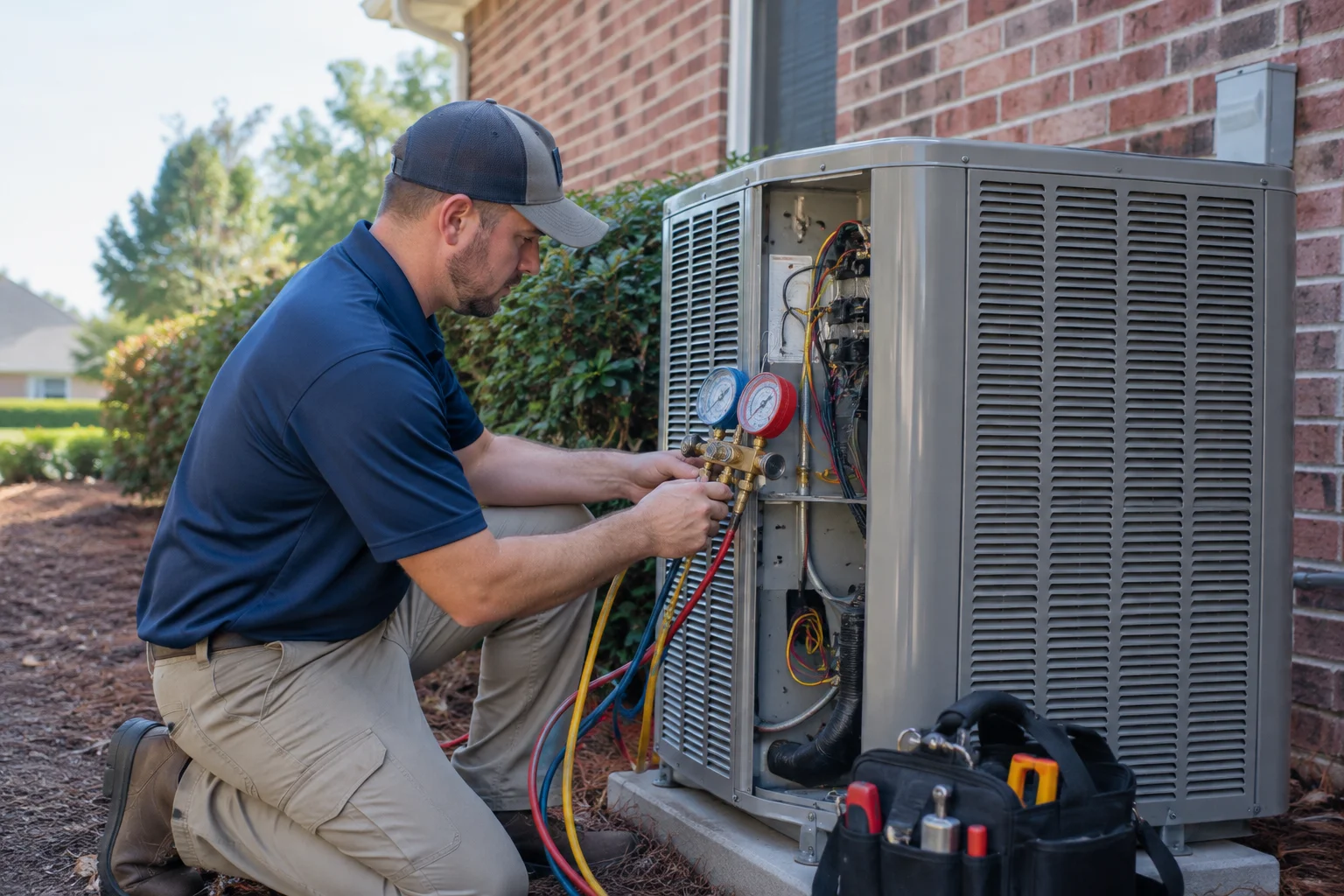
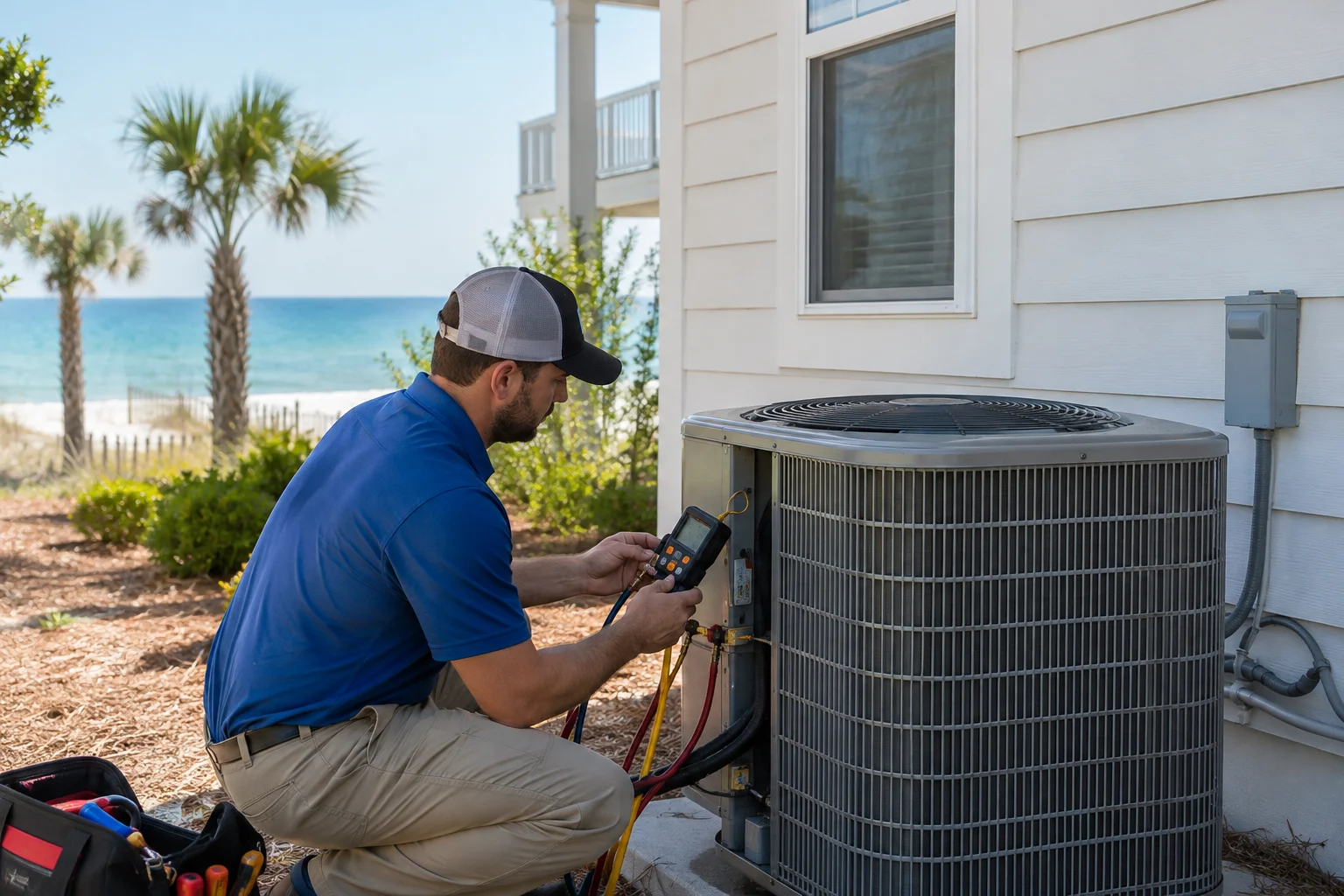
The refrigerant system is the heart of cooling. Wear and tear can cause performance to drift over time, especially when airflow is not ideal or when environmental factors accelerate corrosion. However, refrigerant is not something homeowners should try to diagnose or adjust without an in-person evaluation.
In a professional inspection, the goal is to verify that the system is operating as intended. That can include checking the overall performance indicators that help the technician determine whether the system is within expected ranges. If something looks off, the technician can recommend next steps based on what is found on site.
If you are dealing with air conditioning repair near me searches, remember that a proper inspection should guide whether the issue is best handled as a maintenance item, a repair, or a longer-term replacement discussion.
4) Thermostats and control behavior
Thermostats are often overlooked, but wear and tear can affect how the system cycles. In Florida humidity, short cycling or inconsistent cycling can feel like the system is “never satisfied,” or it may cause temperature swings that lead to comfort complaints.
During an inspection, technicians may check:
- Thermostat operation and settings: Proper scheduling and temperature control logic matters.
- Communication between thermostat and equipment: Loose wiring, failing components, or configuration issues can alter cycle timing.
- System response to demand: The equipment should respond appropriately to cooling calls.
If you are also using a heat pump or have a dual-fuel setup, control behavior becomes even more important. A related service page like Heating Control Systems can be helpful if your home uses more than one mode.
5) Outdoor unit condition and corrosion-related wear
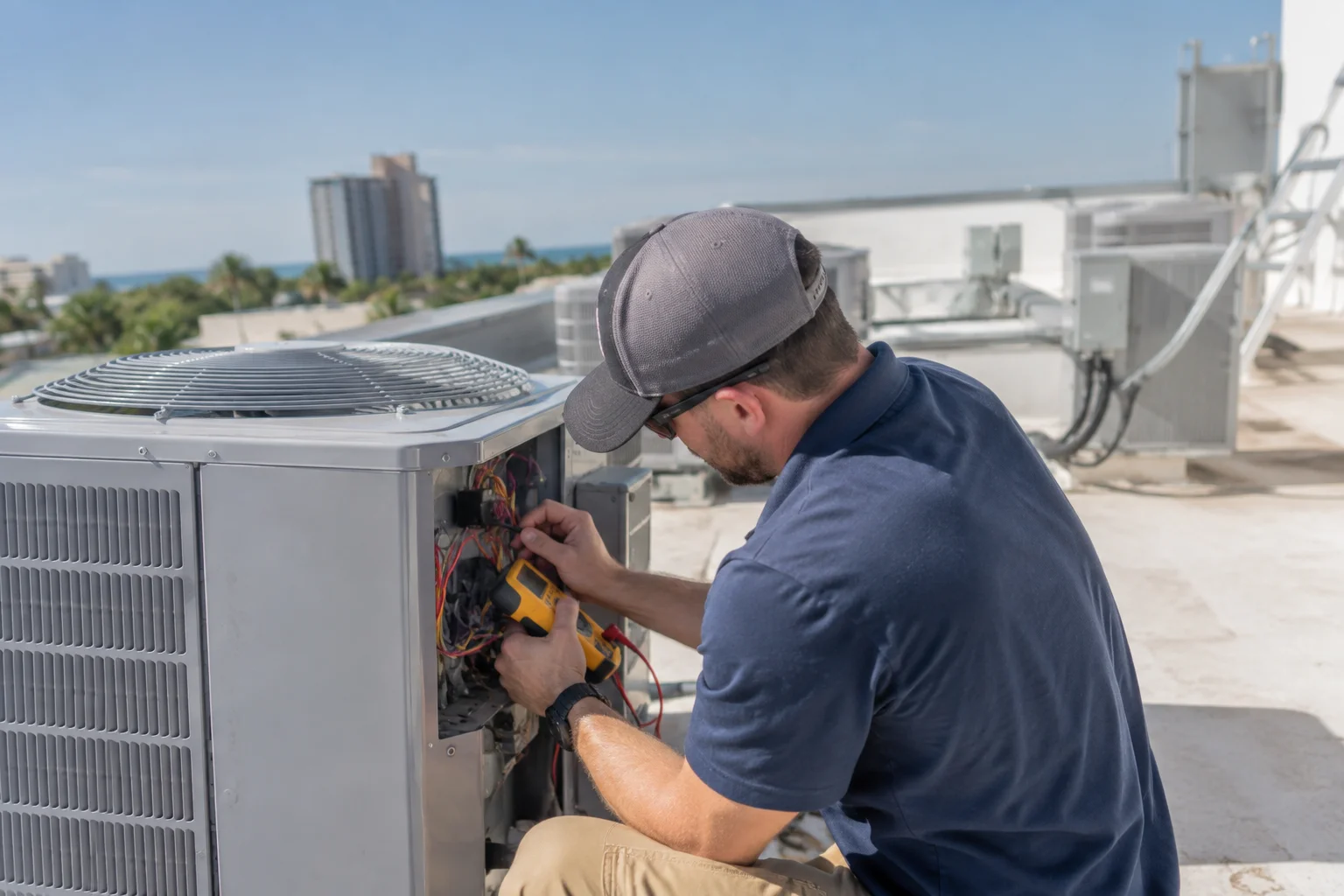
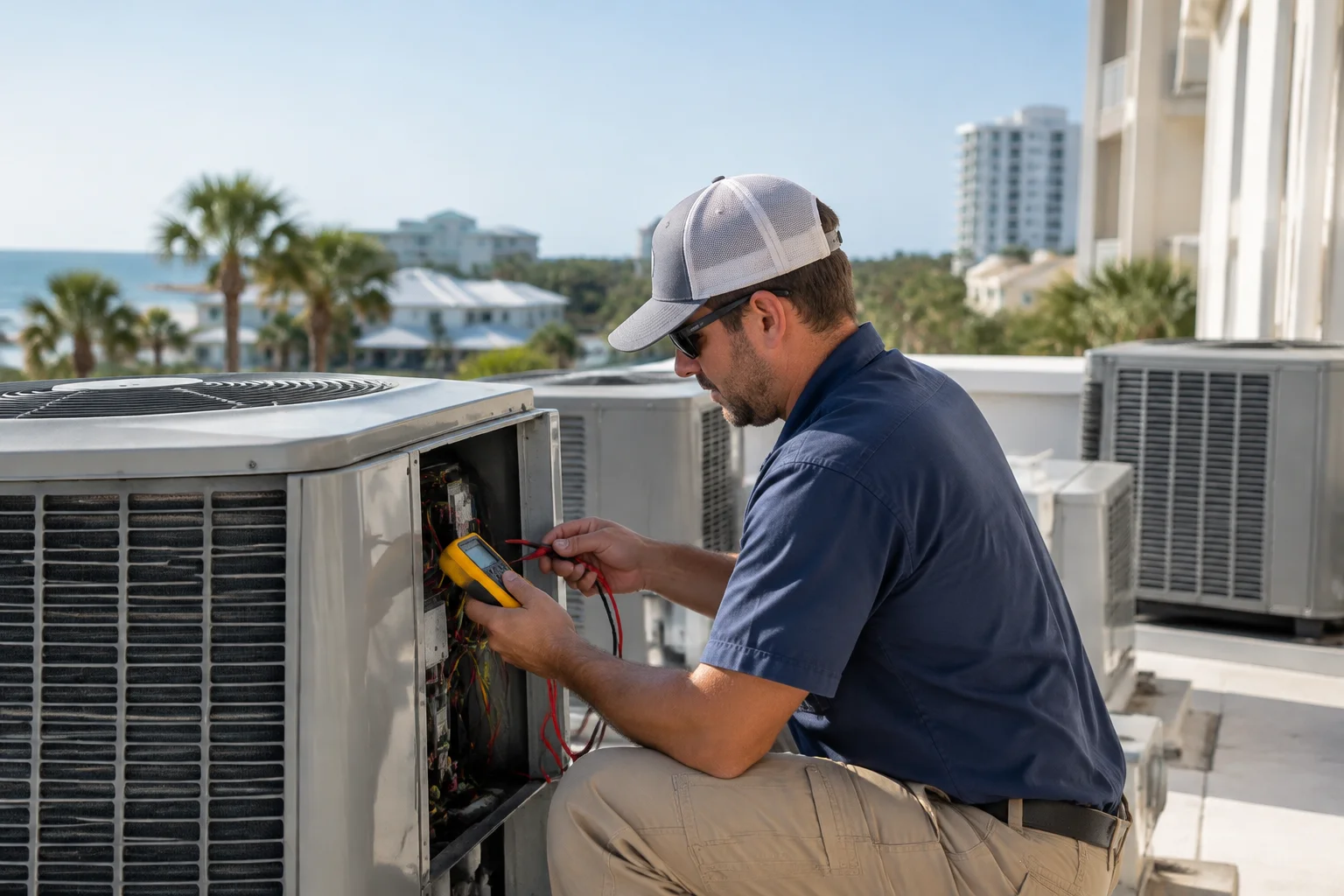
Outdoor units face the most direct exposure to salt air, windblown debris, and humidity. Over time, coils can collect grime, fan blades can accumulate buildup, and corrosion can affect the condition of metal surfaces.
During an inspection, technicians may evaluate:
- Outdoor coil and fins: Debris and buildup reduce heat rejection.
- Fan operation: Smooth operation matters for airflow across the outdoor coil.
- Visible signs of corrosion: Corrosion does not always mean immediate failure, but it can change how the system performs and how long components last.
Salt air can also affect nearby air pathways and the cleanliness of the equipment. That is why inspections in Bay County often include a close look at what the environment is doing to the unit.
Common wear and tear symptoms homeowners notice
Wear and tear rarely announces itself with one clear warning. Instead, it tends to show up as a pattern. If you are noticing any of the following, it may be time for an air conditioning inspection in Latitude Margaritaville Watersound.
- Longer run times: The system runs longer to reach the thermostat setting.
- Uneven cooling: Some rooms feel warmer or more humid than others, often linked to airflow or ductwork issues.
- Higher humidity indoors: Even when the temperature feels okay, the air may feel sticky.
- Weak or inconsistent airflow: Supply vents may feel less forceful, especially when multiple zones are calling.
- Strange odors or musty smells: Often tied to moisture management, coil condition, or airflow.
- Rattling, grinding, or unusual noises: Wear on components can show up as vibration or debris in moving parts.
- Frequent cycling: The system turns on and off more than expected, which can increase wear.
Some homeowners also notice that energy use climbs. When airflow or coil performance declines, the system may consume more energy to achieve the same comfort level. That is another reason inspections matter for homeowners trying to keep summer costs under control without sacrificing comfort.
Why a thorough inspection helps prevent emergency cooling concerns
In Florida summers, “it can wait” often becomes “it cannot wait.” When wear and tear progresses, it can push a system from inefficient to unreliable. An inspection helps catch issues while they are still manageable, before they turn into a mid-summer breakdown.
Examples of how wear and tear can escalate include:
- Restricted airflow: Leads to longer runtimes, higher wear, and reduced moisture removal.
- Drainage problems: Can create moisture buildup and contribute to indoor comfort and air quality issues.
- Coil buildup: Reduces heat transfer, which can strain the system under peak humidity.
- Control issues: Can contribute to short cycling or inconsistent cooling.
A licensed HVAC contractor can evaluate the system as a whole, rather than chasing one symptom. That systems approach is especially important in homes where ductwork, thermostat behavior, and humidity control all interact.
Preventive maintenance that reduces wear before it becomes a repair
Wear and tear is inevitable, but preventive HVAC maintenance can slow the process and keep the system operating efficiently. For many homeowners, an AC tune up before the hottest stretch of the year helps prevent problems that show up when humidity and heat peak.
For Latitude Margaritaville Watersound homeowners, preventive steps often include:
- Regular filter changes: Choose the right filter for your system and replace it on schedule.
- Checking airflow pathways: Make sure returns are not blocked and vents are not obstructed.
- Inspecting drain and moisture control: A clean, properly draining system supports indoor comfort.
- Coil and component inspection: Looking for buildup and early corrosion helps reduce performance drift.
- Thermostat verification: Confirm settings and check that the system responds properly to cooling calls.
If you want a maintenance-focused plan, explore Air Conditioning Maintenance and consider how often your home needs service based on usage and humidity comfort goals.
How an inspection fits with repairs, heat pump service, and ductwork work
Many homes in the area use more than one HVAC configuration. Some have heat pumps, others use traditional split systems, and many rely on ductwork to distribute air. Wear and tear can show up in one component but be caused by another.
That is why homeowners searching for HVAC repair near me should look for an inspection that addresses the system’s connections. For example:
- Ductwork problems can drive AC performance issues: If airflow is restricted, the air conditioner has to work harder.
- Moisture control connects to indoor air quality: Drain and coil conditions influence humidity and comfort.
- Control behavior affects cycling and wear: Thermostat issues can change how often the equipment runs.
If ductwork is part of your comfort problem, you can review Ductwork Services. If your home has a heat pump and you are also researching heat pump installation near me or heat pump service, ask how the inspection evaluates both cooling performance and control behavior.
When to schedule an air conditioning inspection in Latitude Margaritaville Watersound
You do not have to wait for a full failure. A practical approach is to schedule an inspection when you notice early changes or before the peak cooling season. That timing helps you avoid the most stressful weeks of Florida heat and humidity.
Schedule an air conditioning inspection if:
- You notice uneven cooling or rising humidity.
- Your system is running longer than it used to.
- Airflow feels weaker from vents.
- You see moisture concerns around indoor equipment.
- You hear new noises or smell musty odors.
- You have not had a recent preventive HVAC maintenance visit.
If you are a rental homeowner or manage a property, inspections are also a smart way to reduce tenant discomfort and protect the system from avoidable wear. For commercial properties, you can review Commercial HVAC Maintenance for a broader maintenance approach.
Why local service from A Superior Mechanical matters
Coastal Bay County homes are not all built the same, and neither are their HVAC systems. Local HVAC service matters because the inspection needs to account for the realities of the area: humidity levels, salt air exposure, typical airflow layouts, and how ductwork performs in real local conditions.
A Superior Mechanical focuses on professional air conditioning inspection services in Latitude Margaritaville Watersound, FL, helping homes stay efficient, reliable, and comfortable. If you are searching for a licensed HVAC contractor near me, it is worth choosing a team that treats the inspection as a full system evaluation, including airflow, moisture control, condensate drainage, thermostat operation, and the overall condition of refrigerant systems performance indicators.
For more service-area context, you can also visit Latitude Margaritaville Watersound HVAC services or browse Bay County air conditioning and HVAC services. If you want to compare inspection experiences in other nearby communities, the guidance in Seagrove Beach Comfort Clues That Point to a Better Air Conditioning Inspection can help you recognize early patterns.
FAQs homeowners ask during air conditioning inspections
Wear and tear can make questions feel urgent. Below are answers to common concerns homeowners bring up before or during an inspection.
Find Air Conditioning Inspection in Latitude Margaritaville Watersound, FL
If you need Air Conditioning Inspection in Latitude Margaritaville Watersound, FL, visit our local service page or contact A Superior Mechanical today.
Map of Latitude Margaritaville Watersound, FL
Frequently Asked Questions
How does humidity in Latitude Margaritaville Watersound affect an air conditioning inspection?
Humidity increases the amount of moisture your air conditioner removes. That means the inspection pays close attention to indoor coil condition and condensate drainage so the system can dehumidify properly without creating moisture or odor issues.
Can wear and tear make my AC use more energy?
Yes. When airflow is restricted, coils get dirty, or components drift from normal operating conditions, the system often runs longer to reach the thermostat setting. That increased runtime can raise energy use and reduce comfort.
What role does ductwork play in AC problems from wear and tear?
Ductwork affects how much conditioned air reaches each room. With age, duct leaks or restrictions can develop, which reduces airflow and can cause uneven cooling, higher humidity, and faster wear on AC components.
Is it safe for me to check refrigerant or try to fix refrigerant issues myself?
No. Refrigerant systems require proper tools, training, and safety procedures. A professional inspection can evaluate system performance indicators and recommend appropriate next steps after an in-person assessment.
When should I schedule an AC tune up or inspection in Bay County?
If you notice uneven cooling, rising humidity, weak airflow, musty odors, or longer run times, schedule an inspection soon. Many homeowners also schedule preventive HVAC maintenance before the hottest months to reduce the risk of a mid-summer breakdown.
Related Articles
- Keeping Coastal Homes Comfortable Starts with Better Ductwork in Latitude Margaritaville Watersound
- Seagrove Beach Comfort Clues That Point to a Better Air Conditioning Inspection
- What to Expect From Air Conditioning Inspection in Parker, FL
- What Laguna Beach Homeowners Should Know About Air Conditioning Inspections and Catching Problems Early
Photo Gallery