In Bid-A-Wee, comfort depends on more than a working furnace or heat pump. Your heating control system, especially the thermostat and how it communicates with your HVAC equipment, plays a big role in whether your home stays steady, efficient, and safe during Florida’s swingy weather, high humidity, and salty coastal air.
This guide is for local property owners who want to prevent problems before they turn into uncomfortable rooms, higher energy use, or emergency cooling concerns. It focuses on heating control systems and the HVAC factors that most often cause control issues in Bay County homes.
Why heating control systems struggle in Bid-A-Wee’s Florida conditions
Heating control problems are not always “just the thermostat.” In coastal Florida, several environmental and comfort variables can stress the full HVAC control loop.
- Humidity and temperature swings: When indoor humidity is high, airflow and sensor readings can be misleading. That can cause the thermostat to cycle more than it should, or it can delay heating response.
- Salt air and corrosion risk: Coastal exposure can affect electrical connections, blower components, and control wiring over time. Even when a system runs, small connection issues can create intermittent behavior that looks like a thermostat problem.
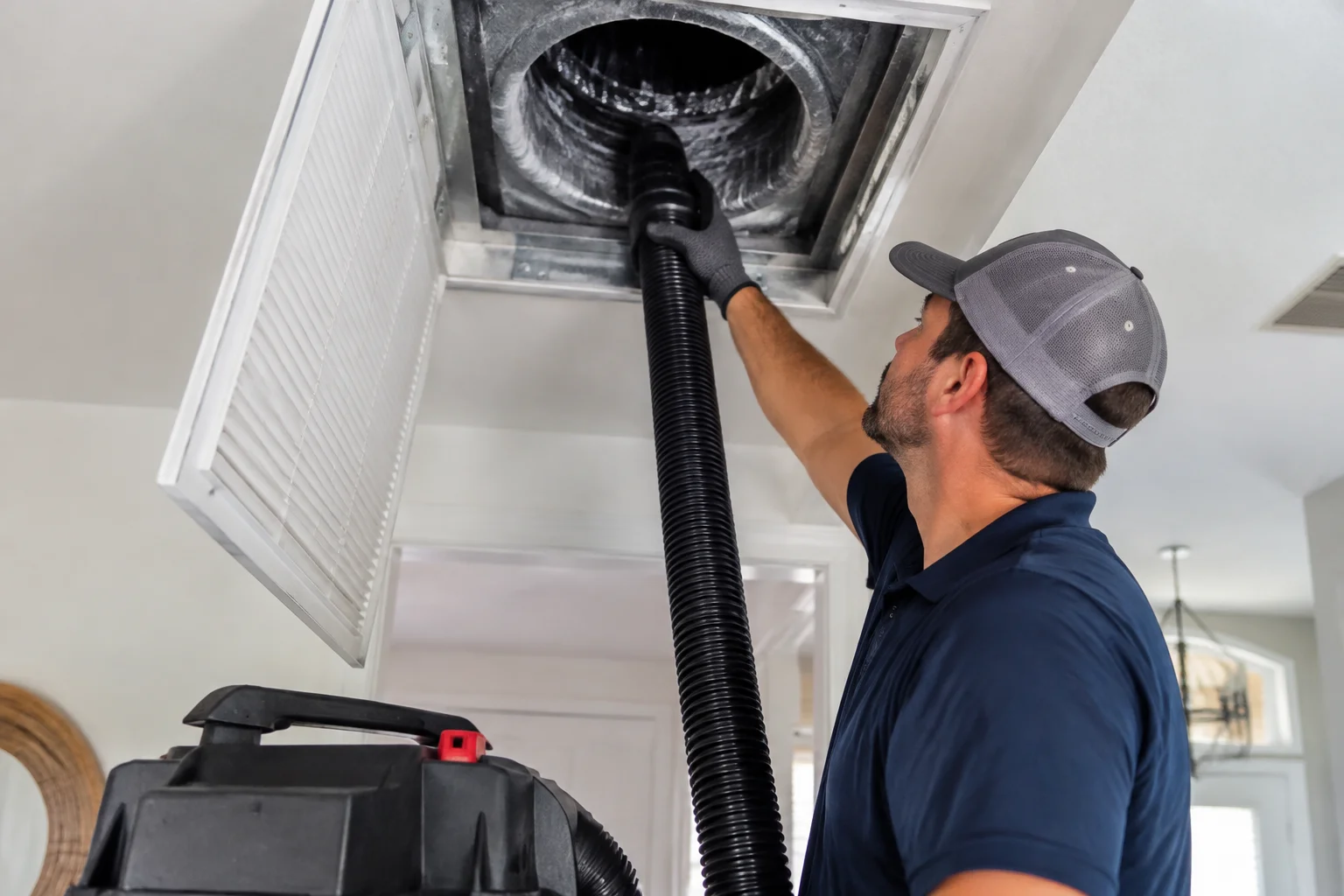
- Airflow restrictions in ductwork: Dirty filters, closed registers, and duct leaks can reduce airflow across the heating and cooling system. Controls may “think” the home needs more heating or cooling when the real issue is poor distribution.
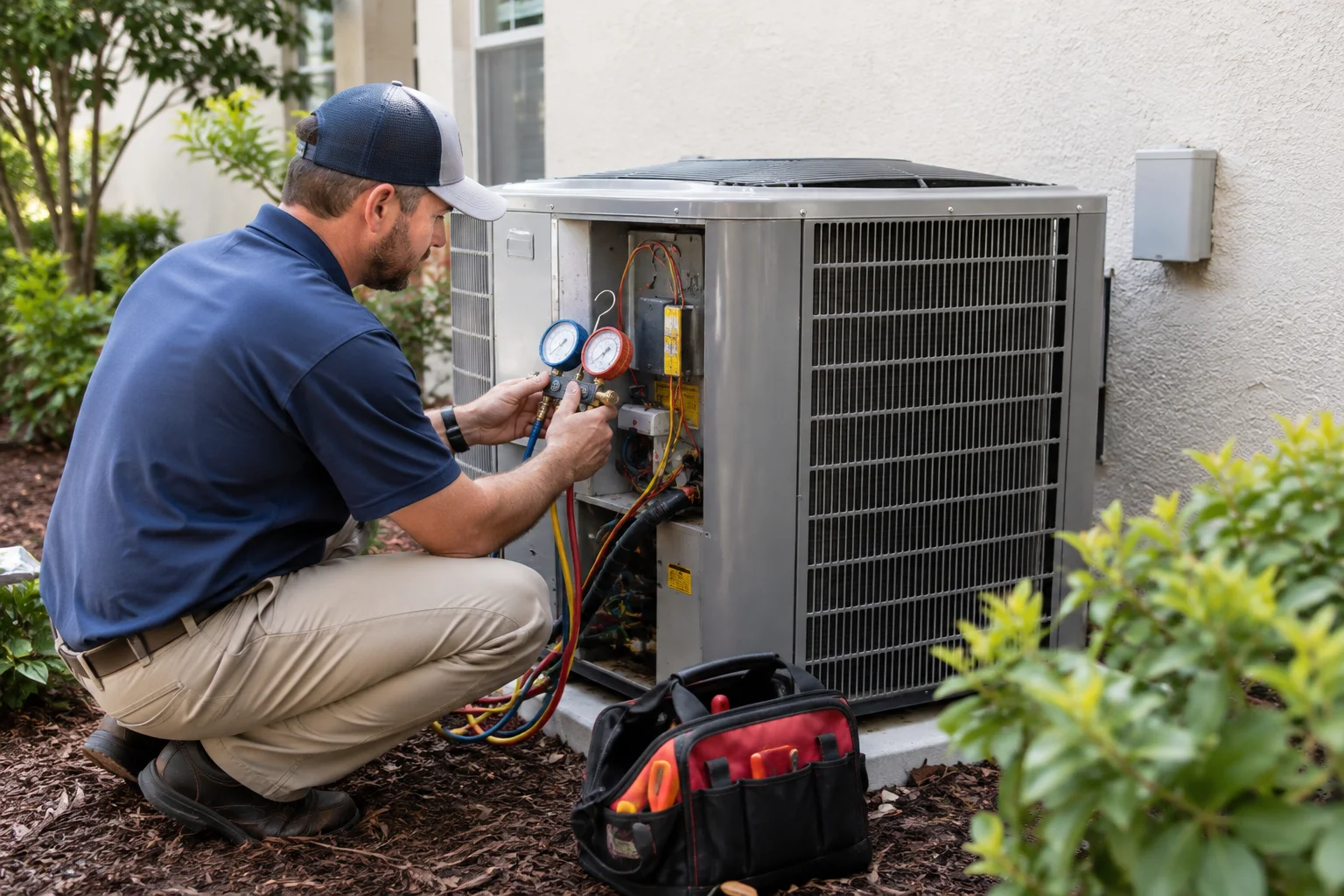
- Refrigerant system sensitivity: Heat pumps and other HVAC systems rely on refrigerant systems to move heat efficiently. When refrigerant performance is off, temperature changes may not match what the thermostat expects, which can create short cycling or long run times.
- Condensate drainage and moisture: During humid periods, condensate drainage matters. If drainage is restricted, moisture can affect nearby components and also worsen indoor air quality.
For homeowners looking for an HVAC contractor near me to help with heating control systems, the key is understanding that prevention involves the thermostat and the system around it.
The most common thermostat and heating control symptoms homeowners notice
Control issues often show up as comfort problems. If you can recognize patterns early, you can reduce wear on the HVAC equipment and avoid mid-summer breakdowns.
1) Short cycling or frequent on off behavior
If your heat pump or air handler turns on and off quickly, it can be driven by thermostat configuration, sensor location, airflow problems, or a refrigerant system that is not performing as expected. Short cycling can raise energy use and increase system stress.
2) Rooms that never reach the set temperature
Hot or cold spots can be caused by ductwork issues, blocked supply returns, or insulation and air sealing gaps. Controls will keep trying to correct the temperature, even when airflow distribution is the real bottleneck.
3) “Heating runs, but it does not feel right”
Sometimes the system is running in heating mode, but air delivery is weak due to dirty filters, blower restrictions, or duct repair needs. The thermostat may be functioning correctly while the HVAC airflow path is not.
4) Unexpected temperature drift when humidity is high
High humidity can make indoor air feel warmer or cooler than the thermostat reading. If your thermostat is not accounting for humidity conditions, or if indoor air is not being properly dehumidified, comfort can feel inconsistent.
5) Thermostat display errors or connectivity problems
Smart thermostats can show connectivity issues, delayed responses, or odd scheduling behavior. Salt air exposure, wiring wear, or power interruptions can contribute. A control system should be evaluated in person, not guessed at.
Preventive steps homeowners can take without guessing the diagnosis
There are several practical actions local homeowners can take that reduce the chance of heating control system problems. These steps focus on airflow, sensor conditions, and maintenance habits that affect how controls perform.
Set up your thermostat for accurate sensing
Thermostats work best when they can “see” the room conditions they are meant to control.
- Place it away from direct sunlight: A thermostat in a bright window line can read too warm and reduce heating when the home still needs it.
- Avoid drafts from vents or doors: Supply airflow can distort sensor readings.
- Keep the thermostat location consistent: If you move furniture or cover vents, you may change how the thermostat responds.
If you are considering thermostat installation near me, make sure the installer verifies wiring, placement, and compatibility with your HVAC equipment and control wiring.
Protect airflow across the heating and cooling system
In Bid-A-Wee, where humidity can be relentless, airflow is tied to both comfort and indoor air quality. When airflow drops, the HVAC system has to work harder to reach setpoints.
- Change or inspect filters regularly: Follow the filter schedule recommended for your system and home conditions.
- Keep supply registers open: Closed vents can push pressure and airflow away from the thermostat’s expected comfort pattern.
- Watch for return air issues: If returns are blocked by furniture or rugs, the system may not move air through rooms evenly.
If you suspect airflow problems, ask about air conditioning inspection and ductwork evaluation. Homeowners searching for duct repair near me often find that duct leaks or restrictions can mimic thermostat failures.
Manage humidity to reduce control confusion
Humidity affects comfort and can change how quickly the home reaches the thermostat’s target. Even if temperature looks “close,” high moisture can make the home feel off.
- Confirm the system is draining properly: Restricted condensate drainage can cause moisture issues and can affect nearby components.
- Ensure the indoor coil area can breathe: Dirty coils and restricted airflow can reduce dehumidification performance.
For homeowners interested in indoor air quality services near me, consistent HVAC airflow and moisture control are often the foundation. You can also read How Preventive HVAC Service Supports Cleaner Indoor Air in Bid-A-Wee to see how maintenance supports healthier indoor conditions.
Maintenance habits that prevent heating control system failures
Heating control systems are part of a larger HVAC system that includes controls, sensors, blower operation, and refrigerant systems. Preventive HVAC maintenance near me is not just about avoiding breakdowns. It is about keeping the control loop stable.
Schedule seasonal tune ups before high demand weeks
In Florida, the hottest and most humid stretches can arrive quickly. Preventive maintenance helps confirm that:
- Blower and fan operation supports airflow needed for stable temperature control
- Thermostat operation matches how your system is performing
- Any moisture-related issues are addressed early
If you have noticed inconsistent comfort, consider seasonal checks before the next peak stretch. You can also review Comfort That Holds Up in Bid-A-Wee Starts With Timely AC Repair to understand how cooling performance affects overall control stability.
Keep an eye on ductwork performance over time
Many homeowners focus on the thermostat, but ductwork performance often changes gradually due to aging, shifting, and minor construction changes. Poor airflow can cause the system to run longer and can make heating control behavior seem erratic.
If you notice whistling, uneven room temperatures, or rooms that are consistently uncomfortable, ask about ductwork inspection and duct repair. For local property owners, pairing heating control evaluation with ductwork checks can prevent repeated “thermostat adjustments” that do not solve the real airflow problem.
Address condensate drainage concerns early
During humid weather, condensate drainage helps remove moisture that forms on cooling components. If drainage is restricted, moisture can contribute to indoor air quality problems and can affect nearby HVAC parts.
A Superior Mechanical can evaluate condensate drainage as part of a broader HVAC assessment. If you are experiencing persistent humidity issues, consider exploring heating control systems evaluation along with air conditioning inspection and maintenance.
When the thermostat setting is not the problem
It is tempting to change thermostat settings repeatedly. Sometimes that helps, but it can also mask a deeper issue. Professional HVAC service matters because a stable heating control system depends on multiple moving parts.
Refrigerant system performance can affect how controls behave
If your system is a heat pump or otherwise uses refrigerant to transfer heat, refrigerant performance affects temperature change timing and airflow behavior. If heating or cooling does not respond as expected, the thermostat may call for more heating or more run time, increasing wear and energy use.
Because refrigerant systems require in-person evaluation, homeowners should avoid trying to “tune” refrigerant through thermostat changes. Instead, document symptoms and schedule HVAC diagnostics with a qualified contractor.
Electrical and wiring issues can show up as control glitches
Intermittent thermostat blank screens, delayed responses, or repeated cycling can sometimes be linked to wiring connections, power stability, or control board behavior. Salt air exposure can contribute to corrosion over time. These are reasons to focus on professional inspection rather than troubleshooting blindly.
Airflow and duct leaks can look like thermostat failure
When ductwork leaks reduce airflow, the system may not deliver heat effectively. That can trigger control calls repeatedly. If you are searching for HVAC repair near me because your thermostat seems “stuck,” ask whether ductwork and airflow are being evaluated alongside thermostat settings.
Smart thermostats and advanced controls: helpful, but only when installed correctly
Many Bid-A-Wee homeowners install smart thermostats to improve scheduling and comfort. Smart controls can help, but they must be configured correctly for your HVAC system type, airflow behavior, and humidity realities.
- Compatibility checks: Your thermostat must work with your HVAC equipment and control wiring.
- Sensor placement: Indoor conditions can vary room to room, especially in homes with ductwork distribution differences.
- Scheduling and staging: If your system uses multiple stages or different operating modes, settings need to match how your equipment actually runs.
If you are considering a new control setup, consider a local HVAC company near me that can verify safe operation and proper integration. You can also explore VRF Multi-Zone Systems if your property uses multi-zone equipment that depends on precise control coordination.
Energy use and comfort: how control stability affects both
Heating control systems influence energy use because they determine how often your HVAC system runs and how long it stays on. When controls are unstable due to airflow restrictions, moisture issues, or equipment performance problems, the system can:
- Run longer to reach setpoints that are not achievable due to distribution issues
- Cycle more frequently, increasing wear on blower and compressor components
- Operate in a way that feels comfortable in the short term but inconsistent overall
That is why prevention is about more than avoiding a breakdown. A stable heating control system supports consistent comfort and can reduce the frustration of repeated “fixes” that do not last.
Know the red flags that mean you should call a professional
Homeowners can do a lot with maintenance and thermostat placement. Still, some situations require an in-person HVAC evaluation. Call A Superior Mechanical if you notice:
- Repeated short cycling that does not improve after basic filter and airflow checks
- Blower running without temperature changes that match expected heating performance
- Condensate drainage concerns such as water around the system or persistent moisture odors
- Thermostat errors that return after restarting or changing batteries
- Comfort that is consistently off across many rooms, suggesting ductwork or airflow problems
- Any emergency cooling concerns during peak heat and humidity, especially if the system is not responding to temperature calls
If you want a local specialist focused on heating control systems, start with the service page for Heating Control Systems in Bid-A-Wee, FL. For broader Bay County coverage, visit /service-areas/bay-county and for city-specific service options, see /service-areas/bay-county/bid-a-wee.
How homeowners can plan ahead for replacements and upgrades
Sometimes heating control issues are tied to system aging, repeated component wear, or mismatched equipment and controls. If you are considering HVAC replacement near me or major control upgrades, prevention still starts with documentation and proper evaluation.
- Track symptom patterns: When does the problem happen, and does it correlate with humidity, time of day, or filter changes?
- Confirm what modes are affected: Heating only, cooling only, or both.
- Ask about system and control integration: A technician should evaluate thermostat operation alongside airflow, condensate drainage, and refrigerant system performance where applicable.
If you are managing a rental or commercial property, prevention matters even more. You can also explore Commercial HVAC Maintenance to help stabilize comfort and reduce service interruptions.
Local maintenance guidance that supports heating control reliability
Bid-A-Wee homeowners do not need to be HVAC experts to prevent control problems. The goal is to keep the control system stable by supporting airflow, moisture management, and accurate sensing.
For additional local context on how maintenance supports control performance, you may find it helpful to read How Better HVAC Maintenance Supports Heating Control Systems in Alys Beach. And if you are comparing priorities across nearby neighborhoods, Why Heating Control Systems Matter for Valparaiso Homes offers a helpful perspective on why controls affect comfort consistency.
Choose HVAC service that treats controls as a system, not a single device
Heating control systems are connected to thermostat settings, ductwork performance, airflow, condensate drainage, and refrigerant system behavior. When problems happen, the most effective fix usually involves evaluating the whole HVAC control loop in the context of Florida’s climate.
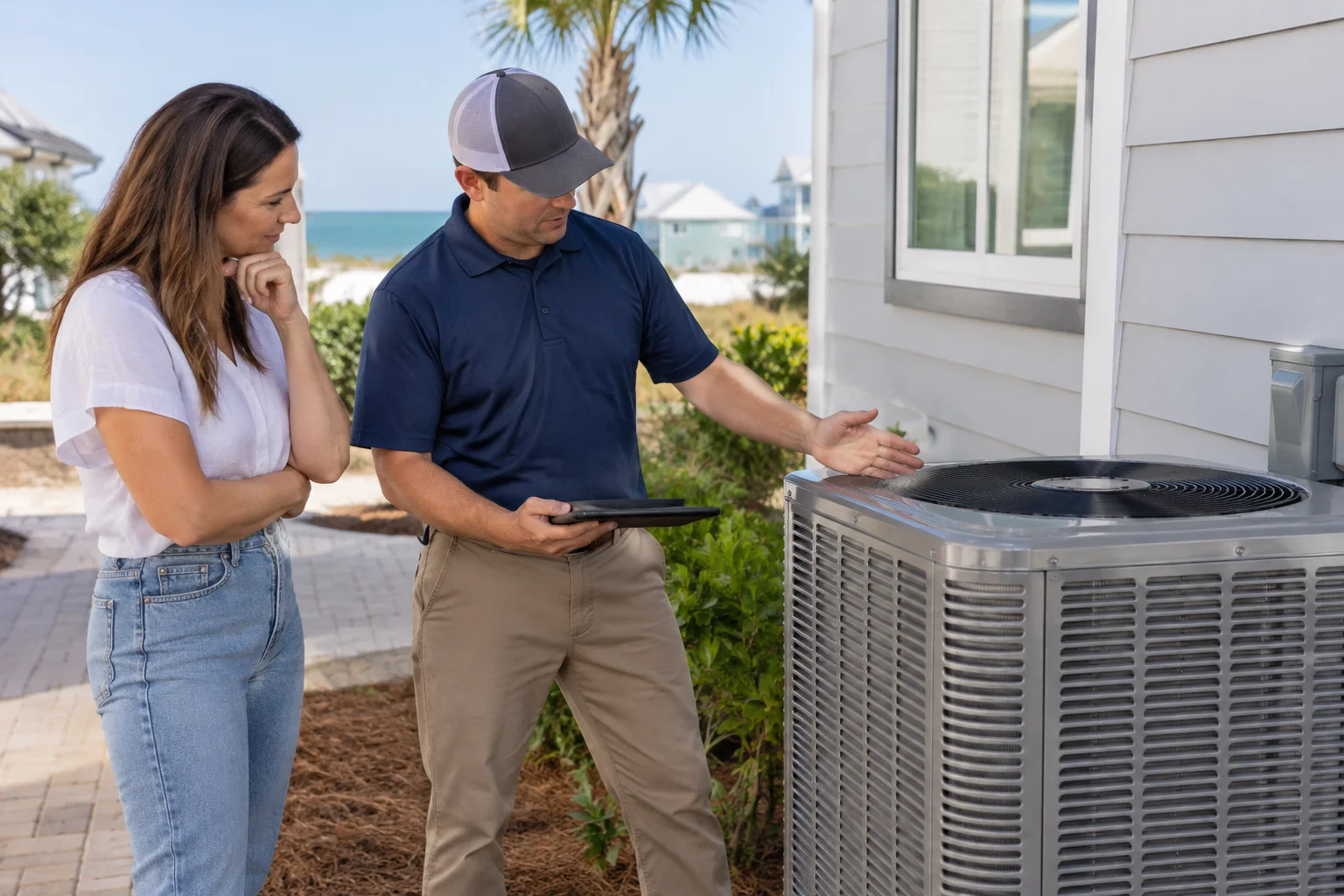
A Superior Mechanical serves Bid-A-Wee and Bay County homeowners who want smarter comfort and reliable HVAC performance. If your heating control behavior feels inconsistent, schedule an HVAC assessment and let a local professional verify what is actually causing the problem.
If you want to compare service options, you can also review Air Conditioning Installation for upgrade planning, or Air Conditioning Inspection if your comfort issues started during humid weather.
Find Heating Control Systems in Bid-A-Wee, FL
If you need Heating Control Systems in Bid-A-Wee, FL, visit our local service page or contact A Superior Mechanical today.
Map of Bid-A-Wee, FL
Frequently Asked Questions
How can I tell whether my thermostat is failing or my HVAC system has an airflow problem?
Look for patterns. If the thermostat calls for heating but rooms do not reach temperature, or if comfort is uneven across the house, airflow and ductwork issues are often involved. A professional inspection can confirm whether the thermostat is reading accurately and whether the system is delivering heat as expected.
What preventive HVAC maintenance helps heating control systems in Bid-A-Wee?
Seasonal tune ups, filter maintenance, and ductwork and airflow checks are key. In humid Florida conditions, condensate drainage and indoor air quality factors also matter because moisture and restricted airflow can make control behavior feel inconsistent.
Can high humidity cause my heating control system to cycle more often?
Yes. Humidity affects comfort and can change how quickly the home feels “on target.” If airflow is restricted or dehumidification performance is reduced, the thermostat may call more frequently. Addressing airflow and moisture issues with local HVAC service helps stabilize control performance.
Should I try to adjust thermostat settings when my system starts short cycling?
Basic checks like confirming the thermostat location is not exposed to direct sunlight and verifying filters are not clogged can help. However, recurring short cycling can be caused by airflow, control wiring, or refrigerant system performance. An in-person evaluation is the safe way to identify the real cause.
What’s a good way to prepare for emergency cooling concerns if the system is not responding?
Keep your thermostat settings simple, replace batteries if applicable, and ensure air filters and registers are not blocked. If the system still does not respond to temperature calls during peak humidity, contact a local HVAC contractor promptly so the issue can be assessed on site.
Related Articles
Photo Gallery