Lynn Haven sits in the kind of Florida climate where “comfortable” can change quickly. Warm Gulf air, frequent humidity, and the salty coastal environment all push indoor moisture higher than many homeowners expect. When humidity climbs, you feel it as sticky air, but the problems go deeper: musty odors, condensation on windows, and strain on your HVAC system and ductwork.
A whole home dehumidifier is designed to manage moisture across the entire house, not just in one room. If you are looking for HVAC repair near me, AC tune up near me, or indoor air quality services near me, humidity control often belongs in the same conversation. Below is a homeowner focused guide to comfort problems, likely causes, and repair planning for whole home dehumidifiers in Lynn Haven, FL.
Why humidity control matters in Lynn Haven homes
In Lynn Haven and Bay County, outdoor air can bring steady moisture loads. Even with a properly sized air conditioner, the indoor system may cool air without removing enough water vapor if humidity is not managed intentionally. Whole home dehumidifiers help fill that gap by reducing moisture levels throughout the home.
When humidity runs high, you can see the effects in everyday life:
- Sticky comfort and “warm when it should be cool”, especially after long humid afternoons.
- Condensation on windows, mirrors, or cooler surfaces.
- Musty smells that return even after cleaning.
- Higher strain on airflow as damp air can make HVAC performance feel inconsistent.
- Potential moisture impact on materials like drywall, insulation, and wood trim.
Because your HVAC system is tied into the home’s airflow and temperature control, humidity management also affects overall comfort and energy use. A properly operating dehumidifier can reduce the “fight” between comfort expectations and indoor moisture levels.
How a whole home dehumidifier works with your HVAC system
Most whole home dehumidifier setups are integrated with the home’s air distribution and condensate drainage. While configurations vary by system, the basic idea is consistent: the unit removes moisture from indoor air and sends the condensate through a drain pathway.
Homeowners often notice the dehumidifier through what they feel and see:
- Airflow changes at registers or returns when the system is running.
- Condensate drainage as water removal occurs. When drainage is blocked or misrouted, you may see overflow risks or water where it should not be.
- Thermostat and control behavior that can affect how the dehumidifier coordinates with the HVAC cycle.
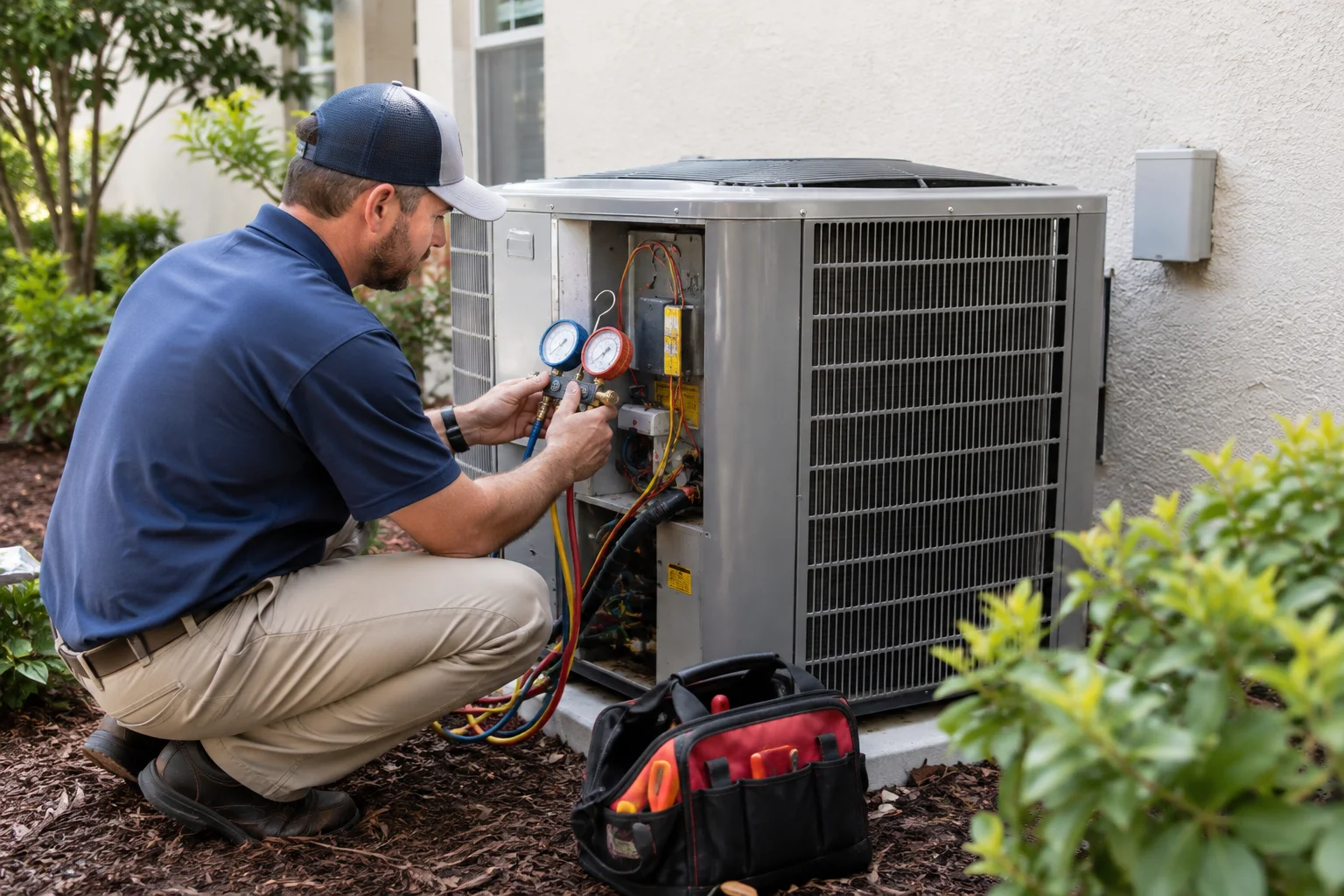
Whole home systems also rely on refrigerant systems inside the dehumidifier. If moisture control is poor, it does not automatically mean a refrigerant issue, but it does mean the system should be inspected in person. Refrigerant diagnosis should be left to a licensed HVAC professional, since incorrect assumptions can lead to wasted time and avoidable damage.
Comfort problems that often point to humidity issues
Not every comfort complaint is a dehumidifier problem. Still, humidity related symptoms are common in Lynn Haven homes, particularly during peak summer humidity and after rainy stretches.
1) AC runs but the home still feels damp
If your air conditioner cycles frequently or runs longer, yet the air still feels sticky, the issue may be moisture removal rather than temperature alone. A whole home dehumidifier can help reduce the load that humidity places on comfort.
2) Condensation on windows or around vents
Visible moisture can show up when indoor air is too humid or when airflow and cooling are not balanced. Ductwork problems, poor distribution, or system airflow restrictions can also contribute. If you are searching for duct inspection or duct cleaning near me, it can be part of a humidity and comfort diagnosis.
3) Musty odors that return after cleaning
Musty smells often correlate with lingering moisture in building materials or hidden areas. Whole home dehumidifiers can help prevent the moisture conditions that allow odors to persist.
4) “Cold rooms” and “hot rooms” that feel worse in summer
Uneven airflow can create temperature differences, and those differences can magnify humidity comfort issues. If some rooms stay cooler, they may also be more prone to condensation or dampness. Better duct replacement and airflow balancing can help. Consider reading Better Duct Replacement in Lynn Haven for Cooler Rooms, Lower Bills, and Longer HVAC Life if distribution is part of your concern.
Common causes of whole home dehumidifier problems
Homeowners usually want to know what is actually going wrong. Here are frequent causes HVAC technicians look for, especially in humid coastal areas like Lynn Haven.
Condensate drainage issues
Whole home dehumidifiers remove water and rely on condensate drainage. Over time, condensate lines can clog, become trapped, or drain poorly. Drain problems can lead to shutdowns, leaks, or water backing up. If you notice water near the unit, staining, or a recurring alert, plan for service rather than attempting repeated DIY fixes.
Airflow restrictions in and around the unit
Dehumidifiers depend on proper airflow. Dust buildup, blocked pathways, or poorly designed ductwork connections can reduce performance. Airflow problems also overlap with indoor air quality concerns, since restricted airflow can affect filtration and ventilation balance.
Thermostat and control coordination
Dehumidifiers and HVAC systems often coordinate through controls. If the thermostat settings, humidity setpoints, or control wiring are out of alignment with your comfort needs, the system may run at the wrong times or not at the right intensity. A licensed HVAC contractor can verify the control logic and ensure the system is configured correctly for your home.
Refrigerant system wear and component performance
Because whole home dehumidifiers use refrigerant systems, performance can decline if components are failing. However, it is not appropriate for homeowners to attempt refrigerant diagnosis at home. A professional evaluation can determine whether performance issues are caused by the refrigerant system, airflow, drainage, sensors, or control settings.
Salt air and coastal environment effects
Lynn Haven’s proximity to the Gulf means the environment can be harsher on equipment over time. Salt air can contribute to corrosion risk and accelerate wear on certain components. That does not mean every issue is corrosion, but it is one reason preventive HVAC maintenance matters for long term performance.
Repair planning: what to document before service
Good repairs start with good information. Before a technician arrives, gather details that help them focus on the most likely causes.
- When the problem started and whether it followed storms, heavy rain, or a period of unusually high humidity.
- What changed, such as thermostat updates, new filters, ductwork changes, or noticeable airflow changes.
- Any error codes or alerts shown on the dehumidifier or thermostat.
- Condensate observations, including whether water is draining normally and if you see overflow or standing water.
- Comfort symptoms like musty odors, condensation, or rooms staying damp even when cooling feels adequate.
If you are comparing options for an HVAC company near me, this kind of documentation makes the service call more efficient and helps the technician explain next steps clearly.
Preventive maintenance that helps dehumidifiers last
Whole home dehumidifiers are part of your comfort system, and they benefit from consistent care. Preventive HVAC maintenance is also one of the best ways to reduce emergency cooling concerns when humidity spikes and your HVAC workload increases.
Schedule maintenance before peak summer humidity
In Lynn Haven, humidity can ramp up quickly. Planning service before the hottest weeks helps ensure condensate drainage, airflow, and controls are ready. If you are searching for commercial HVAC maintenance for a business or multi unit property, the same principles apply: moisture control impacts comfort and indoor air quality.
Keep filters and airflow paths clean
Even if your dehumidifier is not the only air handler in the home, airflow restrictions can reduce performance. Follow the manufacturer’s guidance for filter maintenance and avoid delaying replacements.
Check condensate drainage pathways
Condensate drainage needs to remain clear. If you have a drain pan, a drain line, or a routed condensate line, it should be inspected as part of maintenance. Blocked drainage can quickly become a bigger problem than reduced dehumidification.
Review thermostat and humidity setpoints
Many comfort complaints can be tied to setpoints that are too high for the home’s actual humidity load. A technician can help you confirm that your thermostat settings and dehumidifier controls are aligned with the comfort goals for your Lynn Haven home.
How ductwork and airflow affect dehumidifier performance
Ductwork is not just a temperature delivery system. It also shapes how air moves through the home, which influences humidity distribution. If ductwork has leaks, poor insulation, or airflow restrictions, some rooms may stay damp while others feel fine.
For homeowners exploring duct repair near me or duct inspection near me, it helps to connect ductwork concerns to humidity symptoms. For example, poorly sealed ducts can allow conditioned air to leak into unconditioned spaces, changing how much cooling and dehumidification the home actually receives.
To better understand how maintenance improves airflow performance, see Why Better HVAC Maintenance Makes Duct Inspection More Useful for Lynn Haven Homes.
Indoor air quality: humidity control is part of healthier air
Indoor air quality services near me are often requested for allergies, odors, or lingering “stale air.” Humidity control supports healthier indoor air by reducing conditions that can encourage mold growth and musty odors. While a dehumidifier is not a substitute for filtration or ventilation, it can improve the overall indoor air environment by lowering moisture levels.
If you are also dealing with dust, odor, or allergy symptoms, consider pairing humidity control with an indoor air quality evaluation. You can explore Indoor Air Quality Services in Lynn Haven.
Energy use and system strain during humid weather
When humidity is high, your HVAC system may work harder to maintain comfort. That can increase energy use and lead to faster wear if the system is constantly compensating. Whole home dehumidifiers can reduce moisture levels so the HVAC system does not have to carry the entire comfort load.
Still, energy use is influenced by many factors, including thermostat settings, ductwork condition, insulation, and airflow. A professional HVAC inspection can identify where the system is losing efficiency and what adjustments will actually improve comfort.
System replacement and upgrades: what homeowners should consider
Some homeowners eventually ask about HVAC replacement near me, including whether the dehumidifier should be replaced. Replacement decisions depend on the condition of the unit, the cause of poor performance, and how well the system fits the home’s airflow and drainage setup.
It is not appropriate to decide on equipment replacement based on a few symptoms alone. A technician should inspect the unit, verify airflow and drainage, and evaluate how controls and the refrigerant system are performing. If repair is possible, that may be the better path. If replacement is needed, the technician can explain why and how the new system should be integrated for reliable humidity control.
Emergency cooling concerns during dehumidifier or HVAC failures
Humidity problems do not always wait for business hours. If your dehumidifier fails during an extended humid stretch, the home can quickly feel sticky and uncomfortable. If your air conditioner also struggles, the situation can become urgent.
When homeowners see water problems, repeated shutdowns, or HVAC performance that does not recover, it is reasonable to consider emergency help. Review What Lynn Haven Homeowners Should Know About 24/7 Emergency HVAC Service and explore 24/7 Emergency HVAC Services if comfort and safety are at risk.
Why professional local service matters in Bay County
Whole home dehumidifiers are closely tied to your HVAC system, ductwork, condensate drainage, and indoor air quality goals. That means the right diagnosis requires more than a quick look. A licensed HVAC contractor should evaluate the full setup, including airflow paths, thermostat and control behavior, and condensate drainage.
Local service also matters because Lynn Haven homes face the real conditions of Florida heat, humidity, and salt air. A Superior Mechanical helps homeowners plan for repairs and maintenance that align with how your system performs in Bay County weather.
If you want help choosing, installing, or servicing a whole home dehumidifier, you can review our service page here: Whole Home Dehumidifiers. For broader local context, visit Bay County HVAC services and related options.
Quick checklist for homeowners before you book service
- Do you have visible moisture, standing water, or unusual condensate behavior?
- Is the home feeling sticky even when cooling seems adequate?
- Are there musty odors or condensation on windows?
- Have you noticed airflow changes at registers or returns?
- Do you have thermostat humidity setpoints that may be mismatched to your comfort goals?
Bring these details to your HVAC appointment. It helps technicians focus on condensate drainage, airflow, thermostat coordination, and refrigerant system performance when appropriate. That is the foundation for clear repair planning and dependable humidity control throughout Lynn Haven’s humid season.
Find Whole Home Dehumidifiers in Lynn Haven, FL
If you need Whole Home Dehumidifiers in Lynn Haven, FL, visit our local service page or contact A Superior Mechanical today.
Map of Lynn Haven, FL
Frequently Asked Questions
How do I know if my whole home dehumidifier is failing or if it is an AC problem?
Look for humidity specific symptoms like sticky air despite cooling, condensation on windows, or musty odors. If condensate drainage seems abnormal, or the dehumidifier runs but moisture does not improve, that points toward the dehumidifier system or its airflow and drainage pathways. A licensed HVAC contractor should inspect both the dehumidifier and how it coordinates with your HVAC controls.
What should I check about condensate drainage before calling for service?
If you notice water where it should not be, a blocked or overflowing drain line, or repeated shutoffs tied to drainage, stop and schedule service. Condensate drainage can be affected by clogs or improper routing, and troubleshooting without inspection can create water damage. Document what you see and share it with your technician.
Can a thermostat setting cause poor dehumidification in Lynn Haven homes?
Yes. Humidity setpoints and thermostat control behavior can affect how often the dehumidifier runs and how it coordinates with air conditioning cycles. If the home stays damp, the technician may verify thermostat settings and system coordination as part of the diagnosis.
Is it safe for homeowners to check refrigerant levels on a dehumidifier?
No. Refrigerant diagnosis and repair should be handled by a licensed HVAC professional. Improper refrigerant handling can damage equipment and create safety risks. If performance is poor, schedule an in person evaluation to determine the cause.
When should I consider emergency HVAC service for humidity or cooling issues?
If your AC is not maintaining comfort during a humid period, or you have water overflow, repeated shutdowns, or other urgent safety concerns, emergency HVAC service may be appropriate. For Lynn Haven homeowners, review 24/7 emergency HVAC guidance and consider 24/7 Emergency HVAC Services when comfort and safety are at risk.
Related Articles
- Keeping Lynn Haven Homes Ahead of Humidity Problems With Whole Home Dehumidifiers
- Why Better HVAC Maintenance Makes Duct Inspection More Useful for Lynn Haven Homes
- What Lynn Haven Homeowners Should Know About 24/7 Emergency HVAC Service
- Better Duct Replacement in Lynn Haven for Cooler Rooms, Lower Bills, and Longer HVAC Life
Photo Gallery