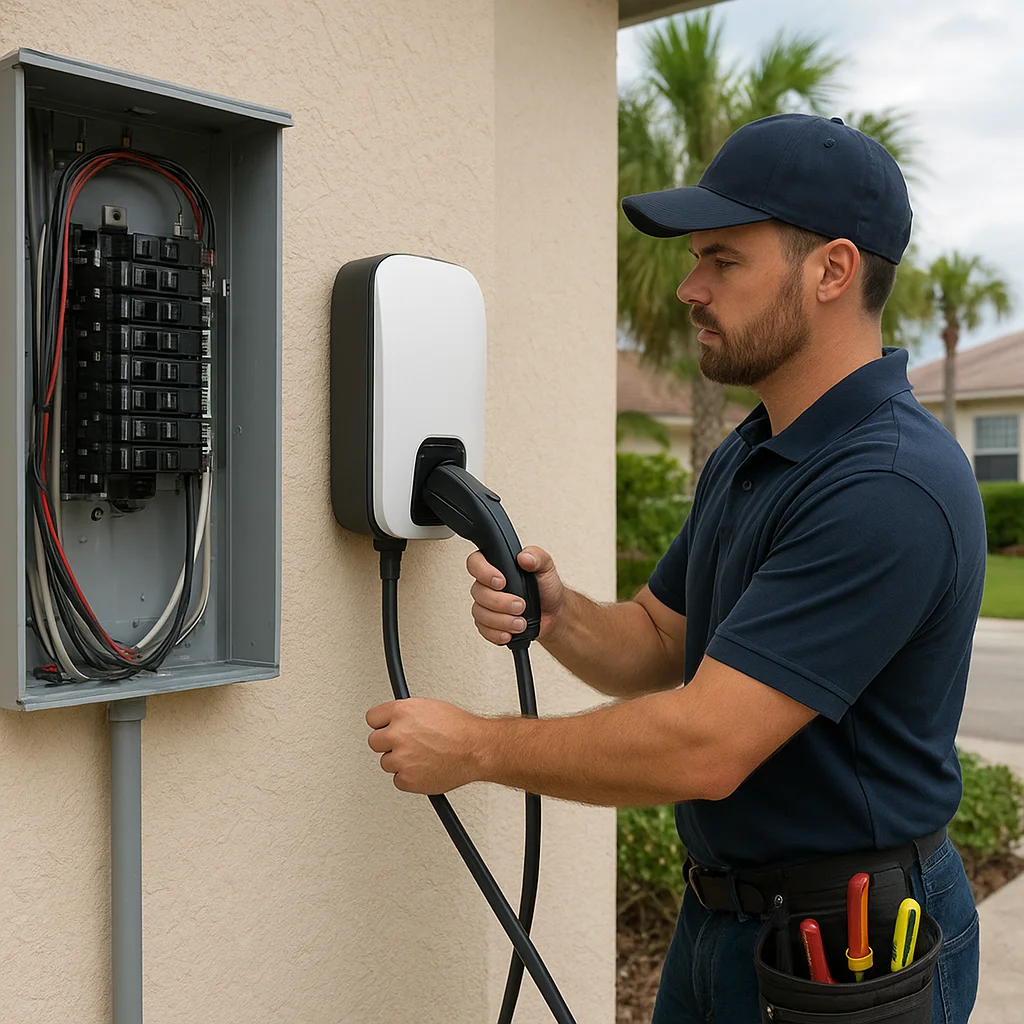
Lower Grand Lagoon homeowners are adding EVs, and that means the electrical system has to keep up. A charger is not just another appliance on a wall. It can place a steady demand on panels, circuits, breakers, and wiring that were never designed for today’s load. In a coastal area like Bay County, where salt air, storms, and humidity already put stress on electrical components, the details matter even more.
For homeowners looking into EV Charger Installation in Lower Grand Lagoon, FL, the first question is usually whether the home can support the charger safely. The answer depends on the panel, the existing wiring, the outlet or hardwired setup, and whether the home has room for a dedicated circuit. A proper installation protects the home, the vehicle, and the people using it every day.
Why EV charging puts a different kind of demand on local homes
Most Lower Grand Lagoon homes already have a mix of everyday electrical loads, including lighting, ceiling fans, refrigerators, laundry equipment, and outdoor fixtures. An EV charger adds a long duration load that can run for hours. That is very different from a toaster, vacuum, or hair dryer. The charger may be simple to use, but the electrical work behind it is more demanding.
Older homes in the area may have smaller panels, limited breaker space, or wiring that is not ideal for modern charging loads. Newer homes and remodels may have more capacity, but that does not mean every garage, driveway, or carport is ready for a charger without evaluation. Homeowners searching for an electrician near me often discover that the real issue is not the charger itself. It is the condition of the home’s electrical system.
Panels, breakers, and dedicated circuits
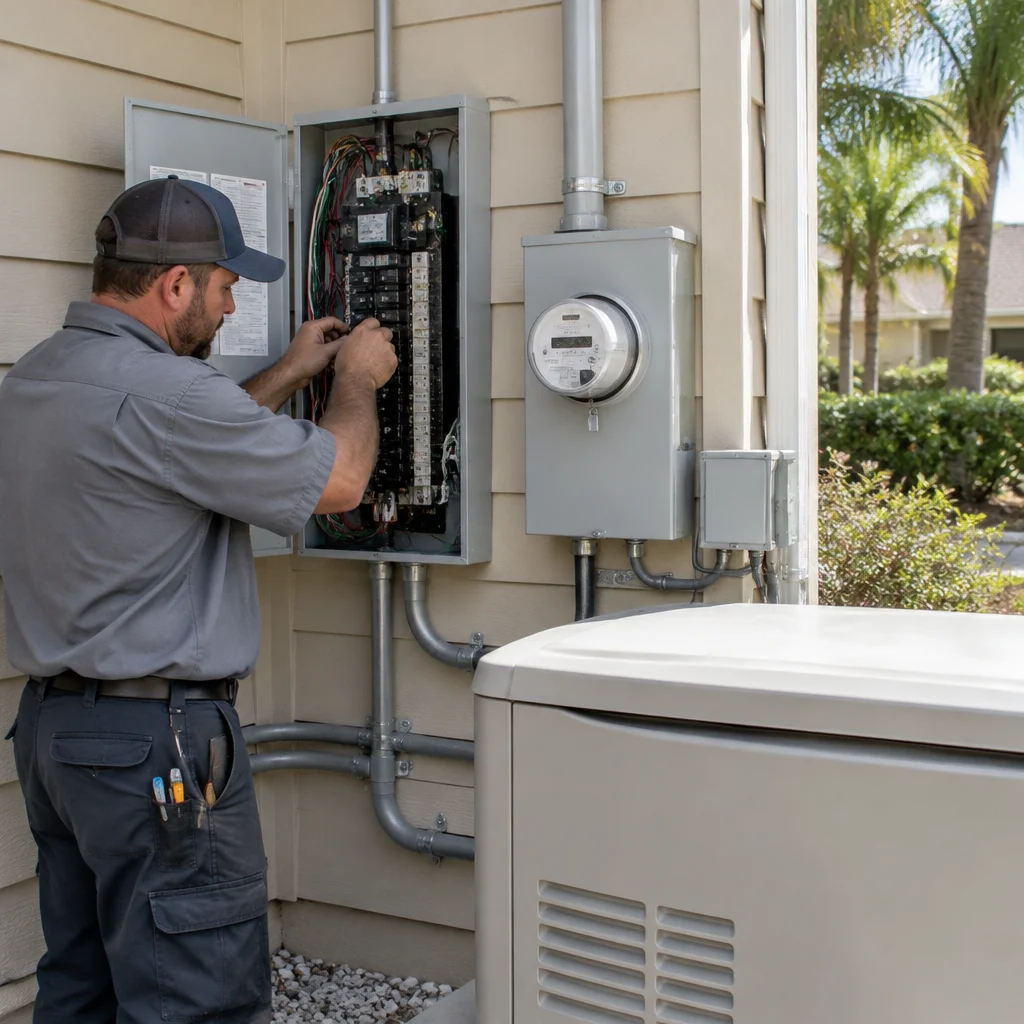
A safe EV charger installation usually starts with the panel. The electrician checks available capacity, breaker space, grounding, and the condition of the service equipment. If the panel is already crowded or outdated, a panel upgrade or sub panel may be needed before the charger is added. That is especially common in homes with hot tubs, pools, workshops, or recent additions that already increased demand.
Dedicated circuits are a major part of the job. A charger should not share a circuit with outlets, lighting, or other appliances. Shared loads can trip breakers, overheat wiring, and create nuisance issues that frustrate homeowners. If the panel needs improvements before the charger can be installed, electrical replacement or electrical installation services may be part of the project.
Some homeowners searching for electrical panel replacement near me or sub panel installation near me are really trying to solve a capacity problem that EV charging will expose. A licensed electrician can determine whether the existing service can handle the added load or if the home needs a larger, safer setup.
Wiring quality matters more in coastal Florida
Lower Grand Lagoon’s weather can be hard on electrical systems. Humidity, salt exposure, and storm season all contribute to corrosion and wear. That is why wiring condition matters so much during EV charger installation. Loose terminations, brittle insulation, undersized conductors, or outdated wiring methods can all create problems once a charger starts drawing power regularly.
In some homes, the charger installation reveals other concerns, such as damaged receptacles, weak connections, or overloaded branch circuits. A homeowner searching for electrical wiring repair near me may need more than a simple fix if the wiring feeding the garage or outdoor charging area is compromised. In older properties, old wiring replacement near me is sometimes the safer path before adding a charger.
For homes with garages, carports, or detached structures, the route from panel to charger also needs attention. Long runs, exposed wiring, and outdoor transitions should be planned for durability and code compliance. If the charger is being installed near a parking pad or exterior wall, the electrician will also consider weather protection and proper mounting height.
Outlet charging versus hardwired chargers
Some EV chargers plug into a receptacle, while others are hardwired. Both can work well when installed correctly, but the right choice depends on the vehicle, the charger model, and the home’s electrical layout. A receptacle installation must use the correct outlet type, proper breaker sizing, and safe placement. A hardwired charger often gives a cleaner setup and can reduce wear on plugs and receptacles over time.
Homeowners comparing charger options often also need related electrical work, such as outlet installation near me, range outlet installation near me, or dryer outlet installation near me if the home’s service is being updated at the same time. The key is making sure the circuit is built for the actual load, not just the convenience of a plug.
For Tesla drivers and other EV owners, searches like tesla charger installation near me or garage ev charger wiring near me usually lead to the same core question: is the home ready for a dedicated, code compliant charging circuit?
GFCI protection, grounding, and code compliance
Charging equipment must be installed with safety in mind. That includes proper grounding, correct breaker sizing, and the right protection for the location. In some cases, GFCI protection is required or recommended depending on the outlet type, installation method, and local code interpretation. The electrician also checks clearances, conductor sizing, and whether the charger location is appropriate for the environment.
Coastal homes in Bay County may need extra attention because moisture and corrosion can affect outdoor equipment faster than in inland areas. A good installation should not just work on day one. It should continue working safely through summer humidity, afternoon storms, and hurricane season. That is why an electrical code inspection near me search often comes up when homeowners are planning an EV charger or other major upgrade.
If the panel, receptacle, or wiring does not meet current standards, code corrections may be required before the charger can be energized. That is not a setback. It is part of preventing overheating, breaker issues, and future repair costs.
Clues that the electrical system needs attention first
Not every home is ready for EV charging right away. A few common clues can point to a larger electrical issue that should be addressed before installation. Frequent breaker trips, warm outlets, buzzing sounds, flickering lights, or a panel that feels crowded are all worth a closer look. So are damaged covers, loose switches, and outlets that no longer hold plugs tightly.
Sometimes a homeowner starts with an EV charger project and ends up uncovering other needed work, such as outlet repair near me, flickering lights repair near me, or even a broader electrical repair near me issue. If the garage circuit is already weak, adding a charger can make the problem worse.
Homes with pools, spas, or outdoor entertaining spaces may already have significant electrical demand. In those cases, it helps to review the whole system, especially if the property has had additions or a remodel. Related projects like pool electrical repair near me or appliance circuit installation near me can reveal whether the service panel needs a broader upgrade before EV charging is added.
Protection against storms, surges, and power interruptions
Storms are part of life in Lower Grand Lagoon. Lightning, utility disturbances, and brief outages can damage sensitive electronics, including EV chargers, vehicle charging systems, and smart home devices. Whole-home surge protection is a smart addition for homes investing in EV charging, especially when the panel is already being evaluated.
Homeowners looking for a whole home surge protector near me often want protection for more than just the charger. That same safeguard can help protect refrigerators, televisions, lighting, garage door openers, and home office equipment. In a coastal market where power quality can change quickly during severe weather, surge protection is a practical layer of defense.
For homes that rely on backup power, a generator can also be part of the planning conversation. While a generator may not power every EV charging load, it can keep essential circuits operating during an outage. If a homeowner is already considering generator installation, it is a good time to review the electrical system as a whole.
Why local service matters in Lower Grand Lagoon
Electrical work in Lower Grand Lagoon is not the same as electrical work in a dry inland neighborhood. Homes here face salt air, storm exposure, vacation rental use, and frequent electrical demand from outdoor living features. That is why local experience matters. A contractor who understands Bay County homes can spot issues faster and recommend the right mix of repair, replacement, and installation.
That local insight also helps when a homeowner is comparing options for lighting installation, ceiling fan wiring, or security lighting installation near me while planning an EV charger project. The goal is to make the whole system more reliable, not just add one new circuit and move on. For some properties, the best approach includes a panel review, outlet upgrades, grounding checks, and a full electrical inspection.
If the home is a rental or second home, reliability matters even more. Chargers, breakers, and outlets should be built to handle repeated use without constant service calls. That is where a local electrician who knows the area can make a real difference.
Preventive maintenance that keeps charging safe
Once the charger is installed, the work is not completely finished. Homeowners should keep an eye on the panel, the charger area, and any receptacles or switches nearby. If the breaker trips repeatedly, the charger cable feels unusually warm, or the outlet shows signs of wear, the system should be checked promptly.
Routine electrical maintenance can catch loose connections, corrosion, and aging components before they turn into bigger problems. For homes with multiple high demand appliances, it is also smart to revisit the electrical load after any remodel, addition, or equipment replacement. A charger that worked fine before a kitchen upgrade may need a new circuit plan later.
If you are planning EV charging along with other improvements, A Superior Mechanical can help evaluate the full electrical picture. That may include panel upgrades, dedicated circuits, outlet repair, lighting fixes, surge protection, or code corrections. The right setup should be safe, practical, and ready for the way Lower Grand Lagoon homes actually live.
For homeowners searching for a residential electrician near me or a 24 hour electrician near me because of an urgent electrical concern, it is wise to get the system inspected before the next charge cycle. A charger should support daily life, not strain the home’s wiring, panel, or breakers.
Find EV Charger Installation in Lower Grand Lagoon, FL
If you need EV Charger Installation in Lower Grand Lagoon, FL, visit our local service page or contact A Superior Mechanical today.
Map of Lower Grand Lagoon, FL
Frequently Asked Questions
Do I need a panel upgrade for EV charger installation in Lower Grand Lagoon?
Not always, but many homes do. The electrician checks panel capacity, breaker space, grounding, and the existing load before recommending a Level 1 or Level 2 charger setup.
Can an EV charger be installed on an older home with original wiring?
Sometimes, but older wiring may need repair or replacement first. If the system has worn insulation, outdated breakers, or limited capacity, the charger should not be added until those issues are corrected.
Is a hardwired charger better than a plug in unit?
Either can work well. Hardwired chargers are often preferred for a cleaner, more durable installation, while plug in units may be useful in certain layouts. The right choice depends on the panel, outlet type, and charger model.
Why is surge protection important for EV chargers in coastal Florida?
Storms, lightning, and utility fluctuations can damage charging equipment and other electronics. Whole home surge protection adds a valuable layer of defense for homes in Lower Grand Lagoon.
Related Articles
- Keeping Lower Grand Lagoon Homes Ready for the Next Electrical Upgrade
- Outdoor Landscape Lighting and the Electrical Clues Lower Grand Lagoon Homeowners Should Not Ignore
- Keeping Pool, Spa, and Hot Tub Wiring Safe in Lower Grand Lagoon Homes
- Keeping Outlets and Switches Reliable in Lower Grand Lagoon Homes
Photo Gallery