New construction air conditioning is one of those projects that feels straightforward until you live with it through Florida heat, humidity, and salt air. In Latitude Margaritaville Watersound, FL, the difference between “it runs” and “it performs” often comes down to timing. When HVAC work is staged correctly, homeowners get stable cooling, better airflow, and indoor air quality that holds up after the first humid summer.
This guide explains how timing affects new construction AC systems, what homeowners can watch for during the build, and why professional HVAC service matters before the first heat wave hits.
Coastal Florida makes timing more than a scheduling issue
Latitude Margaritaville Watersound sits in a coastal part of Bay County where summer brings long stretches of high humidity. That humidity is hard on air conditioning systems, especially when the home is still drying out, settling, or being finished. Salt air can also contribute to corrosion over time, and coastal breezes can change how air moves through the property.
When new construction air conditioning is installed at the wrong stage, the system may be forced to compensate for problems it cannot solve. For example, if ductwork is installed after insulation and drywall are already complete, it becomes harder to verify airflow paths, seal connections, and balance supply and return air. If the thermostat is set up before the building envelope is ready, the system may respond to conditions that do not reflect the final indoor environment.
Timing also affects condensate drainage. During humid weather, the air conditioner removes moisture from the indoor air. That moisture must drain correctly. If the condensate drainage routing is not verified during installation, homeowners can face water management problems later, including clogged drain lines and moisture where it should not be.
What “good timing” looks like during new construction
Every build is different, but reliable HVAC installation usually follows a logical order. Homeowners do not need to manage every step, but understanding the sequence helps you ask the right questions.
1) Plan the HVAC design before walls close
Before ductwork is buried in ceilings or walls, the HVAC contractor should verify the layout and air distribution plan. That includes supply and return locations, airflow direction, and how the system will handle different room loads, including sunny rooms, shaded rooms, and areas with more exterior exposure.
In coastal homes, airflow is not just about comfort. It also influences indoor air quality. When air distribution is uneven, some rooms can stay warmer or feel “stale,” which can make it harder for the system to manage humidity consistently.
If you are comparing options, you can also explore related topics like Air Conditioning Systems to understand how design choices affect performance.
2) Install and seal ductwork early enough to test it
Ductwork quality is often the difference between a system that cools evenly and one that struggles. Timing matters because ductwork inspection and sealing are easier when access is available. A proper install includes checking joints, connections, and transitions so air does not leak into attics, crawlspaces, or wall cavities.
Leaky ducts can waste energy and can reduce system capacity where you need it most. They can also contribute to comfort complaints that show up after move-in, when it is harder to correct hidden issues.
For coastal homeowners, ductwork matters even more because humidity and salt air can make indoor comfort problems last longer. If you want a deeper look, read Keeping Coastal Homes Comfortable Starts with Better Ductwork in Latitude Margaritaville Watersound.
3) Confirm refrigerant system components are installed correctly
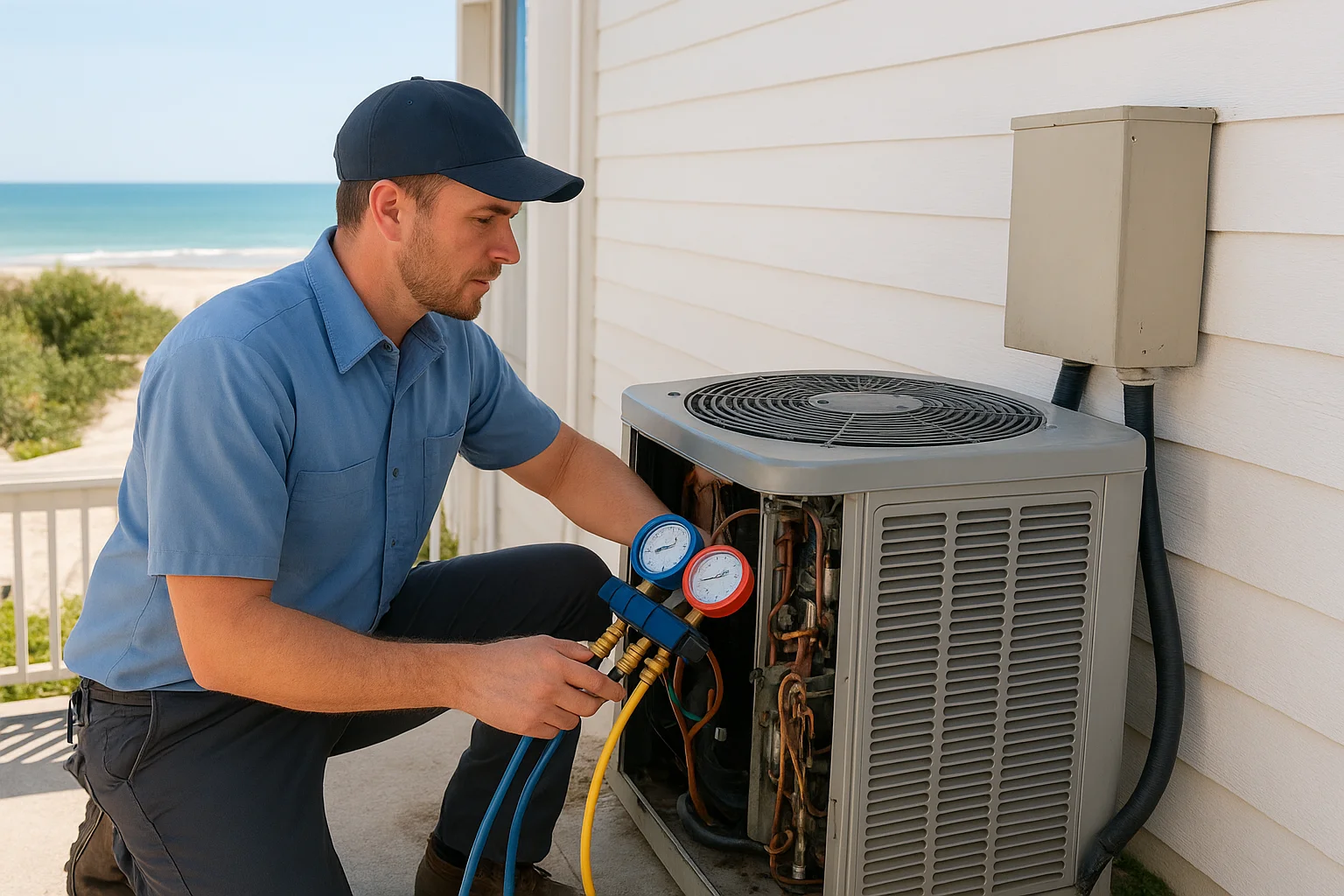
New construction air conditioning relies on the refrigerant system to move heat out of the home. That means proper installation of lines and connections, correct routing, and attention to how the system is assembled and protected.
Homeowners should know that refrigerant systems are sensitive. Small installation mistakes can affect performance and can create issues that are not obvious on day one. A professional HVAC contractor should verify system operation and check measurements during commissioning. Avoid assuming everything is fine just because air is blowing.
If you are planning ahead for installation quality, you can also review Air Conditioning Installation.
4) Verify condensate drainage before the first humid stretch
During Florida summers, air conditioning removes moisture continuously. That moisture becomes condensate that must drain away reliably. Timing matters because the drainage path is easiest to inspect while the system is still accessible.
Ask your HVAC professional to confirm the condensate drainage design and ensure it is installed and tested. If drainage is misrouted or not properly supported, you can see water-related issues later, especially when the system runs longer cycles.
5) Set up thermostats after the home is ready to stabilize
Thermostats control comfort by responding to indoor temperature and, in some systems, humidity related settings. During new construction, the home may still be drying out and the building envelope may not behave exactly like it will after completion.
That is why thermostat setup and system commissioning should align with the finished environment. If the thermostat is configured when the home is still full of construction moisture, it can lead to confusing comfort behavior. Homeowners may see short cycling, uneven cooling, or delayed humidity control.
Commissioning should include verifying that the system cycles properly, that airflow matches the design, and that the thermostat responds as intended.
Common new construction HVAC issues that show up later
When timing is off, the problems often appear after move-in, when residents notice discomfort during peak heat and humidity. Here are issues homeowners in Latitude Margaritaville Watersound may run into.
Uneven rooms and “hot spots”
Hot spots are often linked to airflow distribution. Ductwork design, blocked or undersized runs, and leaky connections can all create uneven cooling. Over time, the system may run longer to compensate, increasing energy use and stressing components.
Humidity that does not drop as expected
In coastal Florida, humidity management is a core part of air conditioning performance. If the air conditioner cannot move enough air through the system or if the ductwork and returns are not balanced, the home may feel clammy even when temperatures look acceptable on the thermostat.
Humidity can also be influenced by the building envelope and airflow to the outdoors, but HVAC design and commissioning still play a major role.
Strange noises during cooling cycles
New equipment can be quiet, so unusual sounds deserve attention. Timing can matter here too. For example, if ductwork or components are not properly secured during installation, noise can increase as the system runs under higher loads.
Condensate drainage concerns
Slow draining, minor overflow, or recurring moisture issues are not always obvious right away. If condensate drainage is not tested during installation, problems can emerge when the system runs consistently during humid weather.
Short cycling or long run times
Short cycling can happen when airflow is restricted or when the system is not matched to the home’s real needs. Long run times can happen when the system cannot reach setpoints efficiently. Both patterns can increase energy use and can contribute to wear.
These issues are not always solved by adjusting the thermostat. In-person inspection is important because the cause can involve airflow, refrigerant system performance, ductwork, and control settings.
How preventive HVAC maintenance protects new systems
New construction air conditioning does not need to be neglected after install. Preventive HVAC maintenance helps the system stay consistent through seasonal humidity swings and salt air exposure.
A strong maintenance plan typically includes:
- Checking airflow performance and system operation
- Inspecting refrigerant system components for proper operation
- Verifying condensate drainage and moisture management
- Reviewing thermostat operation and comfort settings
- Inspecting ductwork for issues that may develop after construction is complete
- Ensuring filters and air filtration practices support indoor air quality
Air filtration and indoor air quality are especially relevant in coastal communities where humidity can affect how dust and airborne particles behave indoors. You may also want to consider Air Filtration and Purifiers or schedule Indoor Air Quality Testing if comfort issues persist.
Energy use and comfort: why airflow and sizing matter
In Florida heat, energy use is tied to how effectively the system moves air and manages humidity. If ductwork is poorly sealed or airflow is restricted, the system may run longer than necessary. That can increase utility costs and can make the home feel inconsistent room to room.
Even when equipment is new, the HVAC system still depends on:
- Proper airflow through the evaporator and across the duct system
- Correct refrigerant system operation and stable performance
- Accurate control through the thermostat and system settings
- Reliable condensate drainage so humidity is handled safely and effectively
Homeowners looking for residential HVAC service near me or an HVAC company near me should focus on commissioning and system balancing as much as they focus on installing equipment. If the system is not balanced, it may not deliver the comfort you expect even if it cools.
When timing mistakes turn into emergency cooling concerns
Most HVAC problems are not emergencies. But in coastal Florida, “not cooling” can become urgent quickly during a heat spike. New construction can still experience issues if installation steps were rushed or skipped.
Watch for these emergency cooling concerns:
- The system stops cooling during a peak heat day
- Airflow is weak or stops abruptly
- There is water pooling around the indoor unit or signs of condensate overflow
- The thermostat shows errors or the system cycles rapidly without reaching comfort
- Burning smells, strong electrical odors, or unusual smoke-like scents
If any of these happen, do not wait for a scheduled appointment. Contact an air conditioning repair near me professional promptly so they can inspect the system in person. A licensed HVAC contractor near me can help you address the issue safely and avoid additional damage.
If you want to compare how different Florida areas handle new builds, these guides may help: What to Expect From New Construction Air Conditioning in Freeport, FL and Getting New Construction Air Conditioning Right in DeFuniak Springs.
Questions to ask your HVAC contractor during commissioning
Commissioning is where timing pays off. It is the step that confirms the system is ready for real-world conditions. If you are working with a contractor, these questions can help you get clarity without getting overly technical.
Airflow and ductwork
- How will you confirm supply and return airflow match the design?
- Will you inspect ductwork connections and verify there are no leaks or blockages?
- Can you explain how the system will balance cooling across different rooms?
Humidity control and condensate drainage
- How will you verify condensate drainage is properly routed and draining?
- What should the home feel like during normal humid operation?
- Are there indoor air quality steps you recommend, like filtration upgrades?
Thermostat setup and control
- Which thermostat settings should we use first for the summer season?
- How do you confirm the thermostat is controlling cooling correctly?
- What comfort adjustments are reasonable versus what needs service?
System operation and safety
- What checks will you perform to confirm refrigerant system operation is stable?
- Will you review normal operating sounds and what is considered abnormal?
- What maintenance steps should we do during the first year?
For more on system planning, you can also read Planning New Construction Air Conditioning for a Laguna Beach Home. While that guide focuses on a different coastal market, the principles about airflow, commissioning, and comfort planning are broadly useful.
Choosing the right local HVAC service for new construction air conditioning
A Superior Mechanical provides custom new construction air conditioning in Latitude Margaritaville Watersound, FL, with installation and system balancing built around how your home actually performs. If you are looking for a new construction air conditioning service, it helps to choose a team that treats commissioning and airflow verification as part of the job, not an afterthought.
Homeowners often start with questions like HVAC service near me or HVAC contractor near me, but the real value comes from professional HVAC service that understands coastal conditions in Bay County County. That includes humidity management, airflow quality, condensate drainage verification, thermostat setup, and indoor air quality considerations.
If you are also comparing options for the future, you can explore additional services on the same city page at /service-areas/bay-county/latitude-margaritaville-watersound and across Bay County at /service-areas/bay-county.
Heat pump considerations for coastal new construction
Some new construction projects in Florida use heat pumps instead of traditional air conditioners. Heat pumps can provide efficient comfort when installed and commissioned correctly, and they can be a good fit for many homes. However, performance depends on airflow, indoor air quality, ductwork design, and proper system setup.
If your home uses a heat pump, keep an eye on comfort consistency and humidity control. If you notice issues, homeowners searching for heat pump repair near me should still prioritize in-person evaluation. A professional can inspect airflow, control behavior, and system operation. If refrigerant-related concerns are suspected, diagnosis should be performed on site by a qualified technician.
Simple homeowner checks you can do after move-in
You cannot replace professional commissioning, but you can spot early indicators that your system needs attention. These checks are quick and practical.
- Check that air registers feel strong and consistent across rooms during cooling.
- Pay attention to humidity. If the home feels clammy even when temperatures are set low, schedule an air conditioning inspection near me.
- Look for moisture around air handler locations, drain areas, or ceilings near vents.
- Confirm thermostat behavior. If the system seems to run constantly or never seems to reach setpoints, do not keep changing settings without inspection.
- Replace filters on schedule and use the correct filter type recommended by the system manufacturer.
If you ever suspect duct issues, you can also ask about duct inspection near me services. Ductwork problems can be subtle, especially in new builds where materials settle and connections may need verification after construction activity.
For new construction homeowners, the goal is not to micromanage the HVAC system. The goal is to make sure the installation process and early commissioning match the reality of coastal Florida living.
Find New Construction Air Conditioning in Latitude Margaritaville Watersound, FL
If you need New Construction Air Conditioning in Latitude Margaritaville Watersound, FL, visit our local service page or contact A Superior Mechanical today.
Map of Latitude Margaritaville Watersound, FL
Frequently Asked Questions
Why does timing matter so much for new construction air conditioning in Latitude Margaritaville Watersound?
Because ductwork, condensate drainage, thermostat setup, and system commissioning are easiest to verify while the home is accessible and the building envelope is ready. If those steps are rushed or done after walls close, airflow and humidity control can be harder to correct later.
What are early signs that a new AC system is not installed correctly?
Look for uneven cooling, rooms that stay humid or feel clammy, weak airflow from vents, unusual noises that develop during operation, or signs of moisture related to condensate drainage. If comfort issues persist, schedule an in-person HVAC inspection.
Can I fix humidity problems just by changing thermostat settings?
Sometimes small adjustments help, but persistent humidity issues usually involve airflow, ductwork balance, system operation, and condensate drainage. A qualified HVAC contractor should inspect the system in person before you assume the thermostat is the only cause.
How does coastal salt air affect a new HVAC system?
Salt air can contribute to corrosion over time, especially for outdoor components. That is one reason preventive HVAC maintenance matters, including routine inspections and attention to system operation and airflow.
When should a homeowner treat AC problems as urgent in coastal Florida?
If the system stops cooling during a heat spike, airflow becomes very weak, there are signs of condensate overflow or pooling water, or you notice burning odors or unusual smoke-like scents, contact a professional promptly. Emergency cooling concerns can become more serious quickly in Florida heat.
Related Articles
- Keeping Coastal Homes Comfortable Starts with Better Ductwork in Latitude Margaritaville Watersound
- What to Expect From New Construction Air Conditioning in Freeport, FL
- Planning New Construction Air Conditioning for a Laguna Beach Home That Stays Comfortable Year After Year
- Getting New Construction Air Conditioning Right in DeFuniak Springs: How Homeowners Can Spot Trouble Early
Photo Gallery